

Isotta-Francini Tipo 8 7.4L OHV Straight-Eight 1927
General description :
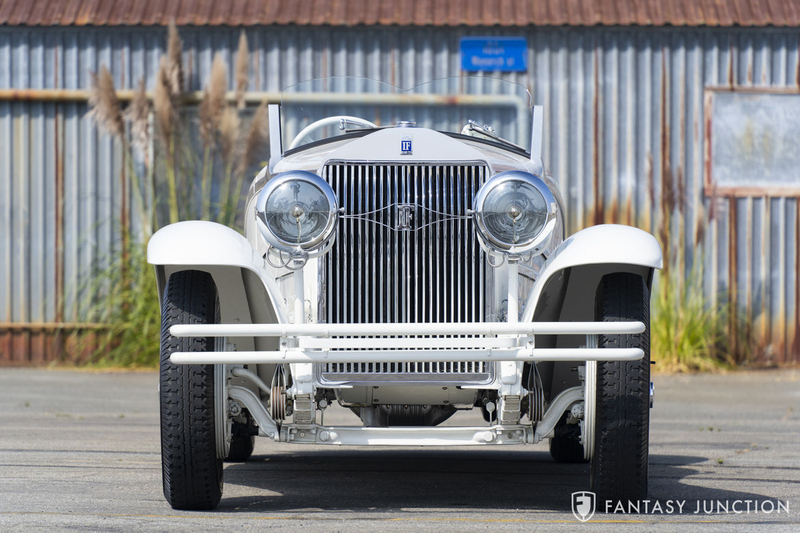
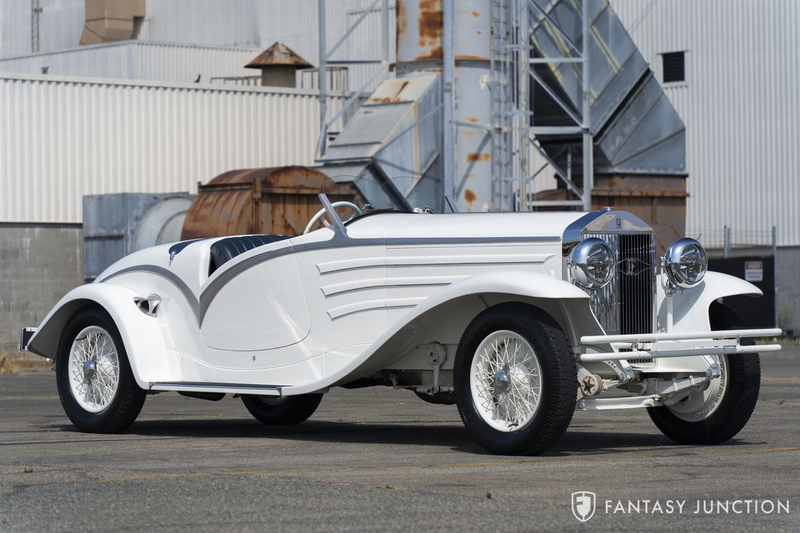
1927 Isotta Fraschini “Flying Star” Rebody
Tipo 8A Chassis no. 687
Engine no. 715
In the pantheon of great automotive classics, the name Isotta Fraschini is unparalleled in design excellence and superlative engineering. Founded in Milan, Italy at the turn of the 20th century, founders Isotta and Fraschini employed some of the greatest mechanical artisans and engineers to construct luxury automobiles of the period, each distinctive, exemplary, and coveted for their astonishing beauty and presence. With the growing wealth in the US, Isotta began offering cars for North American markets, attracting Hollywood elites with placement in films featuring Rudolf Valentino, John Wayne, Claudette Colbert, and others. Though the opulence and magnificence of these classic cars would come to an end after the throes of The Great Depression, the marque would continue to endure in the hearts of collectors and enthusiasts for decades to come.
In keeping with the grand history of extraordinary one-off automobiles, in the early 1930s Isotta Fraschini engaged Italian Carrozzeria Touring, Milan, Italy to execute a lightweight alloy body design upon an Isotta Fraschini Type 8A chassis (original number 1681). The resultant design, dubbed the ‘Flying Star’ was both stunning and visually innovative. The dramatic body lines, low profile, sweeping fenders, unusual side trim, dipped door line, and raked windscreen created a sensation when it debuted at the 1931 Milan Motor Show. After winning the coveted First Prize at Concorso d’Eleganza, Villa d’Este that same year, the Flying Star mysteriously vanished. Speculation has long been that it fell into the hands of Mussolini, but the ensuing years have yet to produce the original artifact, so the mystery remains today an ongoing part of the legacy of greatness from both Isotta Fraschini and Carrozzeria Touring.
Driven by the mystery and beauty of the original Touring Flying Star, an Isotta Fraschini specialist became determined to fully realize this long-lost design just as it was when first conceived. After locating an original 1927 Isotta Fraschini Type 8A 135” wheelbase chassis (No. 687), originally delivered to Archbishop Eris O’Brien of Sydney, Australia, the chassis was measured and verified for the new body. Having been in Australia for some time and outfitted with non-original coachwork of British origin, the car was an ideal candidate as the basis for the rebody. The donor chassis was dispatched of the non-original body and prepared for the new body which was handcrafted using traditional similar construction methods employed by Touring. The work was largely performed in Australia, once again relying on marque experts to capture the essence of the original while utilizing as many correct original Isotta Fraschini components to artfully achieve the most authentic results. As one might imagine, meticulous study of rare period photos was followed by the construction of handmade components unique to the one-off Touring design. Much as the 1930s artisans of Touring worked to build the original, the same level of care and excellence was applied to this effort.
Upon completion, the car became a part of the private collection of Jorge and Maria Fernandez, where it resided until 2001 when it was then sold to Paul Emple. In recent years the car has garnered some of the most prestigious awards including 2001 Pebble Beach Concours d’Elegance, 2nd in Class, 2004 Amelia Island Concours, Best in Class, 2011 Greystone Concours, Best in Class as well as participation in 2005 Meadow Brook and 2009 Keels & Wheels Concours events. Featured in Collectible Automobile, 2007 and Vintage Road & Racecar, 2012, this magnificent example of design and coachbuilding continues to impress just as the original did when conceived and debuted in Milan, Italy.
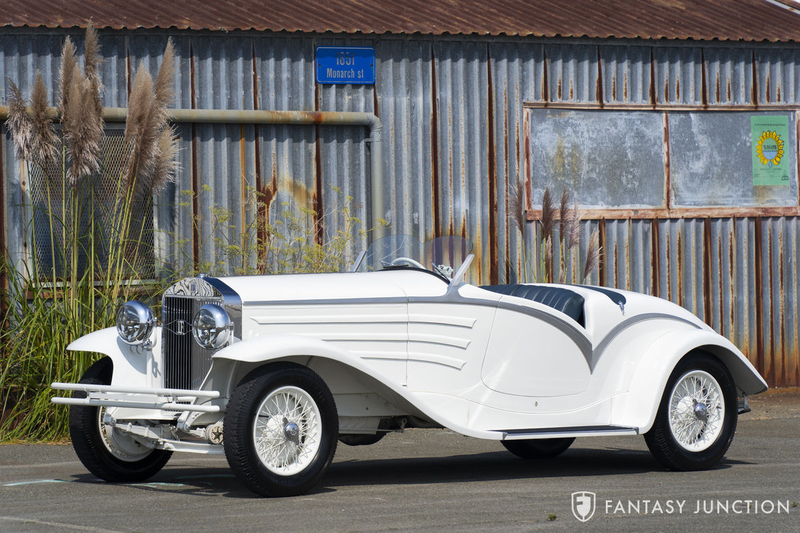
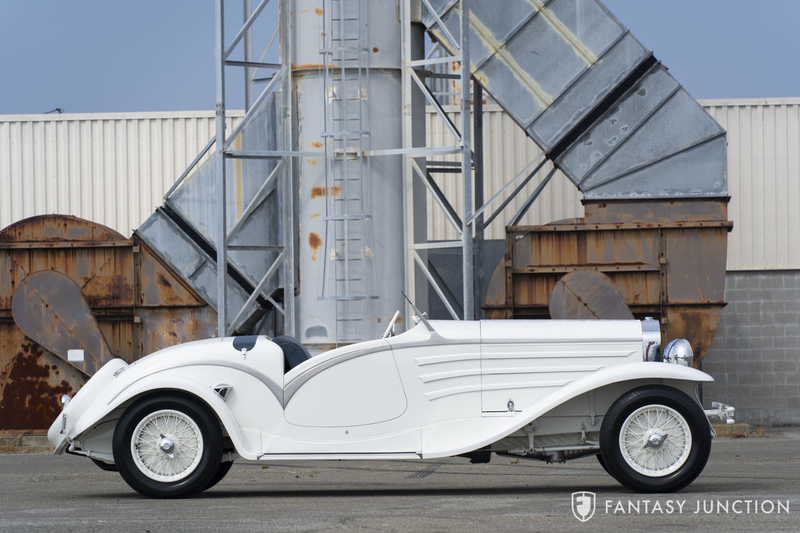
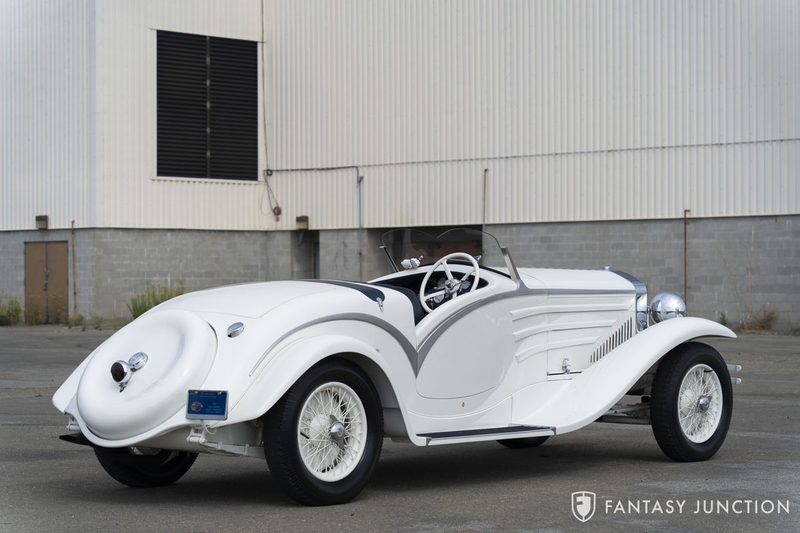
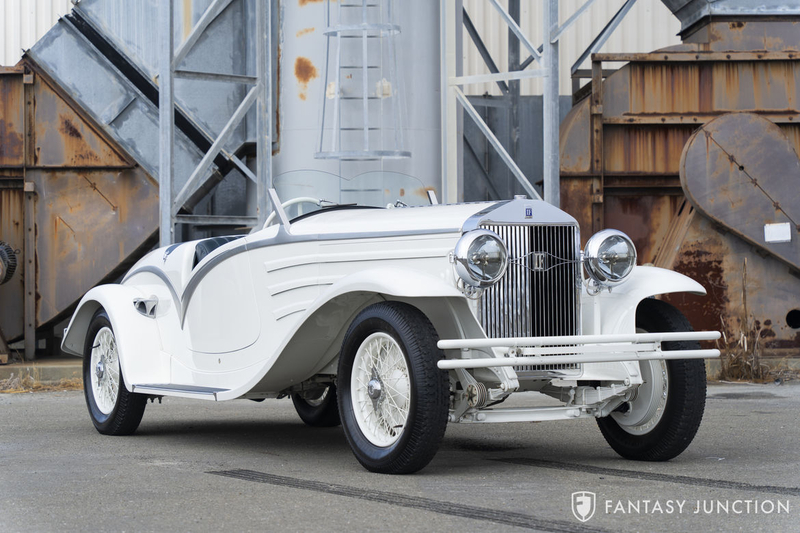
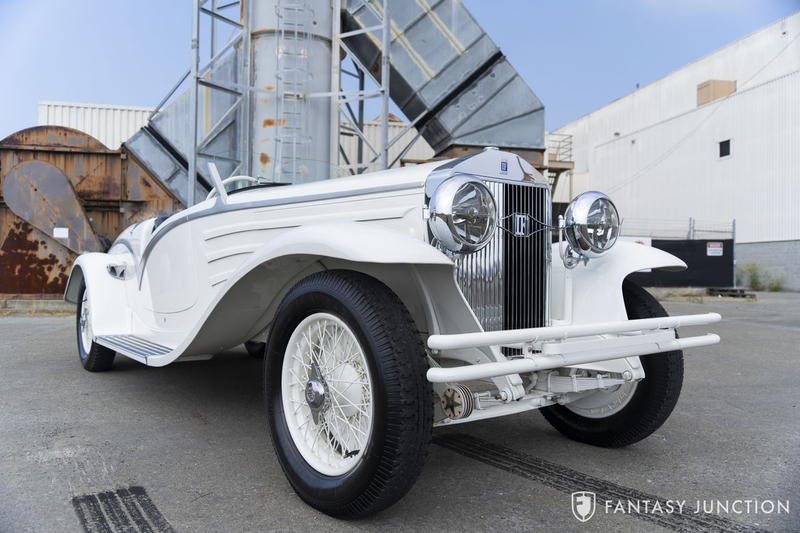
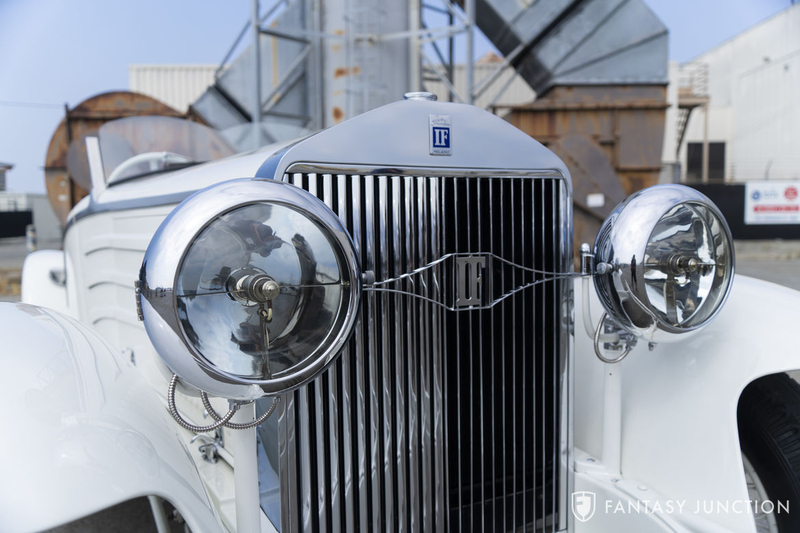
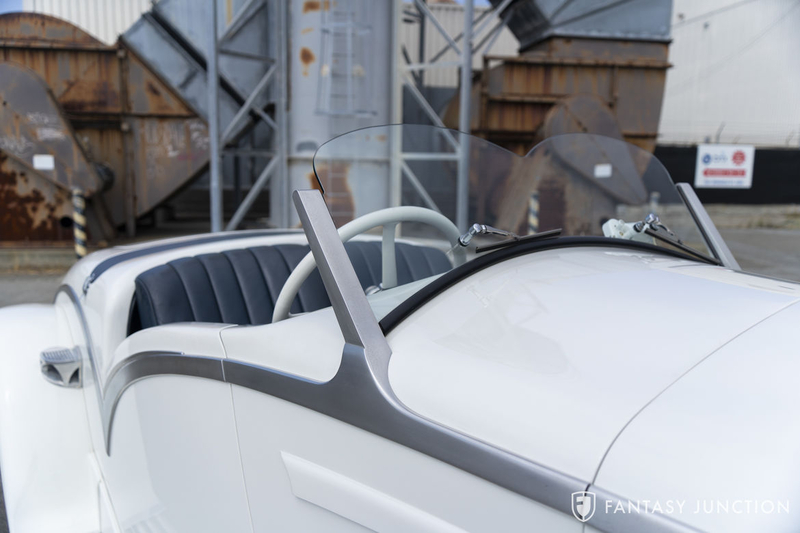
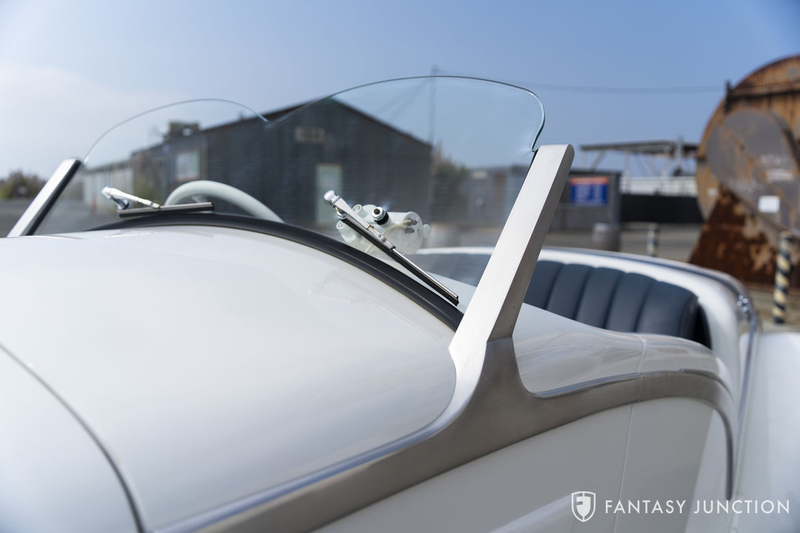
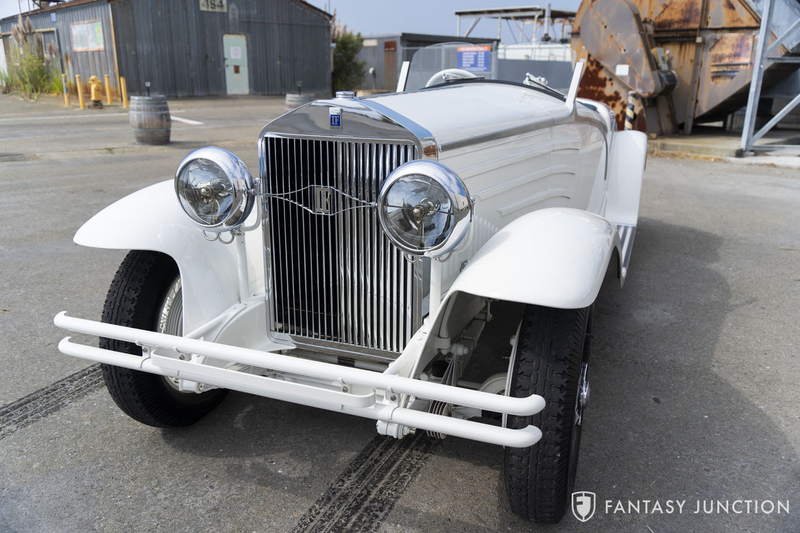
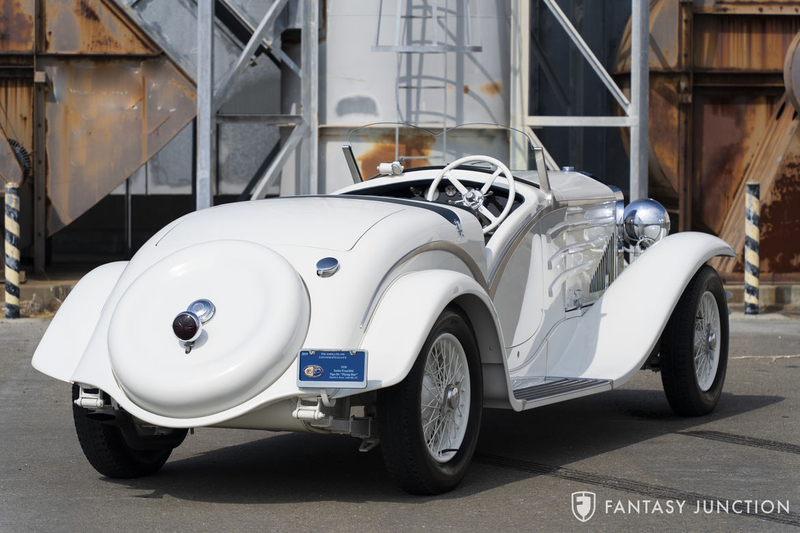
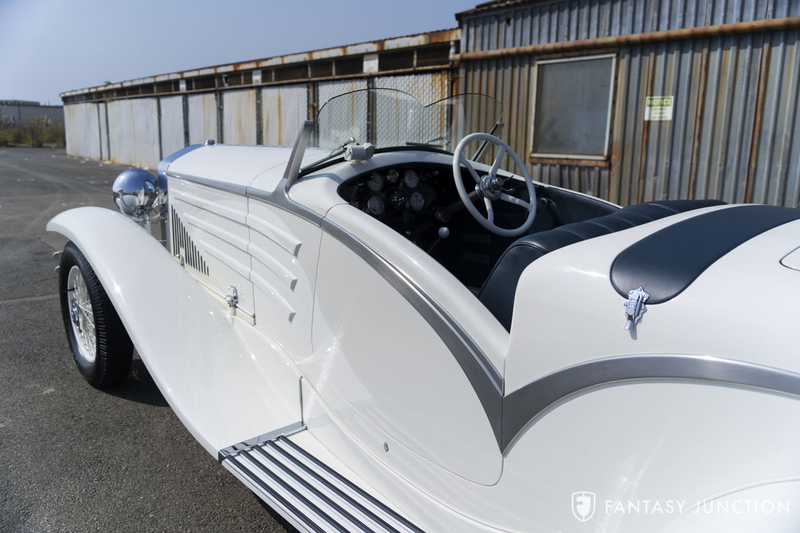
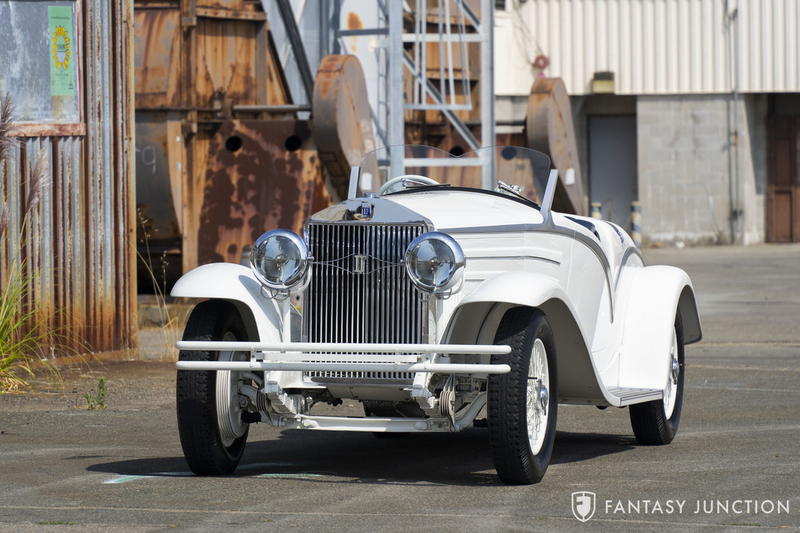
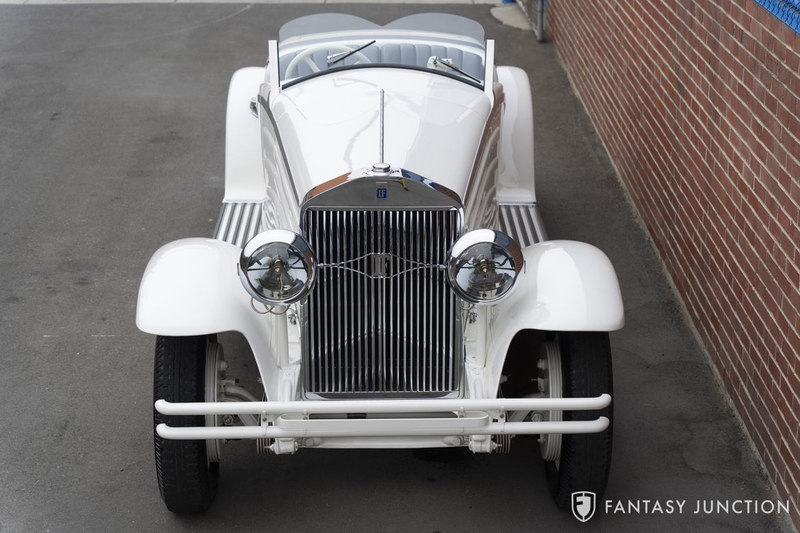
Today the car exhibits exceptionally fine appearance throughout. The paint is glossy and smooth, showing no significant flaws on the otherwise beautifully sculpted finish. The sweeping front fender lines flow back in classic form with distinctly tailored front and rear tips, accented by the dipped doors and side spear. The magnificent hood line and prominent cowl serve as the high points for the lowered profile cockpit and tailored rear end. The sculpted side elements trim the profile of the car perfectly, offering a distinct European flare and energy to the car even when standing still. The unique chrome grille, headlights and twin painted bumpers are further touches of unique design. Throughout the exterior, delightful details such as the racing inspired fuel filler, polished side trim, rumble seat, covered spare tire, and central hinged hood evoke a dignified and authentic character, recalling 1930s vintage charm and old-world craftsmanship. The matching white finished wire wheels and correct profile black wall tires deliver a sporting touch to this two-seat roadster configuration.
The interior is just as impressive as the exterior featuring period correct instrumentation and a large diameter steering wheel, complete with levered engine mixture controls. The Isotta Fraschini chassis plate, identifying the car as 687 is prominently mounted on the dash. The array of white-dial instruments echoes the elegant exterior theme, contrasted by the rich blue leather interior for the seats and pocketed door panels. In keeping with cars of this period, raw alloy features, polished aluminum components, knurled foot pedals, and magnificent exposed hardware add to the visual delight of the impressive cockpit. In addition to the open two-seater roadster configuration, the rear features a hinged rumble seat which can be easily raised to accommodate two adults for exhilarating drives.
Under the hood, the majestic 7,370 cc Isotta Fraschini overhead valve in-line eight-cylinder engine has been beautifully finished and outfitted with twin Zenith carburetors. Outputting 120 hp at 2,500 rpm the engine is both smooth and powerful, motivated by the 3-speed manual gearbox. The engine and engine compartment are a feast for the eyes with stunning casting details and proper vintage materials in keeping with the vintage charm of this car. The Isotta Fraschini engine plate, identifying the motor as Tipo 8A no. 715 is affixed to the engine casting and is documented as original to the chassis per the Isotta Fraschini registry. The intake manifold and carburetors have been beautifully finished along with the various finned alloy components, polished engine accessories, and unique engine details, all of which proudly combine Isotta Fraschini history and bespoke handmade components of modern artistry. The underside of the car and exposed suspension have been properly maintained showing paint and finish work that has been done to a high standard but now exhibiting slight evidence of use which is to be expected given the years of enjoyable driving the former owners have experienced in the Flying Star.
The car starts via an easily followed starting procedure, settling into a smooth idle, when warmed. Once in gear, the car easily pulls away with smooth and even acceleration. The four-wheel mechanical drum brakes are powerful but take some experience to gain familiarity with the operation. The steering and chassis response are very satisfying for a car of this stature. Either in traffic or happily cruising along wine country roads, it is easy to be delighted by the open configuration, even when seated in the rumble seat. Power delivery is smooth and progressive with a clear and distinct sense of majesty accompanying even the most mundane travels.
Beautifully finished, thoroughly unique, and finely maintained since the years of initial construction, this extraordinary Isotta Fraschini masterfully rebodied as the “Flying Star” conveys all the elegance, sporting charm, and character offered in a superlative Italian coach built classic. With its unique Touring-derived handmade coachwork, authentic chassis and engine, combining both past and present artistry from dedicated craftsmen, this beautifully presented Isotta Fraschini offers the next fortunate enthusiast a chance to experience the pleasure of open motoring and the charm of handcrafted elegance.Driving Video: https://youtu.be/obBLWcZiSZA
https://fantasyjunction.com/inventory/1927-isotta-franchini-8-a-flying-star/overview
1927 Isotta-Francini Tipo 8 7.4L OHV Straight-Eight is listed sold on ClassicDigest in Emeryville by Fantasy Junction for Not priced.
Car Facts
Car type : Car Make : Isotta-Francini Model : Tipo 8 Model Version : 7.4L OHV Straight-Eight Engine size : 7.4 Model Year : 1927 Location : Emeryville Vehicle Registration : Normal
Sold
Seller Information
Sold
Other cars listed for sale by this dealer
Alfa Romeo Spider Duetto
Emeryville
Ferrari 308 GTS
Emeryville
Honda S2000
Emeryville
Ford Pick Up
Emeryville
Ford De Luxe
Emeryville
About Isotta-Francini
The history of Isotta-Fraschini, an Italian luxury automobile manufacturer, is a fascinating tale of opulence, innovation, and enduring style. Let's explore this illustrious journey, highlighting some of the different models produced over the years.The Early Years:
Isotta-Fraschini was founded in Milan, Italy, in 1900 by Cesare Isotta and the brothers Vincenzo, Antonio, and Oreste Fraschini. The company initially focused on manufacturing cars and luxury vehicles, becoming one of the first Italian automakers to do so. Their early models, such as the Isotta-Fraschini Tipo 8, were known for their advanced engineering and meticulous craftsmanship.
The Pre-War Glory:
Isotta-Fraschini rose to prominence in the pre-World War I era and was particularly celebrated for its high-quality, finely detailed automobiles. In 1908, they introduced the Tipo 20/30, powered by a 7.3-liter inline-four engine, and later the Tipo 8, featuring a revolutionary 7.4-liter straight-eight engine. These models became popular among the European elite, and Isotta-Fraschini cars were often chosen by royalty, celebrities, and heads of state.
The Interwar Period:
The 1920s and 1930s marked a golden era for Isotta-Fraschini. The company continued to produce luxurious and powerful cars, including the Tipo 8A, which boasted a refined chassis and a variety of coachbuilt bodies. The Tipo 8A became synonymous with elegance and sophistication, attracting an exclusive clientele. Isotta-Fraschini's V8 engines were revered for their smoothness and power, making the brand a symbol of luxury and prestige.
The Art Deco Style:
During the Art Deco era, Isotta-Fraschini collaborated with renowned coachbuilders such as Castagna, Touring, and Zagato to create custom-bodied masterpieces. These one-of-a-kind designs showcased the brand's commitment to artistry and craftsmanship. The Isotta-Fraschini Tipo 8A S LeBaron Boattail Speedster is a notable example, celebrated for its exquisite styling and performance.
The Decline and Post-War Years:
World War II disrupted production for Isotta-Fraschini, and the post-war period presented challenges for luxury automakers. The company faced financial difficulties, leading to the discontinuation of car production in the late 1940s. Isotta-Fraschini shifted its focus to producing industrial and marine engines.
While Isotta-Fraschini cars became increasingly rare, they remained highly sought after by collectors and connoisseurs due to their exceptional craftsmanship and timeless elegance.
Modern Revival:
In the 1980s, an attempt was made to revive the Isotta-Fraschini brand, and a new luxury car was introduced, the Isotta-Fraschini T8. Despite its modern features, it didn't achieve the same level of acclaim as its historic predecessors.
The legacy of Isotta-Fraschini lives on through its classic automobiles, which continue to be treasured by car enthusiasts and collectors. These cars represent a bygone era of luxury and craftsmanship, and they remain symbols of enduring style and innovation in the automotive world. Isotta-Fraschini's historical impact on the realm of luxury automobiles is a testament to the brand's enduring prestige and heritage.