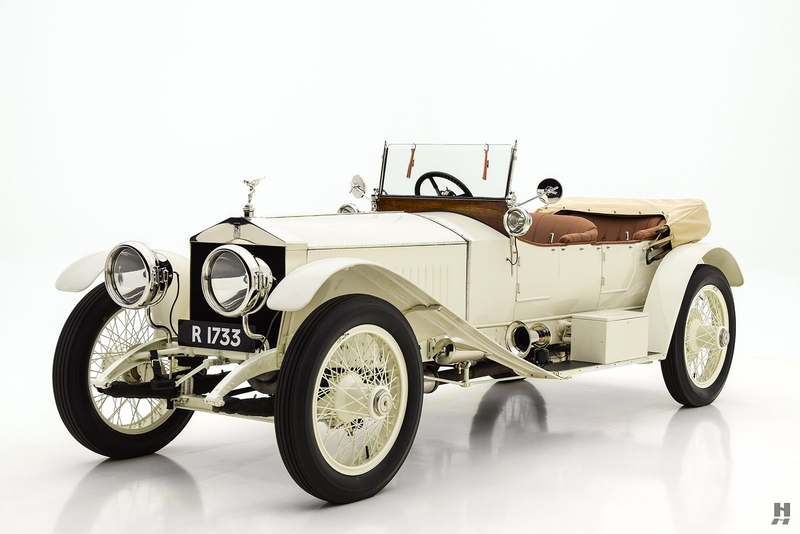

Rolls-Royce 40/50 Silver Ghost Sports Tourer 1913
General description :
The Rolls-Royce 40/50hp “Silver Ghost” made its spectacular debut in 1907, recognized almost immediately as the finest motorcar money could buy. At the heart of the 40/50hp was Henry Royce’s impressively powerful and reliable 7,428cc side-valve inline-six. In its day, the inline-six configuration was considered a folly as competitors could not cope with the issue of long, flexing crankshafts. But Royce’s engine had a crank that was shorter and stronger, and which was supported by seven large main bearings. Exacting, precise machine work and hand-polishing of internal components ensured near silent, smoke-free operation – a characteristic that was virtually unheard of for the time. Features such as pressurized oiling, fixed heads to eliminate leaks, and a twin ignition system via magneto or distributor were advancements that established the Silver Ghost as the standard of the world for motorcars. Particularly when compared to other machinery of the same period, the Silver Ghost is a true marvel of sophisticated engineering and build-quality, capable of delivering near silent operation and a luxurious experience drivers and passengers alike.
In Rolls-Royce’s early days, their chief competition came from Napier. Under the directorship of S.F. Edge, Napier had embraced the idea of the publicity stunt in order to drive sales and prove its machinery in the toughest of conditions. Rolls-Royce was always rather more conservative yet they relented under the pressure from their London-based rivals and in 1911, took on the RAC-sanctioned London to Edinburgh Challenge to prove they built the finest, most reliable and best performing cars in the world. The challenge was seen as the perfect venue to showcase the latest upgrades to the 40/50hp model.
Chassis 1701 was the second such car to receive improved specification that included a massive torque tube sending power to the strengthened rear axle, larger carburetor and a higher compression ratio engine. Fitted with a sporting, close coupled light-touring body by Holmes of Derby, Ltd, chassis 1701 completed the entirety of the 800 miles challenge in top gear, achieving an average consumption of 24.32 miles per gallon. Later, that same car achieved 78.26 miles per hour at Brooklands. The success in the London-Edinburgh challenge led to a raft of new orders for similarly spec’d cars – heretofore known as the London to Edinburgh Ghost. Between spring of 1912 and October of 1913 (ending with chassis 2699) just 188 examples were built – a mere fraction of the total Silver Ghost production of 6,700 cars.
Our featured 1913 40/50hp Silver Ghost, chassis number 2371, is one of these coveted London-Edinburgh specification cars. Original build sheets indicate this car was a direct copy of chassis 2148, which in itself was a direct copy of the famous “1701” works car. Originally clothed in a popular Torpedo style body by Barker, 2371 was delivered new to one Albert Janesich of the illustrious Janesich Jewelry family. Highly detailed notes on the factory build sheets indicate it was specified with Rudge-Whitworth wire wheels, Dunlop grooved tires, C.A. Vandervell lighting, multiple Brooks trunks, cobra horn, speedometer calibrated in KM and an additional clock. Janesich’s fabulous new Rolls-Royce was briefly registered in the UK, though very soon sent across the channel to Paris. Originally finished in silver gray with ivory lines and upholstery, it would have no doubt been a striking machine to see motoring the streets of Paris in its day.
A small accident necessitated a return to the factory for a comprehensive rebuild in 1927, though from there the trail of the history is temporarily lost. As with many such cars living in Europe, 2371 was most likely dismantled and hidden from the Germans during WWII. It wasn’t until the 1990s when the chassis was discovered in Paris by two enthusiasts who were tipped off to the possible existence of a Silver Ghost in the city. Following its discovery, the chassis would pass to a noted marque enthusiast Walter Wilson of Ireland who, working with James Black, would commission a comprehensive rebuild. The original engine had long since been missing, so Wilson and Black found a comparable spec unit from 1914 carrying the number 10 K. Interestingly, the body that 2371 wears today was once fitted to the original works London-Edinburgh chassis; 1701 having been fitted with the body by Kenneth Neve in 1970. A later restoration of 1701 made that body available, becoming a fine match for our chassis 2371. As a finishing touch to the restoration, the original 1913 British registration number – R 1733 – was officially returned to the car.
Walter Wilson thoroughly enjoyed his restored Ghost for the next two decades before passing it to the most recent owner in 2014. It is currently presented in white with tan leather upholstery and beautiful nickel plated fittings and it has a delightfully low-slung and sporty appearance, particularly riding on the correct spec Rudge Whitworth wire wheels. The restoration has held up extremely well; with an inviting, broken-in appeal thanks to Mr. Wilson’s time spent enjoying his motorcar. The car remains mechanically sound and would make the ideal companion for long-distance touring as it was originally intended. Mechanically and cosmetically sound, and with a fascinating history documented via build sheets as well as within the pages of the respected reference work “The Edwardian Rolls-Royce”, chassis number 2371 is a well-known, delightfully attractive and usable example of this highly desirable model.
Offers welcomed and trades considered
https://hymanltd.com/vehicles/5845
1913 Rolls-Royce 40/50 Silver Ghost Sports Tourer is listed sold on ClassicDigest in St. Louis by Mark Hyman for $750000.
Car Facts
Car type : Car Make : Rolls-Royce Model : 40/50 Silver Ghost Model Version : Sports Tourer Engine size : 0.0 Model Year : 1913 Location : Missouri
Sold
Seller Information
Sold
People who viewed this Rolls-Royce 40/50 Silver Ghost also viewed similar Rolls-Royce listed at ClassicDigest
Rolls-Royce 40/50 Silver Ghost
149500 $
Astoria
Rolls-Royce 40/50 Silver Ghost
289500 $
Astoria
Rolls-Royce 40/50 Silver Ghost
315000 $
Philadelphia, PA
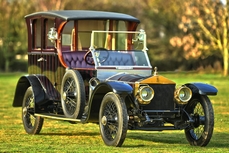
Rolls-Royce 40/50 Silver Ghost
Essex
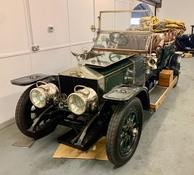
Rolls-Royce 40/50 Silver Ghost
Essex
Other cars listed for sale by this dealer
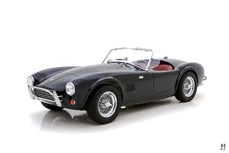
AC Cobra 289
195000$
Missouri
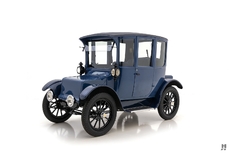
Other Other
142500$
Missouri
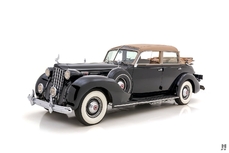
Packard Twelve
139500$
Missouri
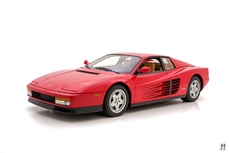
Ferrari Testarossa
159500$
Missouri
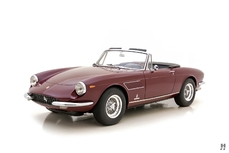
Ferrari 330 GTS
2275000$
Missouri
About Rolls-Royce
Well, ladies and gentlemen, today we're diving into the illustrious history of a brand that has always embodied the very essence of British luxury and craftsmanship - Rolls-Royce.Our story begins at the turn of the 20th century when two visionaries, Charles Rolls and Henry Royce, decided to join forces. In 1904, the very first Rolls-Royce was born, the Rolls-Royce 10 hp. It was a modest start for a company that would go on to redefine automotive excellence.
But it wasn't until 1907 that Rolls-Royce truly made its mark with the introduction of the Silver Ghost. It was hailed as the "Best Car in the World" and set the gold standard for luxury motoring. With its whisper-quiet engine and exquisite craftsmanship, it was a statement of opulence and refinement.
The 1920s brought us the Rolls-Royce Phantom I, an icon of its time. It was the first Rolls-Royce to feature a 6-cylinder engine and set the stage for the legendary Phantom line. This was the era when the Maharajas of India commissioned custom-bodied Rolls-Royces that were nothing short of automotive palaces.
Fast forward to the post-war years, and we have the Silver Cloud, a symbol of post-war British optimism. The Silver Cloud was elegance personified, with its flowing lines and handcrafted interiors. It was the choice of royalty, celebrities, and captains of industry.
But if we're talking about the epitome of Rolls-Royce luxury, it's the Rolls-Royce Phantom VI, which graced us with its presence from 1968 to 1991. This was a car that made the statement that "if you have to ask the price, you can't afford it." Customization was the name of the game, and the Phantom VI was a canvas for the world's wealthiest to express their unique tastes.
Now, it's impossible to discuss Rolls-Royce without mentioning the Rolls-Royce Corniche. Produced from 1971 to 1995, it was a convertible and coupe version of the Silver Shadow. The Corniche was the quintessential grand tourer, a car for those who wished to traverse continents in absolute luxury.
But, alas, even the mightiest must face their decline, and Rolls-Royce was no exception. The company went through financial turmoil in the 1970s and 80s, leading to the takeover by Vickers plc. Then came the controversial BMW and Volkswagen ownership period, which divided enthusiasts.
Rolls-Royce regained its footing under BMW ownership, and the new millennium brought us the Rolls-Royce Phantom VII, a return to the company's roots of uncompromising luxury. The Phantom VII was a testament to British engineering and craftsmanship.
And that, ladies and gentlemen, brings us to today. Rolls-Royce continues to produce some of the most opulent, bespoke vehicles on the planet, a symbol of British imperiousness that has not waned with time. The spirit of Sir Henry Royce and Charles Rolls lives on in every car that bears the Spirit of Ecstasy, a testament to the enduring legacy of British automotive excellence.