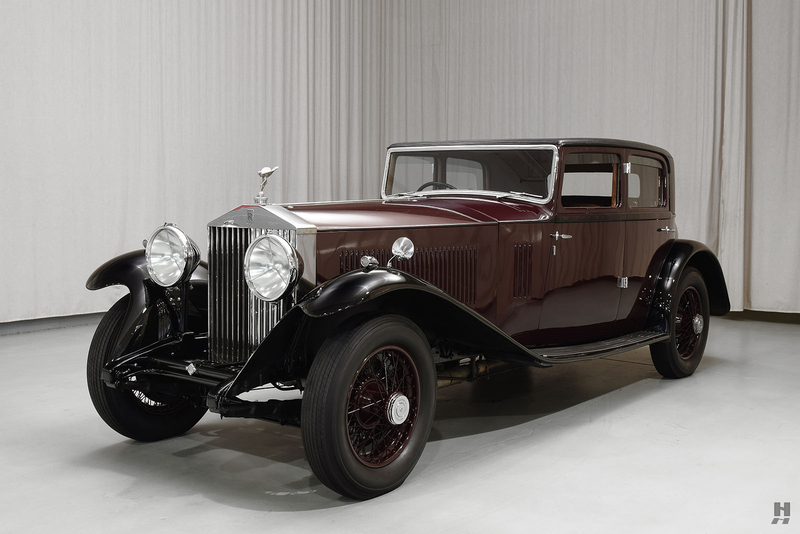

Rolls-Royce Phantom II Sports Saloon 1932
General description :
As the last Rolls-Royce designed under the direct supervision of Sir Henry Royce, the Phantom II Continental is the ultimate and most desirable iteration of the Phantom range. As its name would suggest, the Continental was designed for high-speed touring across Europe, and in ultimate spec, was capable of approaching 100mph. What set the Continental apart from the standard range was namely the shortened chassis with stiffer, five-leaf springs to handle the rigors of high-performance touring and a series of sporting bodies offered by select coachbuilders.
The standard Phantom II shared very little in common with its predecessor (Phantom I) beyond the bore and stroke dimensions of the 7,668cc inline six-cylinder engine. Engineers made a great deal of progress within the big six; adding a cross flow cylinder head, separate inlet ports, improved exhaust manifold and a bump in compression allowing for an additional 20hp. The driveline was also improved with modifications to the gearbox and clutch and the addition of a Hotchkiss drive layout for the hypoid rear axle which allowed for a lower floor line. This of course delighted coachbuilders who could now fit lower, sleeker bodywork and the addition of the short chassis Continental allowed coachbuilders to showcase their most sporting designs. Performance was exceptional for a car of this size, and sales proved strong considering the price, with 281 of the total Phantom II production of 1,767 units leaving the works in Continental specification.
Chassis number 80MS was originally ordered by the respected dealer Jack Barclay in 1932. It was sent to directly to H.J. Mulliner where it received the handsome sports saloon coachwork it wears today. On November 21, 1932, 80MS had completed testing and was delivered three days later to E.M. Thomas and his famous motor-racing wife, Jill (Scott) Thomas. The Thomas’ were well known in motor racing circles; E.M. Thomas was a regular competitor at Brooklands, though rather uncharacteristically for the time, it was his wife who was truly the hardcore racer. She had been formerly married to “Bentley Boy” W.B. Scott and was the first woman to lap Brooklands at over 120mph. She won multiple races and held several 500km and 500 mile records. As such, she was the first ever woman elected to the storied BRDC.
According to factory notes, Mr. Thomas insisted special attention be paid to the brakes on his new Rolls-Royce. We can only assume that this wonderful Phantom II was enjoyed to its fullest by its enthusiastic original owners. In 1938, 80MS passed to Mr. Angus Fletcher, who is believed to have retained the car through the War. It then passed to Mr. John Lewis who kept the car through 1962 when it appears to have made its way to the United States. In 1989, following long-term ownership, the car was handed over to Lyle Reider of British Marque Auto in Pennsylvania who carried out a bare metal respray, re-wiring, and cosmetic restoration. In conjunction, John Dennison performed a full engine rebuild. The most recent owner acquired the car in 2003 who has continually maintained it in excellent mechanical order, using it regularly on tours, events and rallies.
Today, 80MS (engine number WO85) remains in very fine order, showing just a bit of patina from regular use. The crisp and attractive H.J. Mulliner coachwork presents very well with burgundy main body over black fenders and a black upholstered roof. The paint is in good order, showing some signs of use here and there, but remaining quite attractive since the respray was completed. Maroon wire wheels wear blackwall tires that are an ideal match for the sporting coachwork. A single rear mount spare keeps the body sides clean, fully accentuating the sweeping line of the fenders. This is the original body to 80MS, and a photo of the car is featured in Raymond Gentile’s book, “The Rolls-Royce Phantom II Continental” (p156).
The cabin has been retrimmed in attractive brown leather with brown Wilton carpeting. The seats appear lovingly broken-in and the detailing is unfussy and down to business. Wood trim on the door caps and dash is in fine order. Under the bonnet, the 7.7 liter inline six presents beautifully, again showing minor signs of use but never abuse or neglect. Fittings and hardware are largely correct with a few minor accommodations for modernity such as the hose clamps and drive belt.
The Phantom II Continental was designed from day one as a driver’s car with cross continent touring its main charge. With its very intriguing early history, fantastic Mulliner coachwork and well-sorted mechanical condition, we are confident this fine example will continue to bring much enjoyment to its next keeper.
http://hymanltd.com/vehicles/5843-1932-rolls-royce-phantom-ii-sports-saloon/
1932 Rolls-Royce Phantom II Sports Saloon is listed sold on ClassicDigest in St. Louis by Mark Hyman for Not priced.
Car Facts
Car type : Car Make : Rolls-Royce Model : Phantom II Model Version : Sports Saloon Engine size : 0.0 Model Year : 1932 Sub type : Sedan Location : Missouri
Sold
Seller Information
Sold
People who viewed this Rolls-Royce Phantom II also viewed similar Rolls-Royce listed at ClassicDigest
Rolls-Royce Phantom II
189500 $
Astoria
Rolls-Royce Phantom II
34500 $
Astoria
Rolls-Royce Phantom II
67500 $
Astoria
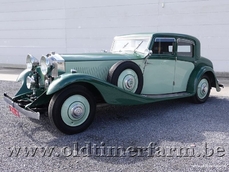
Rolls-Royce Phantom II
125000 €
Aalter
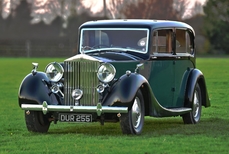
Rolls-Royce Phantom II
Essex
Other cars listed for sale by this dealer
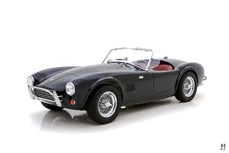
AC Cobra 289
195000$
Missouri
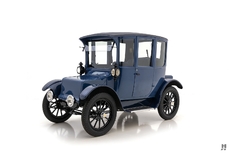
Other Other
142500$
Missouri
Packard Twelve
139500$
Missouri
Ferrari Testarossa
159500$
Missouri
Ferrari 330 GTS
2275000$
Missouri
About Rolls-Royce
Well, ladies and gentlemen, today we're diving into the illustrious history of a brand that has always embodied the very essence of British luxury and craftsmanship - Rolls-Royce.Our story begins at the turn of the 20th century when two visionaries, Charles Rolls and Henry Royce, decided to join forces. In 1904, the very first Rolls-Royce was born, the Rolls-Royce 10 hp. It was a modest start for a company that would go on to redefine automotive excellence.
But it wasn't until 1907 that Rolls-Royce truly made its mark with the introduction of the Silver Ghost. It was hailed as the "Best Car in the World" and set the gold standard for luxury motoring. With its whisper-quiet engine and exquisite craftsmanship, it was a statement of opulence and refinement.
The 1920s brought us the Rolls-Royce Phantom I, an icon of its time. It was the first Rolls-Royce to feature a 6-cylinder engine and set the stage for the legendary Phantom line. This was the era when the Maharajas of India commissioned custom-bodied Rolls-Royces that were nothing short of automotive palaces.
Fast forward to the post-war years, and we have the Silver Cloud, a symbol of post-war British optimism. The Silver Cloud was elegance personified, with its flowing lines and handcrafted interiors. It was the choice of royalty, celebrities, and captains of industry.
But if we're talking about the epitome of Rolls-Royce luxury, it's the Rolls-Royce Phantom VI, which graced us with its presence from 1968 to 1991. This was a car that made the statement that "if you have to ask the price, you can't afford it." Customization was the name of the game, and the Phantom VI was a canvas for the world's wealthiest to express their unique tastes.
Now, it's impossible to discuss Rolls-Royce without mentioning the Rolls-Royce Corniche. Produced from 1971 to 1995, it was a convertible and coupe version of the Silver Shadow. The Corniche was the quintessential grand tourer, a car for those who wished to traverse continents in absolute luxury.
But, alas, even the mightiest must face their decline, and Rolls-Royce was no exception. The company went through financial turmoil in the 1970s and 80s, leading to the takeover by Vickers plc. Then came the controversial BMW and Volkswagen ownership period, which divided enthusiasts.
Rolls-Royce regained its footing under BMW ownership, and the new millennium brought us the Rolls-Royce Phantom VII, a return to the company's roots of uncompromising luxury. The Phantom VII was a testament to British engineering and craftsmanship.
And that, ladies and gentlemen, brings us to today. Rolls-Royce continues to produce some of the most opulent, bespoke vehicles on the planet, a symbol of British imperiousness that has not waned with time. The spirit of Sir Henry Royce and Charles Rolls lives on in every car that bears the Spirit of Ecstasy, a testament to the enduring legacy of British automotive excellence.