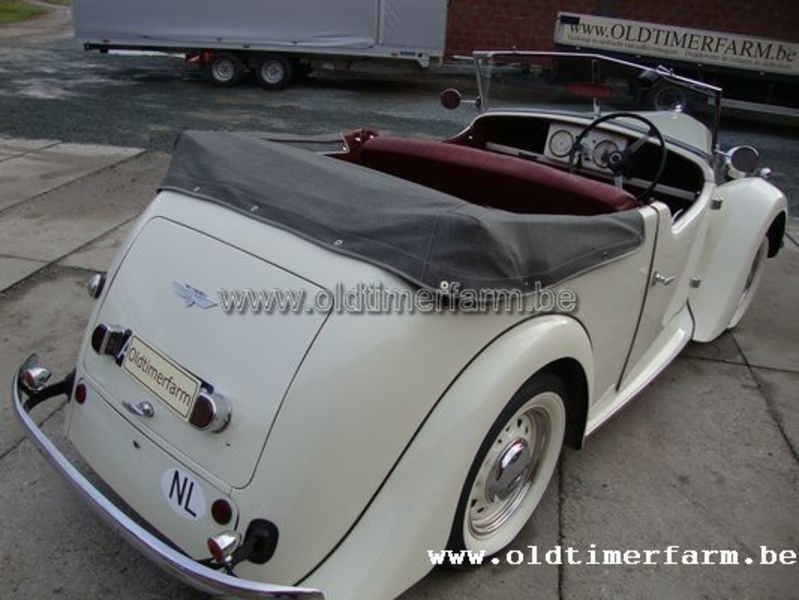

Singer Other 10 '47 1947
General description :
Lowered price from €27.950 -> €24.950(from Wikipedia, the free encyclopedia) Singer was an automobile company founded in 1905 in Coventry, England. It was acquired by the Rootes Group of the United Kingdom in 1956, who continued the brand until 1970. The British Singer company had no connection with the Singer company of Mount Vernon, New York, USA, which made luxury cars from 1915 to 1920. Also bicycle maker, Singer made first four wheel car in 1905. It was made under licence from Lea-Francis and had a 3 cylinder 1400 cc engine. The first Singer designed car was the 4 cylinder 2.4 litre 12/14 of 1906. The engine was bought in from Aster. For 1907 the Lea-Francis design was dropped and a range of two, three and four cylinder models using White and Poppe engines launched. The Aster engined models were dropped in 1909 and a new range of larger cars introduced. All cars were now White and Poppe powered. In 1911 the first big seller appeared with the 1100cc Ten with Singer's own engine. The use of their own power plants spread through the range until by the outbreak of the World War I all models except the low-volume 3.3 litre 20 hp were so equipped. The Ten continued after World War I, with a redesign in 1923 including a new overhead valve engine. Six cylinder models were introduced in 1922. In 1927 the Ten engine grew to 1300 cc and a new light car the 850 cc overhead cam (ohc) engine, the big selling Junior was announced. By 1928 Singer was Britain's third largest car maker after Austin and Morris. The range continued in a very complex manner using developments of the ohc Junior engine first with the Nine (two bearing crank), the 14/6 and the sporty 1 1/2 litre in 1933. The Nine became the Bantam in 1935. Externally the Bantam was very similar to the Morris Eight, had a three-bearing crankshaft and it was the first Singer to be fitted with a synchromesh gearbox, albeit with only three forward gears. After World War II the pre war Nine, Ten and Twelve were initially re-introduced with little change. In 1948 the SM1500 with independent front suspension and a separate chassis was announced, still using the SOHC 1500cc engine. It was, however, expensive at £799, and failed to sell well as Singer's rivals also got back into full production. The car was restyled to become the Hunter in 1954. The Hunter was available with an HRG-designed (q.v.) twin overhead cam version of the engine, but few were made. By 1956 the company was in financial difficulties and Rootes Brothers who had handled Singer sales since before World War 1 bought the company. The Singer brand was absorbed into the Rootes Group whose brands largely sold badge engineered versions of each others cars. The next Singer car, the Gazelle, was a Hillman Minx variant which retained the pre-war design Singer ohc engine for the I and II versions but this too went in 1958 with the IIA given a push-rod engine. The Vogue which ran alongside the Gazelle from 1961 was a rebadged Hillman Super Minx with more luxurious trim. By 1970, Rootes were beginning to struggle financially. They had been acquired by the American Chrysler organisation, and founder Sir William had died in 1964. In April 1970, as part of a rationalisation process, the last Singer rolled off the assembly line, almost 100 years after George Singer built the very first cycle. The last car to carry the Singer name was an upmarket version of the rear engined Hillman Imp called the Chamois. With the take over of Rootes by Chrysler in 1967, many of the brands were to vanish and the Singer name disappeared forever in 1970. First launched in 1938 the Super Ten became Singers most popular saloon model. This well finished car offered comfortable accommodation for 4/5 passengers and offered reasonable performance for a saloon in this popular market segment (every pre-war major UK manufacturer offered a 10hp model). Standard equipment included a 36bhp overhead camshaft engine which had a capacity of 1194cc. Post-war models featured a four speed gearbox, hydraulic brakes and a new grille design. Available only in four door saloon format the Super Ten sold well from 1938-49 with over 10,000 examples being sold. SpecificationsBodyworkLength : cm (in): 396 (156) Width : cm (in): 146 (57.5) Height : cm (in): ± 130 (± 52) Wheelbase : cm (in) : Weight: kg (lb) : 965 (2127) Mechanics. Displacement : straight-4 1193 cc (72.8 ci), front mounted Valve gear : 8 Fuel system : 1 SU carburettor Gearbox : 3-speed, manual Drive wheels : rear wheel drive Maximum power : 37 bhp at 4800 rpm Maximum torque : Maximum speed : 105 km/h (64 mph) For more pictures scroll down! >>>>>>Oldtimerfarm specializes in consignment sales of vintage and collection cars and we are proud to present you this car. Oldtimerfarm is located in Belgium, 9880 Aalter, Steenweg op Deinze 51C, where this car is in our showroom. We are open from Tuesday to Saturday 10-17h (also without appointment). We are closed on Sundays and Mondays. Mondays on appointment only. Make sure you scroll down to look at the extensive photo report (100 pictures). Of course, a more detailed description can be obtained by telephone.Contact us:Xavier (sales): 0032 472 40 1338 (NL, FR, DE, EN, IT) info@oldtimerfarm.beOlivier (after sales): 0032 473 11 7300 (NL, FR, DE, EN) olivier@oldtimerfarm.beOldtimerfarm from Aalter would also like to sell your classic car or car collection. For more information, please contact Xavier.Exhibitions where you can find us: 09-11/09/2016 Open Door Event @OLDTIMERFARM20-23/10/2016 Auto Moto Depoca Padova - Italy18-20/11/2016 InterClassics Brussels - Belgium17-18/12/2016 Dreamcar International Kortrijk - Belgium12-15/01/2017 InterClassics Maastricht - The Netherlands03-05/03/2017 Antwerp Classic Salon - Belgium
http://www.oldtimerfarm.be/en/collection-cars-for-sale/2975/singer-super-10-47.php
1947 Singer Other 10 '47 is listed sold on ClassicDigest in Aalter by Oldtimerfarm Dealer for €24950.
Car Facts
Car type : Car Make : Singer Model : Other Model Version : 10 '47 Engine size : 0.0 Model Year : 1947 Location : Aalter Vehicle Registration : Normal
Sold
Seller Information
Sold
Other cars listed for sale by this dealer
Bentley S1
99950€
Aalter
Alfa Romeo 2000 GTV
25950€
Aalter
Alfa Romeo Giulia 1600 Sprint
69950€
Aalter
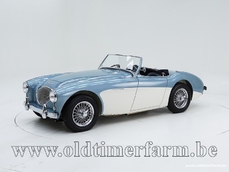
Austin-Healey 100
89950€
Aalter
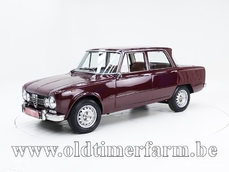
Alfa Romeo Giulia
12500€
Aalter
About Singer
Singer was a well-known name in both sewing machines and automobiles. The Singer brand expanded into car manufacturing in the early 20th century, producing cars that were notable for their quality, innovation, and engineering excellence. Here's a brief history and some key models of Singer cars:History of Singer Cars:
Foundation: The Singer Company began as a bicycle manufacturer in the 19th century and later diversified into sewing machines. In 1905, they ventured into car manufacturing, starting with their first prototype.
Early Years: Singer cars gained popularity for their reliability and performance. They were known for their innovative features, including advanced engine designs and sturdy chassis.
Key Models of Singer Cars:
Singer 10: Introduced in the 1910s, the Singer 10 was a small car available in various body styles. It was one of the early successful models for the company.
Singer Junior: The Junior series was introduced in the 1920s and continued into the 1930s. It was a range of small cars with different engine sizes and body styles, catering to various customers.
Singer Nine: The Singer Nine, launched in the mid-1930s, became a significant model for the company. It was known for its performance and handling, appealing to enthusiasts and drivers seeking a sporty driving experience.
Singer Le Mans: The Singer Le Mans was a sports car introduced in the late 1930s. It was named after the iconic 24 Hours of Le Mans endurance race and aimed to capture the spirit of racing.
Singer SM1500: Post-World War II, Singer introduced the SM1500, a larger car featuring a 1.5-liter engine. It was a step towards more modern designs and aimed at the family car market.
Legacy:
Singer cars were appreciated for their craftsmanship, engineering quality, and their emphasis on delivering a reliable driving experience. However, after World War II, the company faced challenges in keeping up with larger competitors, leading to financial difficulties.
In the late 1950s, Singer was acquired by the Rootes Group, a British automobile manufacturer, and the brand was gradually phased out. Despite its eventual decline, Singer cars left a legacy of well-built vehicles that were respected for their innovation and performance during their heyday. Today, vintage Singer cars are cherished by automotive enthusiasts and collectors for their historical significance and craftsmanship.