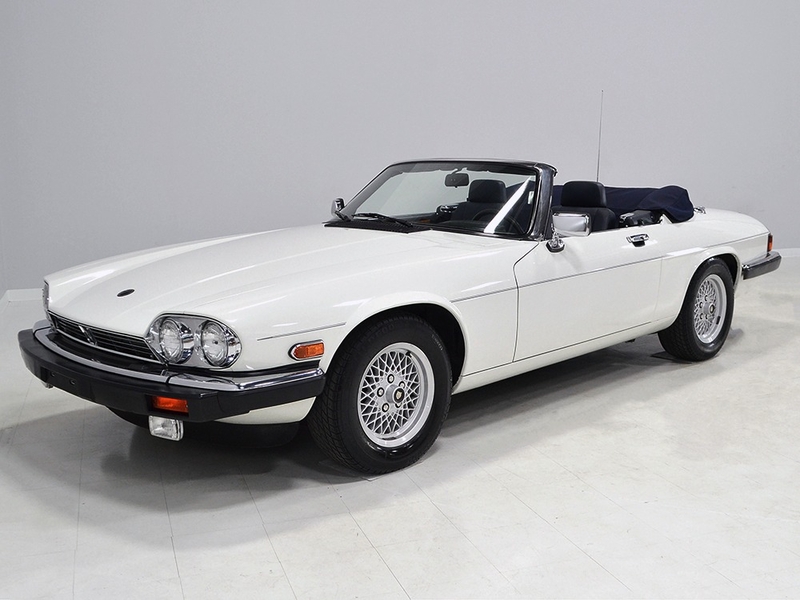

Jaguar XJS 5.3 liter SOHC V12 1990
Allgemeine Beschreibung :
There is still nothing quite like a V12. Long the choice of both luxury automakers and performance machines, twelve cylinders offer an ideal firing order with one cylinder firing every thirty degrees of crankshaft rotation, making for impeccable smoothness. And with the pistons firing that closely together, there’s an unbelievable flow of torque at almost any speed, a feeling more akin to an electric motor than an internal combustion engine. Packard and Cadillac knew it in the 1930s, Ferrari has known it since the 1950s, and Jaguar used it to great advantage in this beautiful 1990 XJ-S cabriolet. Once you’ve had twelve cylinders, you will probably find it difficult to go back to a garden-variety V8 ever again.
There’s an argument to be made that Jaguar lost something when they dropped the V12 in favor of Ford-designed V8 powerplants. At this level, exclusivity matters and there are only a handful of automakers offering V12 engines today—all of them with expensive names. Perhaps that’s why we find this gorgeous XJ-S so appealing. Legendary looks and performance, bargain-basement price. We have a very difficult time reconciling the performance and luxury embodied by this car with its very reasonable price tag.
Better yet, this XJ-S has been owned since new by just one family and shows only 31,303 original miles. It has always been lovingly maintained and never used in inclement weather, resulting in one of the finest examples we’ve seen in a very long time. By 1990, the V12’s days were numbered, as Jaguar would eventually stuff the familiar old 4.0-liter inline-6 into the XJ-S, and it’s at that point that most people stopped caring. When you see this long, low cat, even if you don’t know what it is, there’s an understanding that it’s special and expensive. The long hood, flared wheel arches, and rounded tail all suggest speed and performance, but it’s elegant at the same time, not brash. The white paint is entirely original and shines the way only a hand-rubbed paint job can, and it shows almost no signs of use and age. Yes, if you look under the chin and along the rockers you might find a few small rock chips, but the overall impression is certainly not that of a 30-year-old used car. Lustrous chrome liberally applied on the bumpers, headlights, mirrors, and windshield all give the Jag a uniquely British look that’s traditional but sleek, and a simple pinstripe along the flanks accentuates the Jaguar’s length (this is not a small car).
Nobody does interiors better than the British, starting with supple dark blue leather, plus wool carpeting, and real burled walnut on the dash. There are always the magazine clichés about a “gentleman’s club on wheels” but you will surely find that you’ve never driven a car that feels this right when your fingertips glide over the various materials and surfaces. By 1990, the XJ-S was a proper grand touring car, which means everything was standard, including power windows and locks, a powerful A/C system (complements of General Motors), a full set of gauges, and those very supportive heated leather seats. The gauges combine round speedometer and tach with delightful aircraft-style secondary indictors whose needles move vertically and the slender shifter for the automatic transmission should be mandatory study material for today’s interior designers. There are a myriad of buttons on the dash for the trip computer and AM/FM/cassette stereo, but this was the 1990s and buttons were technology. Everything works properly save for the power antenna, and it is obviously in fantastic shape with only light scuffing on the driver’s outer bolster. A matching blue canvas convertible top with heated glass rear window powers itself into a neat stack, where it’s hidden by a matching canvas boot. Jaguar dispensed with the coupe’s vestigial rear seats, instead giving the cabrio a rather nicely upholstered package shelf and a lockable storage compartment underneath. Of course, that’s in addition to the surprisingly spacious trunk, which includes a full-sized spare tire and wheel assembly as well as the battery box.
But the real reason this Jaguar is special lives under that forward-tilting hood: 5.3 liters of overhead cam V12. It’s a direct descendant of the engine used in the last of the E-Types, and was rated at a rather robust 262 horsepower and 290 pounds of torque (more horsepower than a 1990 Corvette—not too shabby!). With just over 31,000 miles, you can rest assured that it is in excellent mechanical order and you’ll be pleased to note that it has been maintained by noted Jaguar expert Earl Gibbs, who is a personal friend of the family. Yes, the V12 looks fiendishly complex under the hood, but the truth is, with a shop manual and some patience, much of the service work can be done by a handy owner and there’s truly nothing here that should cause you consternation—parts are readily available and its maintenance requirements are not excessive like, say, a Ferrari. Turn the key and the unique-sounding starter fires the fuel-injected V12 with ease and it settles into an idle that you can hear but not feel. The purr from the twin tailpipes is unlike most cars you hear today and at 5000 RPM, we promise the hairs on the back of your neck will stand up. In normal driving, it’s effortless, silent, and completely competent in everything it does. It runs cool, there’s plenty of oil pressure, and it will completely re-write the things you think you know about Jaguars and reliability. Take care of it properly and it will run beautifully for decades to come.
Better yet, you have the world’s most durable automatic transmission living behind it: General Motors’ TH400 3-speed automatic. It was the only available automatic gearbox that could withstand the V12’s torque output, and in this application, it feels quite sophisticated. Drive gently and you’ll hardly feel a shift, but prod the throttle and it clips down a gear and the V12 begins to sing its tenor wail. You’ll probably do it once or twice every time you take the car out just to hear the sound. Out back, it has ultra-tall 2.88 gears, making it a superlative highway cruiser that eats up miles without ruffling its occupants—exactly what it was designed to do. The all-independent suspension offers that incomparable Jaguar balance between nimble handling and a smooth ride and with 4-wheel disc brakes (inboard at the rear), braking power is still impressive. You can see just how clean this car really is underneath, with no signs of rust or rot and it’s even still carrying most of its original exhaust system. Factory alloy wheels are mostly unmarked and carry 235/60/15 Pirelli radials for a proper European feel.
We remain astounded by the amount of car you get for the money with an XJ-S. With new XK Jaguars (and their rather ordinary V8 engines) commanding six-figures today, getting this one for 15% of that figure has to be some kind of record. As with its peers the Mercedes SL and the Porsche 911, the XJ-S remains timeless, elegant, and well-respected. Don’t worry, we won’t tell anyone just how little you actually paid. Call today!
http://www.harwoodmotors.com/vehicles/inventory_details.php?id=892
1990 Jaguar XJS 5.3 liter SOHC V12 is listed verkauft on ClassicDigest in Macedonia by for $17900.
Fakten der Auto
Karosserietyp : Auto Marke : Jaguar Modell : XJS Ausführung : 5.3 liter SOHC V12 Hubraum : 5.3 Modelljahr : 1990 Karosstyp : Convertible Lage : Ohio
Verkauft
Angaben Zum Verkäufer
Verkauft
People who viewed this Jaguar XJS also viewed similar Jaguar listed at ClassicDigest
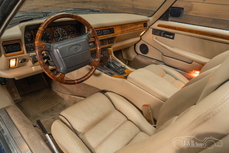
Jaguar XJS
42950 €
Waalwijk
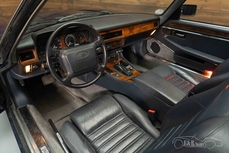
Jaguar XJS
49950 €
Waalwijk
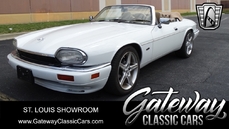
Jaguar XJS
26000 $
St. Louis

Jaguar XJS
16000 $
Houston
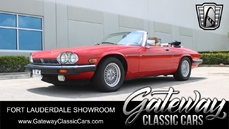
Jaguar XJS
12500 $
Ft. Lauderdale
Other cars listed for sale by this dealer
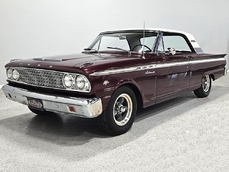
Ford Fairlane
29900$
Ohio
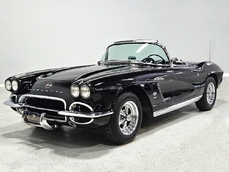
Chevrolet Corvette
89900$
Ohio
Other Other
7900$
Ohio
Ford Galaxie
59900$
Ohio
Chevrolet Corvette
84900$
Ohio
über Jaguar
Ah, die Geschichte von Jaguar, von seinen Anfängen als SS Cars Ltd. bis hin zum Höhepunkt mit dem D-Typ und der Straßenversion des ikonischen E-Typs. An dieser Erzählung haftet etwas zutiefst Britisches, und ich werde sie erzählen, wie es ein britischer Journalist tun würde.Die Anfänge:
Unsere Reise in die Welt von Jaguar beginnt in den 1930er Jahren, als ein Unternehmen namens SS Cars Ltd. auftauchte. Trotz des unglücklichen Zufalls ihrer Initialen, die mit den aufkommenden politischen Spannungen in Europa zusammenfielen, begannen sie, stilvolle und leistungsorientierte Autos herzustellen. Der SS 100, der 1936 eingeführt wurde, war ein Symbol für Eleganz und Geschwindigkeit und legte den Grundstein für das, was Jaguar werden sollte.
Die Geburt von Jaguar:
Als der Schatten des Zweiten Weltkriegs näher rückte, entschied sich SS Cars Ltd. klugerweise, sich von den SS-Initialen zu distanzieren. So wurden sie 1945 offiziell zu Jaguar Cars Ltd., ein Name, der bald für britischen Luxus und Leistung stehen würde.
Die XK-Serie:
Die Nachkriegszeit von Jaguar brachte uns den XK 120, eine wahre Sensation im Jahr 1948. Mit seinem schlanken Design und einem leistungsstarken 3,4-Liter-Sechszylindermotor wurde er zum schnellsten Serienauto der Welt. Der XK 120 war die Blaupause für das, was kommen würde - Jaguars, die Stil mit Geschwindigkeit auf einzigartig britische Weise verbanden.
Die Dominanz des D-Typs:
Dann kam der D-Typ, eine wahre Rennlegende. 1954 eingeführt, gewann er in den 1950er Jahren dreimal Le Mans und zeigte die technische Kompetenz von Jaguar. Mit seiner innovativen Monocoque-Konstruktion und der ikonischen Finne hinten war der D-Typ der Höhepunkt von Jaguars Motorsporterfolgen.
Das Auftauchen des E-Typs:
Aber der wahre Wendepunkt kam 1961 mit der Einführung des E-Typs, oft von Enzo Ferrari als "das schönste Auto, das je gebaut wurde" bezeichnet. Seine lange Motorhaube, die geschwungene Karosserie und ein 3,8-Liter-Motor, der atemberaubende Leistung lieferte, machten ihn sofort zu einem Klassiker. Der E-Typ war nicht nur ein Auto; er war ein Kunstwerk auf Rädern und konnte auf der Straße 150 Meilen pro Stunde erreichen.
Straßen- und Rennsporterfolge:
Die Schönheit des E-Typs wurde durch seine Leistung auf der Rennstrecke unterstrichen. Die leichten E-Typen waren bei verschiedenen Rennveranstaltungen besonders erfolgreich und festigten den Ruf von Jaguar als eine Kraft, mit der man im Motorsport rechnen musste.
Das Zeitalter der Raffinesse:
Je tiefer wir in die Geschichte von Jaguar eintauchen, desto mehr erkennen wir, dass die 1950er und 1960er Jahre ein Zeitalter der Raffinesse und Expansion waren. Neben dem großartigen D-Typ und dem ikonischen Aufstieg des E-Typs führte Jaguar Modelle ein, die seinen Ruf für Luxus und Leistung weiter festigten.
Der MK2:
Ende der 1950er Jahre stellte Jaguar den MK2 vor, eine Sportlimousine, die Eleganz mit Leistung vereinte. Diese elegante viertürige Limousine war sowohl bei Bankräubern als auch bei der Polizei aufgrund ihrer außergewöhnlichen Geschwindigkeit und Handhabung beliebt. Der MK2 war ein Symbol für Jaguars Fähigkeit, Raffinesse mit Leistung zu verbinden und hatte auch eine erfolgreiche Rennkarriere.
Der XJ6:
Springen wir ins Jahr 1968, als Jaguar ein Auto auf den Markt brachte, das Jahrzehnte lang Luxuslimousinen definieren würde - den XJ6. Es war ein Meisterwerk der Ingenieurkunst und des Designs, mit einem sanften Reihensechszylindermotor, unabhängiger Hinterachse und einem geräumigen, wunderschön ausgestatteten Innenraum. Der XJ6 war ein Symbol britischer Eleganz und bot eine so sanfte Fahrt, dass es schien, als würde er förmlich über die Straße gleiten. Er wurde zum Flaggschiffmodell für Jaguar und setzte den Maßstab für Luxuslimousinen und zeigte ein Maß an Raffinesse, das die Konkurrenz staunen ließ.
Die Verschmelzung von Klassik und Moderne:
Während der MK2 und der XJ6 die Evolution der Limousinen von Jaguar repräsentierten, bewahrten sie das Engagement der Marke für Leistung und Luxus. Diese Autos gehörten nicht nur auf die Rennstrecke; sie fühlten sich genauso wohl auf den Prachtstraßen wie auf einer entspannten Fahrt durch die englische Landschaft.
Die Herausforderungen des Wandels:
Dennoch sah sich Jaguar mit dem Eintritt der 1970er Jahre, wie viele britische Automobilhersteller, finanziellen Herausforderungen und Veränderungen in der Eigentümerschaft gegenüber. Die Ära von British Leyland brachte sowohl Chancen als auch Schwierigkeiten mit sich, während die Marke durch verschiedene Fusionen und Übergänge navigierte.
Das Erbe des MK2 und des XJ6, zusammen mit dem D-Typ und dem E-Typ, definiert Jaguar weiterhin als einen Hersteller, der zeitlose Eleganz mit einer Leistungsstärke vereint. Diese klassischen Modelle, ob sie über kurvige Straßen gefahren oder als Sammlerschätze geparkt werden, dienen als Zeugnis für die anhaltende Präsenz von Jaguar in der Welt der automobilen Exzellenz.
Die Jaguar-Geschichte, von ihren Anfängen als SS Cars Ltd. bis zur Schaffung von Automobilikonen wie dem E-Typ, dem MK2 und dem XJ6, ist eine Reise, die das Wesen des britischen Automobilbaus widerspiegelt - eine Mischung aus Luxus, Leistung und Stil, die nach wie vor Enthusiasten und Kenner gleichermaßen fasziniert.