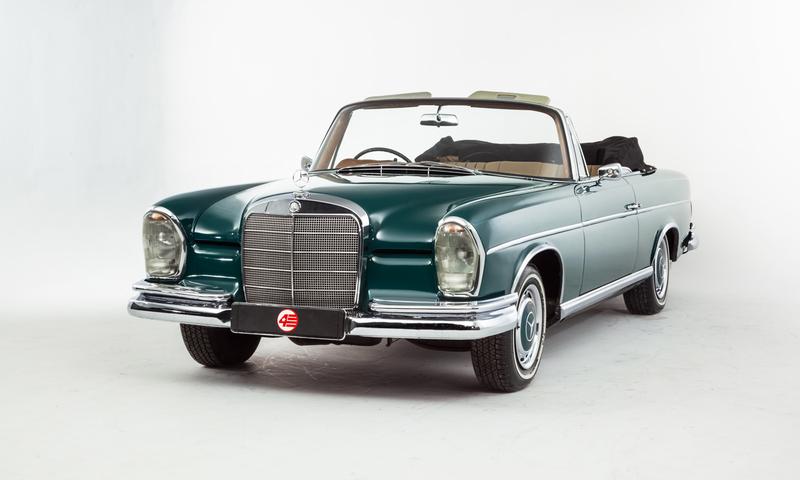

Mercedes-Benz 300SE Cabriolet w112 300 SE Cabriolet RHD 1964
Allgemeine Beschreibung :
Model History
The W112 300 SE Cabriolet was unveiled alongside its Coupé counterpart at the 32nd Geneva Motor Show in March 1962. These two-door four-seater cars were the result of Mercedes’ consistent combination of technical brilliance, impressive performance and elegant design. As the last of the great six-cylinder, two-door Mercedes, the 300 SE of the 1960s represented the German manufacturer’s unrivaled efforts to produce the best handcrafted luxury automobile possible, using only the finest materials and workmanship.
In terms of their style, both coupé and cabriolet were based on the respective variants of the W111 220 SE. The full-length floor unit was adopted from the tailfin saloon, underscoring the stately presence of both two-door vehicles with their 2.75m wheelbase and overall length of 4.88m. However, these new models did feature trim elements in addition to those of the 2.2-litre cars, as well as being equipped with the engine and technology of the 300 SE saloon. Initially, the M189 IV straight-six cylinder light-alloy engine delivered 160hp at 5000rpm, having an increased output of 170hp at 5400rpm from 1964 onwards. Depending on the rear-axle ratio and the engine installed, coupé and cabriolet could reach top speeds of between 108mph and 121mph.
Standard equipment included a four-speed automatic transmission, power steering, pneumatic suspension, and a dual-circuit brake system with disc brakes all round. The additional chrome decoration consisted of a continuous trim strip in the longitudinal groove running from the headlamps to the tail lights, and distinctive trim strips on the front and rear wheel arches. In March 1963 a 4-speed manual transmission became available, and January 1964 brought the replacement of the injection system by a 6-plunger injection pump, which increased the engine’s output by 10hp to 170hp.
Production of the 300 SE Cabriolet and 300 SE Coupé was discontinued in December 1967. Over six years of production, only 708 Cabriolets emerged from Sindelfingen, and just 92 of these were in right-hand drive. The example featured here is, therefore, the most exclusive of that series.
Equipment
UK-supplied right-hand drive, 4-Speed automatic transmission, Folding soft-top in black, Instruments in English, Becker Grand Prix radio, Becker Reims short wave adapter, Complete Becker original instruction booklets, Whitewall tyres Power steering, Pneumatic suspension, Leather upholstery, Front central armrest, Rear armrest, Four-wheel disc brakes, Dash clock, Oil pressure gauge, Self-cancelling indicators, Lockable glove compartment, Original rubber boot mat, Spare wheel, Jack.
Exterior
This gorgeous W112 300 SE is one of just 92 cabriolets produced in right-hand drive. The car is finished in its original colour combo of Dark Green with contrasting Parchment leather upholstery. The paintwork is very presentable all round having been refreshed in the past, with few signs of age or wear to speak of. There are no unsightly scuffs or scrapes to the glossy finish, and all items of trim are present and correct. Some patination to the chrome is visible upon close inspection but generally a mirror shine is retained. All badges, headlamps and taillights look in particularly fine fettle, and the original black soft-top is present without any damage.
The Mercedes appears in excellent driver-quality condition overall, offering a tremendous base for further restorative work should the new keeper desire. Having seen little use under current ownership some re-commissioning will be required if it is to see regular use.
Interior
The interior is lavishly upholstered in Parchment leather with glamorous walnut trim adorning the dash fascia, instrument cluster, and A pillars. The front seats are some of the most comfortable you will find in a car of this vintage, and despite showing signs of age there is no damage to report; the rear seats remain in excellent unworn condition, as do the door panels and armrests. Edged in leather the carpets are in fine order throughout.
Glancing across the dash you’ll find the steering wheel looking fresh, the supple leather trim free of any cracks, and the original Becker radio system still in place. A really nice touch is the accompanying Becker documentation, which includes warranty cards for both the Grand Prix and Reims units. At the rear of the car the rubber mat is in great original condition having never gone brittle, and the boot floor remains solid.
ENGINE & TRANSMISSION
As a 1964 300 SE this example boasts raised compression and a larger Bosch injection pump than pre ’64 cars, resulting in an increase in performance from 160hp to 170hp. Under the bonnet the original "matching number" 3-litre straight six appears in good order. The engine feels strong on test and with almost undetectable gear changes the car is an absolute pleasure to drive.
WHEELS, TYRES & BRAKES
The Mercedes sits on 14-inch wheels with body-coloured chrome hubcaps. Each of the wheel trims present well with a bright polished finish to each rim. The wheels are wrapped in a matching set of whitewall tyres, as per original factory specification. Out on the road the disc brakes remain feeling sharp, and the smooth pneumatic suspension operates exactly as intended.
History File
This exceptionally rare UK-supplied 300 SE Cabriolet was first registered in May 1964. It was purchased by the second owner two years later but did not change hands again until 2005. It has now seen just five keepers in total, with a mere 89k miles driven.
The Mercedes is accompanied by an outstanding selection of original documentation, as detailed below. Amongst this you’ll find the original RF60 “buff logbook” registration document, invoices and correspondence from 1966 detailing the purchase made by the second owner, a selection of original 300 SE sales brochures, and the complete Becker document pack to accompany the factory-fitted radio system. The original stamped service book and owner’s manual are also present, along with a copy of the factory data card to verify the specification.
Contents of the History File as follows:• RF60 registration book• Service book• Owner’s manual• 300 SE Sales brochure• 300 SE Supplementary brochure• 300 SE Supplementary paint colours brochure• 300 SE technical specification leaflets• 1964 Mercedes-Benz price list• Becker document wallet• Becker Grand Prix/Reims operating instructions• Becker Grand Prix/Reims warranty card• Becker Grand Prix service and parts manual• Copy of original Mercedes-Benz factory data card• Invoices and correspondence dating back to 1966• MOT certificates dating back to 1978• DVLA vehicle ownership history• V5C
http://www.4starclassics.com/for-sale/mercedes-w112-300-se-cabriolet-rhd-for-sale/
1964 Mercedes-Benz 300SE Cabriolet w112 300 SE Cabriolet RHD is listed verkauft on ClassicDigest in Kingsley by 4 Star Classics for £109995.
Fakten der Auto
Karosserietyp : Auto Marke : Mercedes-Benz Modell : 300SE Cabriolet w112 Ausführung : 300 SE Cabriolet RHD Hubraum : 3.0 Modelljahr : 1964 Karosstyp : Convertible Lage : Hampshire
Verkauft
Angaben Zum Verkäufer
Verkauft
People who viewed this Mercedes-Benz 300SE Cabriolet w112 also viewed similar Mercedes-Benz listed at ClassicDigest
Mercedes-Benz 300SE Cabriolet w112
150000 €
Saxtorp
Mercedes-Benz 300SE Cabriolet w112
Hainholzweg 1 Germany 21376 Gödenstorf-Lübberstedt
Mercedes-Benz 300SE Cabriolet w112
129950 $
4576 1/2 Worth St. Los Angeles, CA 90063
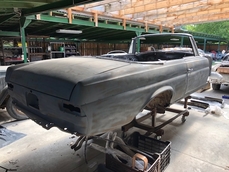
Mercedes-Benz 300SE Cabriolet w112
78000 €
Gyár u. 2 2040 Budaörs, Hungary
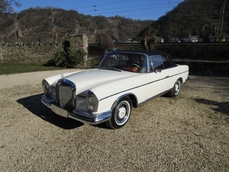
Mercedes-Benz 300SE Cabriolet w112
169000 €
Römerstr. 52 Schloß LiebigDE-56330 Kobern-Gondorf
Other cars listed for sale by this dealer
Datsun 240Z
39995£
Hampshire
Volkswagen Karmann-Ghia
36995£
Hampshire
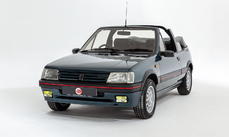
Peugeot 205
10995£
Hampshire
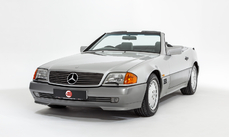
Mercedes-Benz 500SL r129
19995£
Hampshire
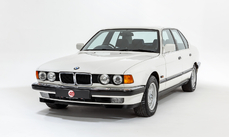
BMW 735
29995£
Hampshire
über Mercedes-Benz
In den Annalen der Automobilgeschichte entfaltet sich die Reise von Mercedes-Benz wie eine Erzählung voller Ingeniosität seiner Gründer. Im Jahr 1886 schuf Karl Benz den Benz Patent Motorwagen, eine Kreation, die als das weltweit erste Automobil in die Geschichte eingehen sollte. Unwissentlich markierte dieser Moment den Ursprung dessen, was sich zu einem weltweit renommierten Premium-Autohersteller entwickeln würde. Die finanzielle Basis dieses bahnbrechenden Unternehmens wurde interessanterweise von Karls Ehefrau, Bertha Benz, bereitgestellt, was eine bemerkenswerte Partnerschaft demonstrierte, die den Ton für das Erbe von Mercedes-Benz setzen sollte.Nicht weit entfernt entstand eine parallele Erzählung, als die Daimler-Motoren-Gesellschaft, gegründet von Gottlieb Daimler und Wilhelm Maybach, die Bühne betrat. Im Jahr 1901 enthüllten sie ihr Auto unter dem mittlerweile berühmten Namen "Mercedes", was auf Spanisch "Geschenk Gottes" bedeutet. Dieser Name wurde auf das Auto auf Wunsch von Emil Jellineks Tochter verliehen, dem Vertriebspartner der Daimler-Motoren-Gesellschaft. Die Räder der Innovation wurden in Bewegung gesetzt.
Springen wir vorwärts ins Jahr 1926, ein entscheidendes Jahr, das die Fusion von Daimler mit Benz & Cie. sah, was zur Geburt von Daimler-Benz führte. Die Fusion führte zur Übernahme von "Mercedes-Benz" als das renommierte Markenzeichen für ihre Automobile und verschmolz die Legenden zweier visionärer Unternehmen zu einer.
Entgegen konservativen Wahrnehmungen entfaltet sich die Geschichte von Daimler-Benz als Chronik von Branchenneuheiten. Von der Einführung des Wabenkühlers über den Schwimmervergaser bis zur bahnbrechenden Einführung von Vierradbremsen im Jahr 1924 trieb Daimler-Benz kontinuierlich die Grenzen der automobilen Innovation voran. Der Dieselantrieb des Mercedes-Benz 260 D im Jahr 1936 markierte den Beginn von Dieselmotoren in Personenkraftwagen. Der ikonische Mercedes-Benz 300SL Gullwing schrieb Geschichte als das erste Auto mit direkter Kraftstoffeinspritzung, wenn auch der winzige 2-Takt-Motor des Gutbrod Vorrang beanspruchen kann.
Sicherheitsinnovationen wurden zum Markenzeichen, mit Béla Barényis patentiertem Sicherheitszellen-Design in den "Ponton"-Modellen im Jahr 1951, das Front- und Heck-Knautschzonen umfasste. Der W116 450SEL 6.9 führte die Einführung des Antiblockiersystems (ABS) ein, eine weitere wegweisende Sicherheitsfunktion. Vom ersten serienmäßigen Airbag bis hin zu vielen weiteren Innovationen wurde das Erbe der "Ersten" weiter in das Gewebe von Daimler-Benz eingeschrieben.
Auf seiner über hundertjährigen Reise hat Mercedes-Benz nicht nur Autos produziert, sondern automobile Ikonen geschaffen. Der SSKL, 710 SSK Trossi Roadster, 770K Grosser, 540K Spezial Roadster, 300SL Gullwing, W100 600 Pullman, W111 280SE 3.5 Flachkühler, W113 230SL Pagode, W109 300 SEL 6.3 und W201 2.3-16 Cosworth sind Zeugnisse des Engagements der Marke für Ingenieurkunst.
Die donnernden Silberpfeile, oder "Silberpfeile", darunter der W 25, W 125, W154, W165 und W196, schufen ein Erbe der Dominanz auf der Rennstrecke. Diese Maschinen waren nicht nur Autos; sie waren Ausdruck von Präzision, Geschwindigkeit und einem unbezwingbaren Geist, der die Konkurrenz im Staub zurückließ.
Während Mercedes-Benz in die Zukunft schreitet, tut es dies nicht nur als Automobilhersteller, sondern als Hüter eines Erbes, als Fackelträger der Innovation und als Leuchtturm automobiler Exzellenz. Der Weg in die Zukunft wird zweifellos die Fortsetzung der Verschmelzung von modernster Technologie, zeitlosem Design und dem unerschütterlichen Engagement für die Festlegung neuer Standards in der Welt der Automobile erleben.