
Mercury Comet 289 cubic inch V8 1964
Allgemeine Beschreibung :
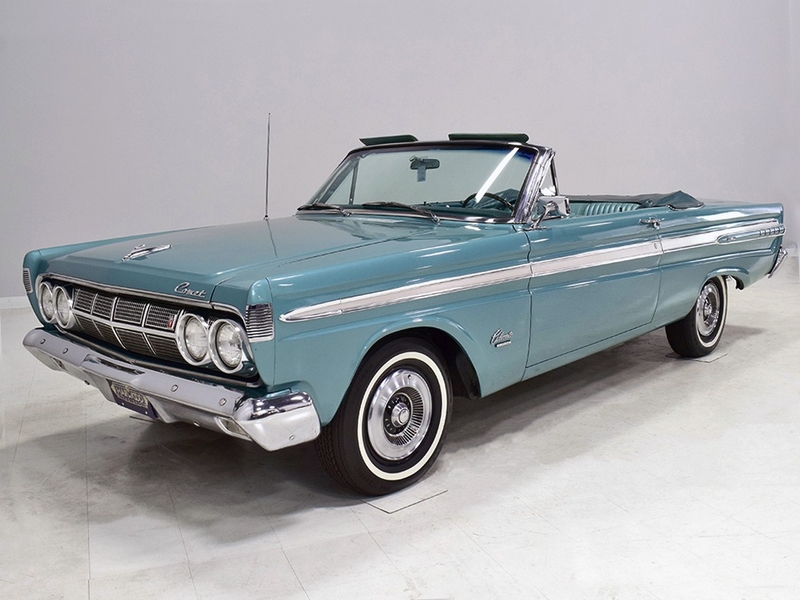
We’ve seen a remarkable uptick in Mercury Comet interest in the last two years and in our opinion, it’s long overdue. Mercury’s compact has lived in the Mustang’s shadow (and to a lesser extent, the Falcon’s) for decades, but in the last two years, we’ve sold almost a dozen of these upscale compacts. And the surprising thing is, there are usually buyers fighting over them. That’s not sales hype, that’s a fact that even took us by surprise. We’re guessing that the new surge in interest is driven by the fact that a lot of people owned these when they were new and are now looking to relive those days, which is what drives the entire hobby. It may also be due to the fact that Mustang prices are going up rather rapidly and smart buyers understand that the Comet/Falcon twins offer all the fun of a Mustang on a much more reasonable budget. For example, if this K-code Mercury Comet Caliente convertible were a Mustang, the price would probably be $10,000 higher. Take a look and I think you’ll understand.
Most importantly, this wonderful little ragtop is almost 100% original, including the interior and top. It was repainted once about 10 years ago in its original code D Silver Turquoise—not a great name but an accurate description. It’s rather handsome and has a bright metallic undertone that makes it look quite unlike the pastels of the previous decade. Of course, all the sheetmetal is in fantastic condition and it doesn’t look like this car has ever seen inclement weather, because it’s 100% original bodywork. The doors fit well and close with authority, the long stainless side trim lines up evenly, and the paint has a wonderful soft shine that seems quite appropriate, although it’s probably better than new in some ways. All the factory trim remains in place, and since the Caliente was the top-of-the-line, it got a lot of bright work. There’s a handsome ornate grille, those neat gills at the leading edges of the fenders, and the wonderful taillights that use a three-element design to give it a very distinctive look. The bumpers are excellent, particularly for 1964 chrome, and the rest of the trim has a very consistent appearance that works well.
The interior is entirely original, including the seat covers and carpets, and it’s in fantastic condition. We had a split in the driver’s lower cushion professionally repaired (it is not visible in photos but it does show up in the video) and it’s almost invisible today. Otherwise, it’s in excellent shape with no issues. The seats are all firm and comfortable, the door panels are beautifully detailed, and all the woodgrained inserts are still bright and clear. You’ll also note that the upscale steering wheel is in excellent condition, the dash pad hasn’t been cooked by the sun, and there’s a full array of fully functional gauges plus a fully functional factory AM radio that actually sounds great! The 61,573 miles showing on the odometer are authentic and the car does indeed feel like a machine that has been well-maintained and sparingly driven all its life. Even the original AM radio is still in the dash, although it is sadly no longer operational (a modern radio would be a nice upgrade in this cruiser). Overhead, the power convertible top also appears to be original and it’s extremely nice, with no splits or tears and only some mild discoloration on the plastic rear window. It’s pretty impressive. The trunk is also beautifully preserved with the original mat, full-sized spare (maybe not the original spare tire, but certainly an ancient one), and a complete jack assembly. You will note that the quarter panels are untouched and the factory spot welds are still clearly visible on the trunk floor. This has NEVER been a rusty car.
The fifth digit in the VIN is a K, which means a 289 cubic inch V8 with a 4-barrel carburetor lives under the hood. It’s not the legendary K-code that would be introduced in Mustangs in 1965, but rather what would become the A-code engine with 225 horsepower on tap. It is the car’s original engine and in the lightweight Comet, performance is extremely impressive. The engine bay is nicely detailed with correct black engine enamel and gold tinwork, along with reproduction decals and a fresh tune-up using Motorcraft parts. Turn the key and it fires easily and idles well, offering a nice V8 burble from the twin tailpipes and a bit of a surprising attitude for such a low-key little car. In 1964, it would have been a mistake to tangle with this Comet on the street. It’s also happy to trundle around town where the power steering makes it a breeze to handle, and it never gets hot or fussy under any condition. There’s a big swell of torque at almost any speed and the C4 3-speed automatic transmission is always ready with a quick downshift to really make this little ragtop fly. I bet you’ll be surprised (and pleased!) with the way this one runs!
The undercarriage bears out the car’s low mileage and winter-free history because it’s extremely clean. No undercoating to hide any details, although at some point it was sprayed satin black over the original red oxide primer. The floors are crisp and solid, all the chassis reinforcements are in place, and factory spot welds are clearly visible on the rockers. The transmission was rebuilt just last year, there are newer shocks all around, the brakes were recently serviced, and the exhaust system is only a few years old and sounds great. Ride and handling are very much like a Mustang, although the Comet is a bit more luxurious so you’ll find it’s a bit softer and more comfortable on today’s roads. The original rear end is full of 2.80 gears, making it comfortable on the highway and the torquey 289 doesn't seem to mind at all. That fantastic ride quality is likely helped by those recent 195/75/14 whitewall radials that look a great deal like vintage bias-plys.
This car includes plenty of documentation, including a shop manual, service receipts, club publications, and other interesting papers. It also comes with a matching set of fender skirts that are ready to install if you like the look.
These little cars are red hot right now and this is one of the best we’ve had yet. The preservation is extremely impressive, but we like how it drives even more. This is one of those unusual finds that over-delivers on the promises made by its appearance. Fast, comfortable, and inexpensive to maintain, it’s a great hobby car for the guy who wants something a little out of the ordinary. Call today!
http://www.harwoodmotors.com/vehicles/inventory_details.php?id=998
1964 Mercury Comet 289 cubic inch V8 is listed verkauft on ClassicDigest in Macedonia by for $27900.
Fakten der Auto
Karosserietyp : Auto Marke : Mercury Modell : Comet Ausführung : 289 cubic inch V8 Hubraum : 0.0 Modelljahr : 1964 Karosstyp : Convertible Lage : Ohio
Verkauft
Angaben Zum Verkäufer
Verkauft
People who viewed this Mercury Comet also viewed similar Mercury listed at ClassicDigest
Mercury Comet
Arlington

Mercury Comet
27900 $
Port Charlotte
Mercury Comet
38900 $
Port Charlotte
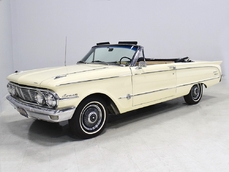
Mercury Comet
19900 $
Ohio
Mercury Comet
19995 $
Dallas/Fort Worth
Other cars listed for sale by this dealer
Ford Fairlane
29900$
Ohio
Chevrolet Corvette
89900$
Ohio
Other Other
7900$
Ohio
Ford Galaxie
59900$
Ohio
Chevrolet Corvette
84900$
Ohio
über Mercury
Mercury, die Automarke, hat eine reiche Geschichte, die über ihre Rolle in der Anpassungs- und Hot-Rodding-Szene hinausgeht, insbesondere mit dem ikonischen Mercury Eight. Hier sind einige wichtige Punkte über Mercury:Gründung und Frühe Jahre:
Mercury wurde 1938 von der Ford Motor Company als Mittelklassemarke eingeführt und positionierte sich zwischen den erschwinglichen Ford-Modellen und der Luxus-Lincoln-Reihe. Die Marke sollte die Lücke zwischen diesen beiden Segmenten füllen.
Mercury Eight:
Der Mercury Eight, eingeführt im Jahr 1939, ist vielleicht das bekannteste Modell in der Geschichte der Marke. Er zeichnete sich durch ein elegantes Design und einen leistungsstarken V8-Motor aus. Dieses Modell wurde für die Anpassung und das Hot-Rodding populär und hat einen bedeutenden Platz in der amerikanischen Automobilkultur eingenommen.
Kultur der Anpassung:
Der Mercury Eight mit seinem unverwechselbaren Design und einem relativ erschwinglichen Preis wurde zu einem Favoriten unter den Bauherren von maßgeschneiderten Autos. Er spielte eine entscheidende Rolle in der Entwicklung der Kultur der maßgeschneiderten Autos und Hot Rods, insbesondere in der Nachkriegszeit.
Lead Sleds und Anpassung:
Der Begriff "Lead Sled" wird oft mit stark angepassten Autos aus den 1940er und 1950er Jahren in Verbindung gebracht. Diese Autos, einschließlich des Mercury Eight, wurden oft mit tiefergelegten Aufhängungen, gekürzten Dächern und anderen stilistischen Veränderungen modifiziert. Lead Sleds waren ein herausragender Bestandteil der Kultur der maßgeschneiderten Autos, und der Mercury Eight war eine beliebte Wahl für solche Modifikationen.
Wohlstand der Nachkriegszeit:
In der Nachkriegszeit erlebte Mercury, wie viele andere amerikanische Automobilhersteller, einen Aufschwung der Popularität, als die Wirtschaft florierte. Die Marke trug zur Faszination für stilvolle und leistungsstarke Autos dieser Ära bei.
Entwicklung von Modellen:
Im Laufe der Jahre produzierte Mercury verschiedene Modelle und trug so zum Angebot von Ford bei. Einige bemerkenswerte Modelle sind der Mercury Monterey, der Mercury Comet und der Mercury Cougar.
Niedergang und Einstellung:
Trotz Phasen des Erfolgs hatte Mercury Schwierigkeiten, eine eindeutige Identität neben Ford zu etablieren. Mit dem Wandel der Verbraucherpräferenzen kämpfte die Marke, und Ford kündigte schließlich 2010 die Einstellung von Mercury an.
Erbe in der Populärkultur:
Mercury, insbesondere Modelle wie der Mercury Eight, nimmt einen bedeutenden Platz in der amerikanischen Populärkultur ein. Die Verbindung zur Szene der Anpassung und des Hot-Rodding sowie das unverwechselbare Design haben einen nachhaltigen Einfluss hinterlassen.
Zusammenfassend lässt sich sagen, dass der Mercury Eight für seine Rolle in der Kultur der Anpassung und des Hot-Rodding gefeiert wird, während Mercury als Marke eine breitere Rolle in der Automobilgeschichte spielte, indem sie zum mittelpreisigen Segment beitrug und die Automobil-Trends ihrer Zeit widerspiegelte.