
Volkswagen 1600 Typ3 1.6L flat four-cylinder 3 Squareback Station Wagon 1971
Allgemeine Beschreibung :
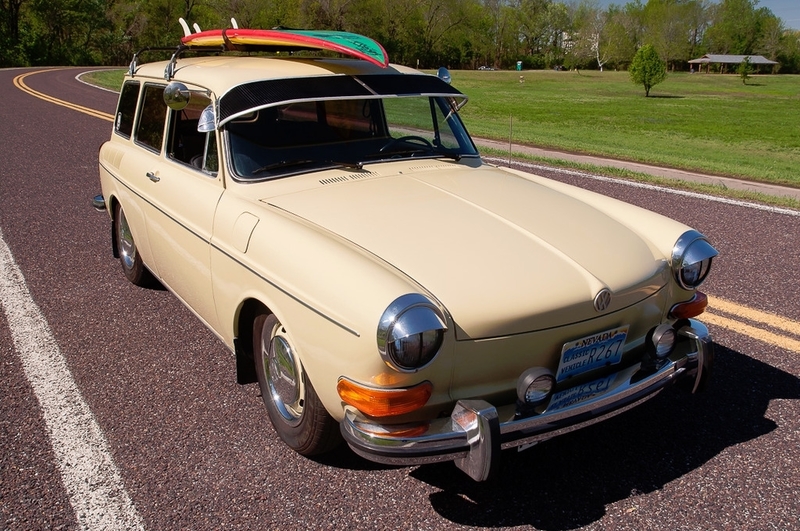
1971 Volkswagen Type 3 Squareback
VW wagon from the dry southwest state of Nevada
1.6L flat, air-cooled four-cylinder engine with factory fuel injection and new electronics
Type 3 was the world’s first volume production car to feature fuel injection
Four-speed manual transmission
New, factory correct Shantung Gold (code L12D) paint with black interior and new carpet and original interior paint
Factory disc brakes
Vintage Thule roof rack, sun visor and Dana surfboard
Lowered body
Custom stereo speaker under dash
Volkswagen fans who wanted more space than the Beetle offered but did not require the cavernous room of the Transporter chose one of the three Type 3 models, the Fastback, the Notchback (sedan) or the Squareback (wagon). This rarely seen VW hails out of the arid state of Nevada!
MotoeXotica Classic Cars is pleased to present this 1971 Squareback, finished in new and factory correct Shantung Gold (code L12D). It was made in September 1970 at VW’s Wolfsburg, West Germany factory. The paint and trim are in overall very good order. The headlights and windshield all have visors plus a vintage Thule roof rack and a Dana surfboard. The rear window is complete with a defroster grid. The wagon’s bodywork is straight and solid; the body has been lowered as well. The chrome bumpers with bumper guards are in very good condition. A pair of foglights perch above the front bumper.
This Squareback rolls on Federal radials, size 165/60R15 at each corner. Each one is mounted on body-colored, slotted wheels with chrome center caps. The tires are in good, original condition while the wheels are in very good order.
In back, under the cargo floor is a 1.6L flat, air-cooled four-cylinder engine with factory fuel injection and new electronics. The motor is linked a four-speed manual transmission. This VW also has factory front disc brakes. The Type 3 was the first Volkswagen front suspension to incorporate transverse round torsion bars.
Inside, the high-back, black vinyl seats are in very good order, its matching carpet is new, while the headliner is in good, original order but the dash has some cracks. The two-spoke steering wheel, instrument panel and inner door liners area all in good, original order but the horn, wipers and odometer are inoperable. A Pioneer AM/FM stereo with CD player and a custom speaker under the dash rounds out the interior.
The Volkswagen Type 3 is a compact car that was manufactured and marketed by Volkswagen from 1961 to 1973. Introduced at the 1961 Frankfurt Motor Show, Internationale Automobil-Ausstellung (IAA), the Type 3 was marketed as the Volkswagen 1500 and later as the Volkswagen 1600, in three body styles: two-door Notchback, Fastback and Squareback, the latter marketed as the 'Variant' in most markets and 'Squareback' in the United States.
The Type 3 diversified Volkswagen's product range beyond the existing models – the Type 1 Beetle, Type 14 Karmann Ghia, Type 2 (Bus) – while retaining several of the Beetle's key engineering principles, notably the air-cooled rear-engine, rear-wheel drive layout and all-round torsion bar suspension on the same 94.5-inch wheelbase. The concept of the type 3 was to let it be more of a family car than the Beetle, offering more passenger and luggage space and a larger engine.
The model received a facelift in 1970, when a 4.5-inch nose-lengthening, added 1.5 cubic feet to the luggage capacity. At the same time, it got new big square-section bumpers and much larger tail lamps and front indicators.
Wagon competition to this VW in 1971 included Chevrolet’s Vega Kambako, Datsun’s 1200, Dodge’s Colt, Ford’s Pinto and Toyota’s Corolla.
This Squareback is dressed for the beach and ready to help its driver catch some tasty waves. If you’re interested in classic Volkswagens or if you have a thing for wagons or estates, this Squareback would make an eclectic addition to anyone’s collection. Stop by today to check it out for yourself!
VIN: 3162035433
This car is currently located at our facility in St. Louis, Missouri. Current mileage on the odometer shows 497 miles. It is sold as is, where is, on a clean and clear, mileage exempt Nevada title. GET OUT AND DRIVE!!!
Or copy & paste link below into your browser:https://youtu.be/wIKaq8L-2J0
https://www.motoexotica.com/inventory/inventory/15277/1971/Volkswagen/3162035433.html
1971 Volkswagen 1600 Typ3 1.6L flat four-cylinder 3 Squareback Station Wagon is listed verkauft on ClassicDigest in Fenton (St. Louis) by for Preis nicht verfügbar.
Fakten der Auto
Karosserietyp : Auto Marke : Volkswagen Modell : 1600 Typ3 Ausführung : 1.6L flat four-cylinder 3 Squareback Station Wagon Hubraum : 0.0 Modelljahr : 1971 Karosstyp : Kombi Lage : Fenton (St. Louis)
Verkauft
Angaben Zum Verkäufer
Verkauft
People who viewed this Volkswagen 1600 Typ3 also viewed similar Volkswagen listed at ClassicDigest
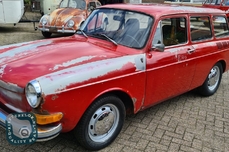
Volkswagen 1600 Typ3
5950 €
Reijmerweg 78A 6871 HG Renkum, Netherlands
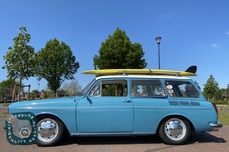
Volkswagen 1600 Typ3
14950 €
Reijmerweg 78A 6871 HG Renkum, Netherlands
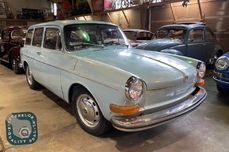
Volkswagen 1600 Typ3
Reijmerweg 78A 6871 HG Renkum, Netherlands
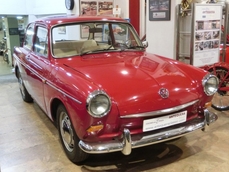
Volkswagen 1600 Typ3
12000 €
VALENCIA (SPAIN)
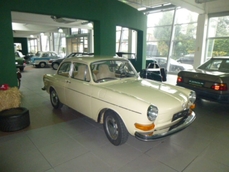
Volkswagen 1600 Typ3
16900 €
Weinsheimerstrasse 39DE-67547 Worms
Other cars listed for sale by this dealer
Fiat Coupe
15500$
Fenton (St. Louis)
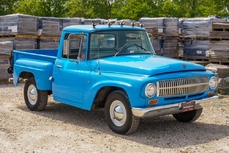
International C-1100
Fenton (St. Louis)
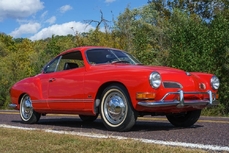
Volkswagen Karmann-Ghia
Fenton (St. Louis)
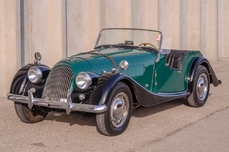
Morgan Plus 4
Fenton (St. Louis)
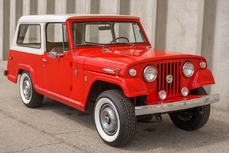
Willys Jeepster
Fenton (St. Louis)
über Volkswagen
Die Volkswagen-Geschichte ist in der Tat eine faszinierende Geschichte von Innovation, Belastbarkeit und Wiederbelebung nach dem Krieg, die von verschiedenen Modellen gekennzeichnet ist, die in der Automobilgeschichte zu Ikone geworden sind.Das Volksauto (Volkswagen): Zunächst von Adolf Hitler in den 1930er Jahren als "Volksauto" oder "Volkswagen" auf Deutsch vorgestellt, war die Idee, ein erschwingliches und praktisches Fahrzeug für das deutsche Volk zu schaffen. Dieses Konzept führte zur Entwicklung des von Ferdinand Porsche entworfenen Volkswagenkäfers (oder des Typ 1).
Nachkriegsherausforderungen: Nach dem Zweiten Weltkrieg stand Volkswagen erhebliche Herausforderungen. Die Fabrik war stark beschädigt, und die Verbindung der Marke mit dem NS -Regime führte in einigen Regionen zu einem mangelnden Interesse an dem Auto.
Britische Intervention - Die britische Armee & Ivan Hirst: Die britische Armee übernahm die Kontrolle über die Fabrik in der unmittelbaren Nachkriegszeit. Major Ivan Hirst, ein Offizier der britischen Armee, spielte eine entscheidende Rolle bei der Wiederbelebung von Volkswagen. Er erkannte das Potenzial des Käfers und setzte sich für seine Produktion ein. Er überzeugte das britische Militär, mehrere tausend Autos zu bestellen. Diese Entscheidung hat dazu beigetragen, die Wiederbelebung der Marke zu starten.
Exporterfolg und der globale Anziehungskraft des Käfers: Der Käfer gewann nicht nur in Deutschland, sondern auch weltweit an Popularität und wurde zu einer Ikone des erschwinglichen Fahrwerks. Das einfache, zuverlässige Design und das einzigartige Erscheinungsbild machten es zu einem Favoriten unter den Verbrauchern weltweit.
Modellentwicklung: Im Laufe der Jahre führte Volkswagen verschiedene Modelle neben dem Käfer ein, wobei jeder zum Wachstum der Marke beitrug:
Typ 2 (VW -Bus oder Transporter): In den 1950er Jahren wurde er in den 1960er Jahren zu einem ikonischen Symbol der Hippie -Bewegung eingeführt und wurde wegen seiner Geräumigkeit und Vielseitigkeit geliebt.
Golf (Kaninchen in den USA): Der Golf (oder Kaninchen in den USA) wurde Mitte der 1970er Jahre ins Leben gerufen und markierte eine Verlagerung in Richtung Frontantrieb, modernes Design und Schrägheckpraktikabilität und wurde zu einem Eckpfeiler des Erfolgs der Marke.
Passat, Jetta und andere Modelle: Volkswagen erweiterte seine Aufstellung mit Modellen wie dem Passat und Jetta, die sich für verschiedene Marktsegmente befassen.
Herausforderungen und Innovationen: Trotz des Erfolgs stand Volkswagen vor Herausforderungen, einschließlich Qualitätsproblemen in den 1970er Jahren. Die Marke hat jedoch weiterhin neue Modelle und Technologien entwickelt und entwickelt.
Aufstieg des GTI und globaler Expansion: In den 1980er Jahren stieg der legendäre Golf GTI auf, eine Hochleistungsversion, die den Trend der heißen Luke auslöste. Volkswagen erweiterte auch seine globale Präsenz in diesem Zeitraum.
Die britische Intervention bei der Wiederbelebung von Volkswagen nach dem Zweiten Weltkrieg spielte eine entscheidende Rolle bei der Wiederbelebung der Marke. Während es in den 1950er und 1960er Jahren aufgrund des Erfolgs von Volkswagen in den 1950er und 1960er Jahren möglicherweise einige Spannungen oder einen Wettbewerb zwischen Automobilunternehmen gegeben hat, hat die Fähigkeit der Marke, innovative und beliebte Modelle zu produzieren, ihren Platz in der Automobilgeschichte festigend.