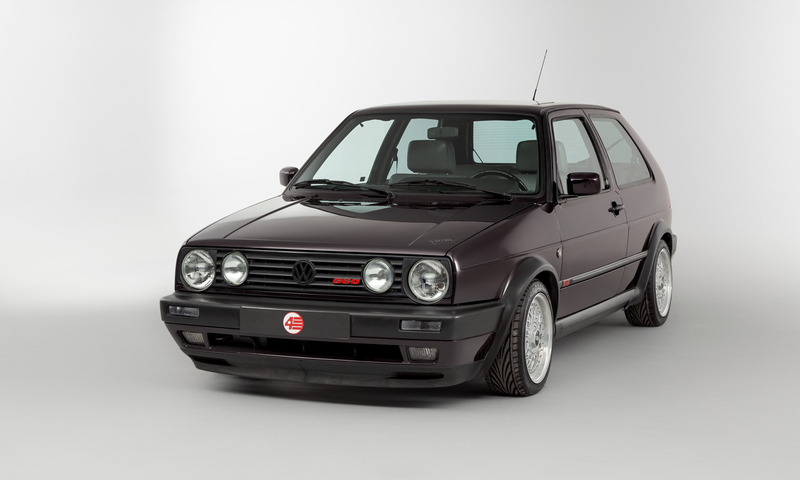

Volkswagen Golf GTI G60 1991
Allgemeine Beschreibung :
Model History
The Mk2 Golf succeeded the Mk1 from 1983 and remained in production until late 1992. Volkswagen reportedly spent £500 million developing the Mk2. The car slightly grew in wheelbase, with greater exterior and interior dimensions over its predecessor. Despite this it still retained the overall look of the Mk1, albeit slightly rounder to improve aerodynamics and reduce drag. During the life of the Mk2 there were a variety of updates and revisions to styling and trim, the most notable was the introduction of “big bumpers” for the European market during the August 1989 facelift.
The success of the Mk1 GTI was continued with the sporty Mk2 GTI, and to capitalise on the worldwide success of the Mk1, VW chose to release the Mk2 GTI in the same year as the rest of the fleet. It featured a 1.8-litre 8v engine with a more powerful 16v variant following shortly. The 8v was particular popular for its low-down torque and excellent driveability. During its midlife update the 8v unit benefited from the introduction of a Digifant engine management system.
The early ‘90s saw the development of some interesting new models from VW. The LHD-only GTI G60 came about following research done by Volkswagen on their 1987 Polo GT G40 project, a 1300cc supercharged pocket rocket capable of hitting 120mph+ from the box. Although based on the 1781cc EA111 series unit, the G60’s engine bore little resemblance to the original 8v GTI lump, with pretty much every part being different by the time VW had finished modifying it. The ‘G’ in G60 was derived from the shape of the supercharger scrolls, while the ‘60’ related to the ‘charger’s 60mm inlet size.
The GTI G60 looked very similar to the GTI 16v of the day, but featured a few structural differences invisible from the outside. For example, the windscreen was bonded in to increase the rigidity of the shell, and the tunnel running through the centre of the car was larger, as taken from the Golf Syncro. The G60 was also available as a number of special editions. The Edition One – as featured here – is one such example. Colour choices were limited to Dark Burgundy Pearl (also known as Aubergine), Pearl Grey, or Brilliant Black Metallic. The Edition One featured a number of special upgrades over the standard G60 and was only available with a Mauritius Blue Recaro interior, although leather could be specified for an additional charge.
Equipment
Dark Burgundy Pearl (Aubergine) paintwork, Grey leather upholstery, Two-piece BBS alloy wheels, “Edition One” bonnet decal, “Wolfsburg Edition” front wing emblems, All-black grille, Body-coloured door mirrors, Wider wheel arch flares, Partially tinted rear lights, White front indicators, Black rear VW badge, Four-spoke leather steering wheel, Leather gear knob and handbrake grip, Tinted rear windows, Multi-function display (MFA), Manual sunroof, Air conditioning, Electric windows, Electric door mirrors, Coilover suspension, Viper Alarm, Alpine head unit, Tailored overmats, Spare key.
Exterior
This rare ‘Edition One’ G60 looks great in desirable Dark Burgundy Pearl (Aubergine), the paintwork still presenting to an excellent standard throughout - our studio photos really don’t do it justice! Looking closer the body appears very straight indeed, with even shut lines and a deep, uniform colour across every panel. There are no unsightly dents or scratches to report, the only area that could benefit from some light cosmetic attention being a small blemish on the offside front wing. An expected light dusting of stone chips is also visible at the front end, further evidencing the car’s honesty.
Aubergine is one of only three colours that were available to the Edition One, and it may very well be the rarest. Other special and unique ‘Edition One’ features to note are the wider wheel arch flares, “Wolfsburg Edition” emblems, white front indicators, partially tinted rear lights, body-coloured mirror casings, black rear VW badge, and the all-black front grille. Amazingly even the original bonnet decal is still present, although now somewhat faded.
VIEWINGS WELCOME BY APPOINTMENT ONLY /// ADDITIONAL PHOTOS AVAILABLE UPON REQUEST
Interior
A G60 Edition One is rare enough, but an Edition One with leather is almost unheard of! The light grey upholstery and carpets are a welcome contrast against the Dark Burgundy paintwork and make for an airier cabin. Sitting inside, the seats are still notably supple and the bolsters maintain excellent shape; the complementing leather door cards also look great with minimal wear to be found. Original Edition One details such as the leather-rimmed steering wheel, leather gear knob and handbrake grip have all worn extremely well, as have the dash and centre console with no damage to report. In the rear the seats appear almost unused, and in the footwells the carpets are protected by a set of tailored overmats. The original data sticker is still inside the boot confirming that it's an original G60.
ENGINE & TRANSMISSION
The engine bay is wonderfully clean and tidy, a real treat for the enthusiast with no signs of any damage or poor repair. Originally a German-supplied car with stamped VW history until 84k miles, this G60 has been looked after primarily by Jabba Sport since arriving in the UK in 2010. Invoices within the History File show plenty of engine work to have been carried out, including a Stage 4 supercharger rebuild (Jabba Sport certificate present). The clutch has also been replaced within the last few thousand miles.
WHEELS, TYRES & BRAKES
The G60 sits on two-piece BBS alloys in fine condition. There is no curb marking to be found and the wheels are wrapped in a matching set of 195/45 R15 Toyo tyres, as fitted around 800 miles ago. The brakes also appear in fine fettle showing plenty of life left; the brake fluid and two calipers were replaced in 2018.
History File
This rare G60 was first registered in Germany in March 1991. The original service book is still present and is stamped up to 84k miles, all by VW main agents. Since arriving in the UK in 2010 the car has been primarily maintained by marque specialists, Jabba Sport, who have carried out plenty of engine work including a Stage 4 supercharger service and upgrade.
Upon arrival into the UK the KM clocks were replaced with an MPH unit from a 16v GTI. The car was then IVA-tested, MOT’d, and registered for UK road use. The speedo was not reset to zero however the raft of UK documentation within the History File shows the car to have driven less than 7,500 miles over the last 10 years. It has been carefully dry stored when not in use and the V5C shows just two UK owners. The MOT is valid until June 2021.
http://www.4starclassics.com/for-sale/vw-golf-gti-g60-for-sale/
1991 Volkswagen Golf GTI G60 is listed verkauft on ClassicDigest in Kingsley by 4 Star Classics for £17995.
Fakten der Auto
Karosserietyp : Auto Marke : Volkswagen Modell : Golf Ausführung : GTI G60 Hubraum : 1.8 Modelljahr : 1991 Lage : Hampshire
Verkauft
Angaben Zum Verkäufer
Verkauft
People who viewed this Volkswagen Golf also viewed similar Volkswagen listed at ClassicDigest

Volkswagen Golf
Littleton, CO, 80120

Volkswagen Golf
Littleton, CO, 80120
Volkswagen Golf
17995 £
Hampshire
Volkswagen Golf
24400 €
Volkswagen Golf
14900 €
Netherlands
Other cars listed for sale by this dealer
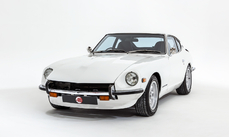
Datsun 240Z
39995£
Hampshire
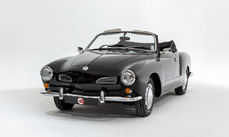
Volkswagen Karmann-Ghia
36995£
Hampshire
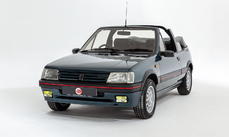
Peugeot 205
10995£
Hampshire
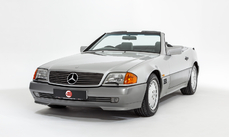
Mercedes-Benz 500SL r129
19995£
Hampshire
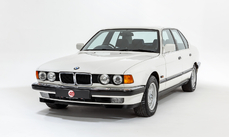
BMW 735
29995£
Hampshire
über Volkswagen
Die Volkswagen-Geschichte ist in der Tat eine faszinierende Geschichte von Innovation, Belastbarkeit und Wiederbelebung nach dem Krieg, die von verschiedenen Modellen gekennzeichnet ist, die in der Automobilgeschichte zu Ikone geworden sind.Das Volksauto (Volkswagen): Zunächst von Adolf Hitler in den 1930er Jahren als "Volksauto" oder "Volkswagen" auf Deutsch vorgestellt, war die Idee, ein erschwingliches und praktisches Fahrzeug für das deutsche Volk zu schaffen. Dieses Konzept führte zur Entwicklung des von Ferdinand Porsche entworfenen Volkswagenkäfers (oder des Typ 1).
Nachkriegsherausforderungen: Nach dem Zweiten Weltkrieg stand Volkswagen erhebliche Herausforderungen. Die Fabrik war stark beschädigt, und die Verbindung der Marke mit dem NS -Regime führte in einigen Regionen zu einem mangelnden Interesse an dem Auto.
Britische Intervention - Die britische Armee & Ivan Hirst: Die britische Armee übernahm die Kontrolle über die Fabrik in der unmittelbaren Nachkriegszeit. Major Ivan Hirst, ein Offizier der britischen Armee, spielte eine entscheidende Rolle bei der Wiederbelebung von Volkswagen. Er erkannte das Potenzial des Käfers und setzte sich für seine Produktion ein. Er überzeugte das britische Militär, mehrere tausend Autos zu bestellen. Diese Entscheidung hat dazu beigetragen, die Wiederbelebung der Marke zu starten.
Exporterfolg und der globale Anziehungskraft des Käfers: Der Käfer gewann nicht nur in Deutschland, sondern auch weltweit an Popularität und wurde zu einer Ikone des erschwinglichen Fahrwerks. Das einfache, zuverlässige Design und das einzigartige Erscheinungsbild machten es zu einem Favoriten unter den Verbrauchern weltweit.
Modellentwicklung: Im Laufe der Jahre führte Volkswagen verschiedene Modelle neben dem Käfer ein, wobei jeder zum Wachstum der Marke beitrug:
Typ 2 (VW -Bus oder Transporter): In den 1950er Jahren wurde er in den 1960er Jahren zu einem ikonischen Symbol der Hippie -Bewegung eingeführt und wurde wegen seiner Geräumigkeit und Vielseitigkeit geliebt.
Golf (Kaninchen in den USA): Der Golf (oder Kaninchen in den USA) wurde Mitte der 1970er Jahre ins Leben gerufen und markierte eine Verlagerung in Richtung Frontantrieb, modernes Design und Schrägheckpraktikabilität und wurde zu einem Eckpfeiler des Erfolgs der Marke.
Passat, Jetta und andere Modelle: Volkswagen erweiterte seine Aufstellung mit Modellen wie dem Passat und Jetta, die sich für verschiedene Marktsegmente befassen.
Herausforderungen und Innovationen: Trotz des Erfolgs stand Volkswagen vor Herausforderungen, einschließlich Qualitätsproblemen in den 1970er Jahren. Die Marke hat jedoch weiterhin neue Modelle und Technologien entwickelt und entwickelt.
Aufstieg des GTI und globaler Expansion: In den 1980er Jahren stieg der legendäre Golf GTI auf, eine Hochleistungsversion, die den Trend der heißen Luke auslöste. Volkswagen erweiterte auch seine globale Präsenz in diesem Zeitraum.
Die britische Intervention bei der Wiederbelebung von Volkswagen nach dem Zweiten Weltkrieg spielte eine entscheidende Rolle bei der Wiederbelebung der Marke. Während es in den 1950er und 1960er Jahren aufgrund des Erfolgs von Volkswagen in den 1950er und 1960er Jahren möglicherweise einige Spannungen oder einen Wettbewerb zwischen Automobilunternehmen gegeben hat, hat die Fähigkeit der Marke, innovative und beliebte Modelle zu produzieren, ihren Platz in der Automobilgeschichte festigend.