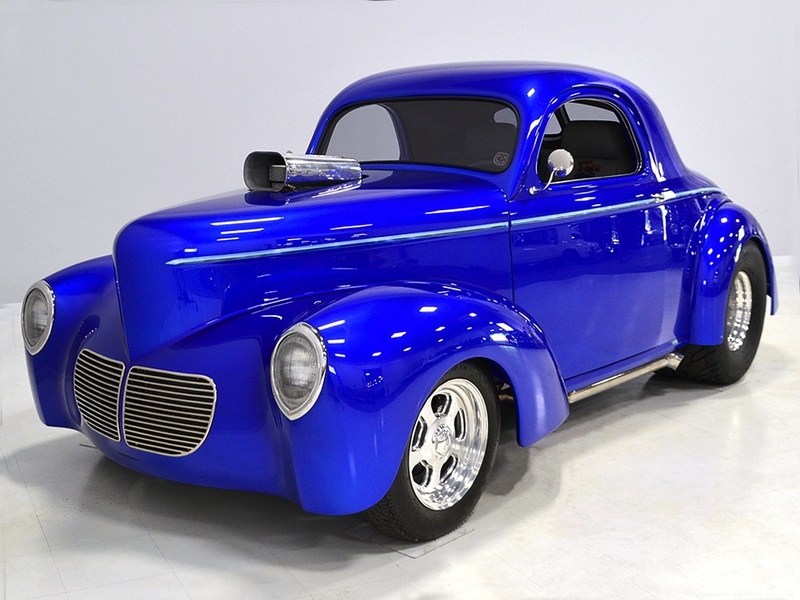

Willys Coupe 414 cubic inch supercharged V8 1940
Allgemeine Beschreibung :
We love cars because of the stories they represent. Some cars, of course, ARE the story, while others are interesting because of the story behind them. This 1940 Willys falls into the latter category, and the story tied to it is a great one indeed. It was built and owned by the legendary Barbara Hamilton, and if you don’t know who she is, well, you should be a little ashamed, but don’t worry, I’ll fill you in on all the details. But the bottom line is that this car was built and owned by one of the people who make up the foundation of the NHRA, and it represents not only some fantastic history, but also the current state-of-the-art in pro-street.
Before we dive into this incredible Willys, let’s talk about the woman who drives it. The short version is that Barbara Hamilton was the first woman to hold an NHRA competition license for supercharged cars, way back in 1962. And she wasn’t just some eye-candy for her boyfriend’s race team, she WAS the race team. Starting as a high school student in 1957, she started going to the drag strip and meeting the racers, one of whom (John Dunlap) showed her how to rebuild an engine and let her race his blown 1934 Ford with a 265 Chevy under the hood. From there, she was hooked. Shortly thereafter she borrowed $700 from her mother to buy a 1937 Willys coupe very similar to the 1940 coupe you see here, and together with her friend Nancy Leonello, they went racing with the big boys. This wasn’t just a weekend project or something they thought would be fun for a little while—they spent years and years of their free time (the ladies held day jobs at TRW) hauling that lightweight Willys around the country, winning races, and creating legends.
Barb’s ’37 coupe became legendary in its own right and the sight of it in the paddock occasionally caused other competitors to box up their cars and go home before a single flag had dropped. You can glance through the photo array and see some of the notable period photos of Barb and the Willys in action in places as far away as Pomona, and everyone one of them is legit—she is the real deal. She spent her career racing, tuning, and building cars, but she always came back to that blue Willys and it was unquestionably the car most closely associated with her. In 1992, Barb Hamilton was inducted into the International Drag Racing Hall of Fame and her original 1937 Willys remains on display in the Don Garlits Museum of Drag Racing, still wearing its trademark “Barb’s Blue” paint.
Which brings us full circle to the 1940s Willys you see here. A few years ago, Barb decided she wanted another Willys, but one she could drive to shows and events, not another race car (although the line between street and race gets very blurry when Barb is involved). They started with an Outlaw body and chassis, and while it isn’t a ’37 like her original racer, it has a very distinctive attitude that recalls the same predatory look. The body was professionally prepped and smoothed in preparation for a show-quality finish, but before they could spray the paint, Barb decided she needed to make a few changes. The most notable was to radius the rear fenders, allowing for more clearance for those giant tires—as a racer, her attitude was that the tires had to be able to be removed without taking anything else apart. So Barb herself, at age 80-something, took the saw to the fender and made it right. THEN they could finish the car. The color is still Barb’s Blue, a custom mix that is probably far more dramatic than the finish on the original Willys, but that was their guide. It’s PPG paint, and thanks to a big group of supporters, the car has a show-worthy look. It’s still pretty stock-looking, although the big hood scoop kind of gives it away. You’ll note it still has functional chrome door handles, the traditional two-piece Willys grille, and a split rear window, so it’s easy to recognize, but there are a lot of custom touches. Note that the side trim isn’t stainless, it’s an airbrushed simulation that’s quite convincing. The whole nose is a one-piece tilt unit that gives great access to the burly small block within, and the taillights were mounted flush with the rear pan. Nothing radical, mind you, but obviously the work of professionals who know what they’re doing. And as a car that would represent Barb Hamilton in the 21st century, obviously it had to be right. It is.
The car was built for combat but that doesn’t mean it’s not comfortable. This was intended to be a street car, after all. So the interior is comfortable and well-finished, with gray leather bucket seats from a late-model, custom embroidered with an image of that famous ’37 Willys. Lots of insulation makes it comfortable and details like the tilt column, full door panels, and leather-wrapped wheel make it feel far more civilized than the original. If you look closely, you’ll see that it was once fitted with a roll cage, but Barb felt that a street car shouldn’t be inconvenient to use, so the cage, plus the wheelie bars and parachute, were removed (the wheelie bars and parachute are available if you want them). A full array of Auto Meter gauges were neatly molded into the dash, including a clock up top, which is a thoughtful touch. There’s a B&M shifter on the floor, which manages a built TH400 3-speed automatic with reverse-manual valve body, so it’s a lot of fun to drive. It even has power windows and courtesy lights under the dash! This is not some half-finished race car. It also includes a very nicely finished trunk with fully upholstered fender wells, side panels, and polished stainless fuel cell.
Since her original Willys had run a small block Chevy, it was only fitting that the modern iteration do the same. Tilt the front end forward and you’re rewarded with a mountain of a Chevy small block: 414 cubic inches’ worth of stroker motor topped by a 6-71 blower. It’s an all-aluminum Donovan block so it can handle the big stroke with ease, and it’s filled with a Clay Smith camshaft, Wiseco pistons, and a Callies crank, making it combat-ready. Up top, there’s that big blower from Hampton Supercharger, plus a pair of Edelbrock 4-barrel carburetors instead of the original car's Hilborn injection, and it’s all lit up by a Vertex magneto by Taylor. Plenty of polished aluminum chrome, and more Barb’s Blue paint make it sparkle under the hood, but they didn’t build it just for show—there’s a giant aluminum radiator with twin fans up front, heavy-duty oil coolers, and a reasonable-sounding exhaust system with side pipes that’s definitely muscular but not overwhelming for a street car. And you might be wondering about those aluminum boxes in the cowl—Barb asked them to add those when they were fabricating the car because her old ’37 Willys had them and she always found them useful for storing extra plugs and hardware (you’ll note there are still a few extra nuts and bolts in there now).
The Outlaw chassis was heavily fortified in preparation for race duty, so while this is a street car it has the hardware to be competitive. The chassis is fully boxed and painted medium gray to add a detailed look that was also functional. B&M built an indestructible TH400 3-speed automatic transmission and mated it to a 3200 RPM stall torque converter that helps this Willys get off the line. A Denny’s Driveshaft aluminum driveshaft connects to a narrowed and reinforced Ford 9-inch rear end full of 3.89 gears on a Detroit Locker differential and spinning Strange axles. The front suspension is Mustang II, with rack-and-pinion steering so it’s easy to handle and light on its feet, and there are disc brakes for plenty of stopping power. Out back it’s got a familiar 4-link and there are Aldan coil-overs at all four corners. Custom 15-inch Billet Specialties wheels were made just for this car and they carry 26x7.50-15 front and giant 32x22.00-15 rear Mickey Thompson tires.
With just 505 miles on the build, this car is still incredibly fresh and fully sorted. Barb herself had a hand in making it right and she’s driven it—it was the thrill of a lifetime to climb in beside her and watch her do her thing. She still has what it takes to make a car sing and dance and horsepower obviously doesn’t intimidate her. Those massive tires spin at half throttle and the transmission cracks off lightning-fast shifts. This is a car that demands you be at the top of your game, and I have no doubt that few can make it run like Barbara Hamilton.
This is a unique opportunity to own not just a fantastic car (at a fraction of the build cost) but also a spectacular piece of history. Barb would love to sit with the new owner and tell him all about the build and drag racing history, which should be worth the price of admission all by itself. A very cool car with a spectacular pedigree, and this is one of the pioneers of drag racing who spent her entire career at the top of the sport. Call today!
http://www.harwoodmotors.com/vehicles/inventory_details.php?id=910
1940 Willys Coupe 414 cubic inch supercharged V8 is listed verkauft on ClassicDigest in Macedonia by for $69900.
Fakten der Auto
Karosserietyp : Auto Marke : Willys Modell : Coupe Ausführung : 414 cubic inch supercharged V8 Hubraum : 0.0 Modelljahr : 1940 Karosstyp : Coupé Lage : Ohio
Verkauft
Angaben Zum Verkäufer
Verkauft
People who viewed this Willys Coupe also viewed similar Willys listed at ClassicDigest
Willys Coupe
149900 $
Plymouth
Willys Coupe
90000 $
Chicago
Willys Coupe
66000 $
Louisville
Willys Coupe
119995 $
Dallas/Fort Worth
Willys Coupe
54000 $
Indianapolis
Other cars listed for sale by this dealer
Ford Fairlane
29900$
Ohio
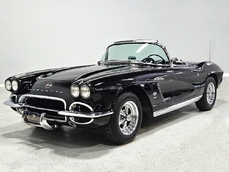
Chevrolet Corvette
89900$
Ohio
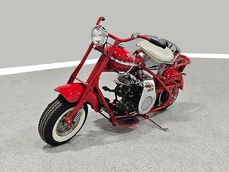
Other Other
7900$
Ohio
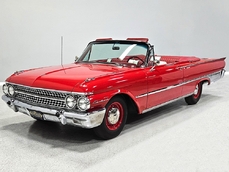
Ford Galaxie
59900$
Ohio
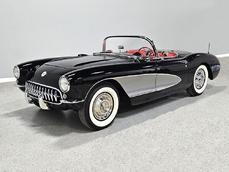
Chevrolet Corvette
84900$
Ohio
über Willys
Die Willys-Overland Company, später einfach Willys genannt, war ein amerikanischer Automobilhersteller, der eine bedeutende Rolle in der Automobilgeschichte spielte. Hier ist ein Überblick über die Geschichte von Willys:Frühe Jahre:
Gründung: Das Unternehmen wurde 1908 von John North Willys in Toledo, Ohio, zunächst als Willys-Overland Motor Company gegründet. John Willys erwarb die Overland Automotive Division der Standard Wheel Company, die das Overland-Automobil herstellte.
Früher Erfolg: Willys-Overland war in den frühen 1910er Jahren erfolgreich und produzierte Fahrzeuge wie das Overland Model 79, das aufgrund seiner Erschwinglichkeit und Zuverlässigkeit ein beliebtes Auto war.
Erster Weltkrieg:
Militärverträge: Während des Ersten Weltkriegs sicherte sich Willys-Overland bedeutende Verträge zur Lieferung von Fahrzeugen für die Kriegsanstrengungen. Die Produktionskapazitäten des Unternehmens waren für das Militär von entscheidender Bedeutung, da es Lastkraftwagen und Automobile für verschiedene Zwecke herstellte.
Einführung des Jeep:
Beitrag zum Zweiten Weltkrieg: Im Vorfeld des Zweiten Weltkriegs reagierte Willys-Overland zusammen mit anderen Automobilherstellern auf die Anfrage der US-Armee nach einem leichten, geländegängigen Aufklärungsfahrzeug. Das Unternehmen entwickelte den Willys MB, der zum legendären Jeep wurde.
Jeep Legacy: Der Jeep spielte mit seiner Robustheit, Vielseitigkeit und Zuverlässigkeit eine entscheidende Rolle im Zweiten Weltkrieg. Sein Erfolg führte zur Gründung der Marke Jeep, die für die Herstellung von Geländefahrzeugen bekannt ist, die sowohl im militärischen als auch im zivilen Bereich an Popularität gewannen.
Die Nachkriegszeit:
Zivile Jeep-Modelle: Nach dem Krieg führte Willys zivile Versionen des Jeeps ein, wie die CJ-Serie (Civilian Jeep), die eine Adaption des Willys MB aus Kriegszeiten darstellte. Diese Fahrzeuge wurden für den Offroad- und Freizeitgebrauch beliebt.
Willys' Entwicklung und spätere Jahre:
Eigentümerwechsel: Willys-Overland geriet in finanziellen Schwierigkeiten und wechselte in den Nachkriegsjahren mehrmals den Eigentümer, bis es schließlich zur Kaiser-Jeep Corporation wurde, nachdem es in den 1950er Jahren von Kaiser Motors übernommen wurde.
Ende von Willys: 1970 erwarb die American Motors Corporation (AMC) Kaiser-Jeep. Das Willys-Namensschild verschwand allmählich, als sich AMC auf die Marke Jeep konzentrierte. Später erwarb Chrysler in den 1980er Jahren AMC und führte die Produktion und Entwicklung von Jeep-Fahrzeugen fort.
Vermächtnis:
Willys‘ Vermächtnis ist in erster Linie mit seinem Beitrag zur Automobilindustrie durch die Schaffung des Jeeps verbunden, eines Fahrzeugs, das die Mobilität während des Zweiten Weltkriegs veränderte und zu einer eigenständigen Kultmarke wurde. Der Ruf des Jeeps für Langlebigkeit, Vielseitigkeit und Geländetauglichkeit entstand durch die Innovationen und den Erfolg von Willys-Overland während des Krieges.