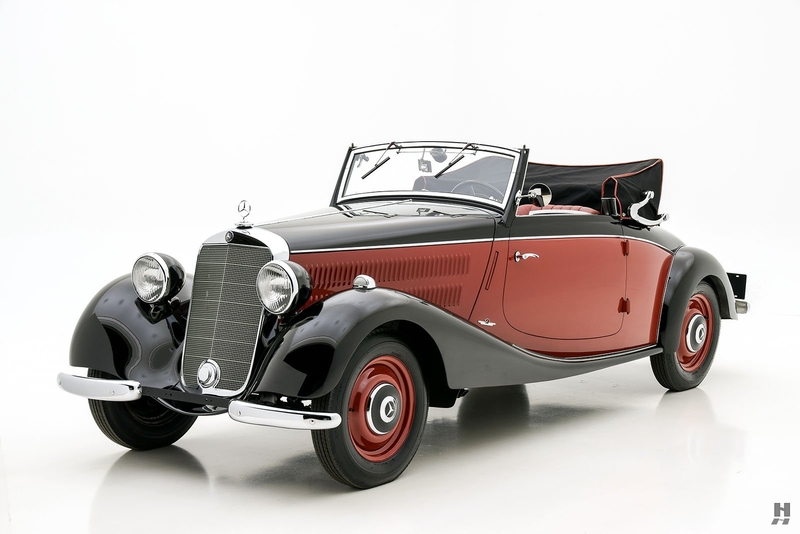

Mercedes-Benz 170V V Cabriolet 1938
General description :
Mercedes-Benz has long demonstrated the power of a diverse product portfolio. With an ethos of quality and innovation above all, Mercedes-Benz has made their mark in virtually every aspect of over the road transport, from taxicabs to Formula 1 cars, supercars to heavy trucks. Although they are most closely associated with luxury, Mercedes-Benz wisely relied upon the middle of the market to provide the majority of their sales over the years. When the luxury car market sagged in the 1930s, Mercedes-Benz was quick to realize the importance of expanding their offerings, yet crucially, they managed to do so without cheapening their brand and damaging their reputation for quality. The 170 was conceived to compete in the mid-priced market, making its debut at the Paris Auto Salon in 1931. Chassis engineer Hans Nibel designed the platform which featured revolutionary all-independent suspension in a lightweight chassis. The ride quality and handling prowess were far and above superior to other vehicles in the same class. The new model proved quite popular, with nearly 70,000 examples built before 1941.
Found within the 170 range was a wide variety of vehicles that utilized the innovative chassis. Mercedes-Benz offered it as a two- or four-door sedan, two- or four-seat cabriolet, roadster, cabrio-sedan, open touring car, Sedan Delivery, taxi, ambulance, or pickup. Eventually, the range-topping Cabriolet A was added to the mix. The Cabriolet A was a product of the prestigious Sindelfingen coachbuilding department, Mercedes’ in-house custom body builder.
Herman Ahrens arrived at Mercedes-Benz in 1932, setting up a custom coachbuilding shop at the Sindelfingen works. His reputation for quality was established at that Deutsche Industrie Werke in Berlin as well as with Horch where he designed some of that firm’s most prestigious motorcars. Alongside Walter Hacker, who joined him at Mercedes in 1933, Mercedes-Benz styling was transformed and the duo produced some of their most breathtaking designs on the 540K chassis. For buyers of somewhat more modest means than the typical 540K client, the 170 V Cabriolet offered the cachet of a Sindelfingen-designed body at a more reasonable (though still not insignificant) $1,459 in 1936. Rather than modifying a mass-produced model, each Cabriolet A was hand built alongside its more expensive stablemates. The resemblance to its larger sibling can be seen in the graceful sweep of the front wings, the taper of the bonnet as it flows from cowl to radiator grille and the elegant proportions.
Our featured example of this rare and desirable coachbuilt Mercedes-Benz was recently part of the collection of renowned contemporary American realist painter Jamie Wyeth. It was completely restored beginning in 1990 by Magno Restorations of Massachusetts and has been featured in the May/June 1997 issue of The Star magazine. It has been very well cared for since the high-quality restoration was completed, and it presents today in lovely condition. The two-tone black and red paint is period correct and highlights the handsome lines of this rare and desirable body. Beautiful concours-quality chrome work remains in excellent order and the body fit and alignment reveal this as a very high level restoration. The signature of the 170 V are the stylish steel disc wheels, in this case painted in red to complement the body sides and provide some visual pop against the black wings. The body style is simple yet finely detailed with features such as an inset rear-mount spare tire, a small “trunk” behind the top, exposed landau irons and cowl-mounted trafficators.
The cabin is trimmed in lovely dark red leather that complements the exterior paint scheme. The soft trim remains in very good condition, showing signs of light use since the restoration, but presenting with a welcoming broken-in character. Instruments, switchgear and interior brightwork are all in very good order, again showing some light use but remaining very attractive. A side-facing rear seat is fitted for the occasional second passenger, providing they don’t mind the cozy experience.
Beneath the bonnet is a simple and humble appearing 1,697 cc side-valve four-cylinder which produces 38hp. Our example is well detailed with proper fittings and hardware, though not over restored or fussy. The engine produces 38hp and delivers the power to the rear wheels via a four-speed manual transmission. Four wheel hydraulic brakes and independent suspension allow for this car to feel much younger than its 79 years. Following its high quality restoration, this car was shown at a great number of prestigious events such as Meadow Brook, Castle Hill Concours, Lime Rock Vintage Fall Festival, Radnor Hunt Concours and others. It was displayed at the Lars Anderson Museum’s Mercedes Retrospective and even featured in advertising for Saks Fifth Avenue. It remains in handsome condition, and is ready for use in tours, rallies or simply to enjoy for its delightful road manners on your favorite country roads. This is a wonderful opportunity to acquire a true Sindelfingen coachbuilt Mercedes-Benz that can be thoroughly enjoyed on the road or on a show field.
https://hymanltd.com/vehicles/5883
1938 Mercedes-Benz 170V V Cabriolet is listed sold on ClassicDigest in St. Louis by Mark Hyman for $149500.
Car Facts
Car type : Car Make : Mercedes-Benz Model : 170V Model Version : V Cabriolet Engine size : 0.0 Model Year : 1938 Sub type : Convertible Location : Missouri
Sold
Seller Information
Sold
People who viewed this Mercedes-Benz 170V also viewed similar Mercedes-Benz listed at ClassicDigest
Mercedes-Benz 170V
67500 $
Astoria
Mercedes-Benz 170V
67500 $
Astoria
Mercedes-Benz 170V
21500 $
Astoria
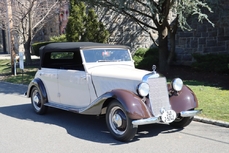
Mercedes-Benz 170V
49500 $
Astoria
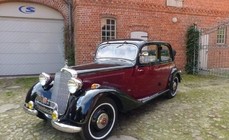
Mercedes-Benz 170V
48500 €
Hainholzweg 1 Germany 21376 Gödenstorf-Lübberstedt
Other cars listed for sale by this dealer
AC Cobra 289
195000$
Missouri
Other Other
142500$
Missouri
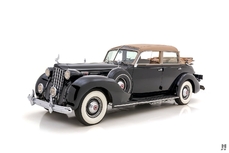
Packard Twelve
139500$
Missouri
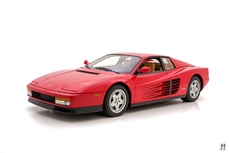
Ferrari Testarossa
159500$
Missouri
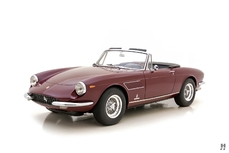
Ferrari 330 GTS
2275000$
Missouri
About Mercedes-Benz
In the annals of automotive history, the journey of Mercedes-Benz is a tale that unfolds with the ingenuity of its founding pioneers. In the year 1886, Karl Benz crafted the Benz Patent Motorwagen, a creation that would go down in history as the world's inaugural automobile. Unbeknownst to him, this moment marked the genesis of what would evolve into the most illustrious premium car manufacturer globally. The financial underpinning of this pioneering venture, interestingly, was provided by Karl Benz's wife, Bertha Benz, demonstrating a remarkable partnership that would set the tone for Mercedes-Benz's legacy.A parallel narrative emerged not far away, as Daimler-Motoren-Gesellschaft, founded by Gottlieb Daimler and Wilhelm Maybach, entered the scene. In 1901, they unveiled their automobile under the now-famous moniker "Mercedes," meaning "godsend" in Spanish. This name was bestowed upon the car at the behest of Emil Jellinek's daughter, the distributor for Daimler-Motoren-Gesellschaft. The wheels of innovation were set in motion.
Fast forward to 1926, a pivotal year that witnessed the merger of Daimler with Benz & Cie., culminating in the birth of Daimler-Benz. The amalgamation saw the adoption of "Mercedes-Benz" as the distinguished trademark for their automobiles, fusing the legacies of two visionary entities into one.
Contrary to perceptions of conservatism, the trajectory of Daimler-Benz unfolds as a chronicle of industry firsts. From the introduction of the honeycomb radiator to the float carburetor, and the pioneering implementation of four-wheel brakes in 1924, Daimler-Benz consistently pushed the boundaries of automotive innovation. The diesel-powered Mercedes-Benz 260 D in 1936 marked the inception of diesel engines in passenger cars. The iconic Mercedes-Benz 300SL Gullwing made history as the first car with direct fuel injection, albeit the Gutbrod's tiny 2-stroke engine can claim precedence.
Safety innovations became a hallmark, with Béla Barényi's patented safety cell design in the "Ponton"-models in 1951, featuring front and rear crumple zones. The W116 450SEL 6.9 saw the introduction of the Anti-Lock Brake system (ABS), another pioneering safety feature. From the first production airbags and beyond, the legacy of "firsts" continued to be etched into the fabric of Daimler-Benz.
Over its centennial journey, Mercedes-Benz has not merely produced cars but has sculpted automotive icons. The SSKL, 710 SSK Trossi Roadster, 770K Grosser, 540K Spezial Roadster, 300SL Gullwing, w100 600 Pullman, w111 280SE 3.5 Flachkühler, w113 230SL Pagoda, w109 300 SEL 6.3, and w201 2.3-16 Cosworth stand testament to the brand's commitment to engineering excellence.
The roaring Silver Arrows, or "Silberpfeile," including the W 25, W 125, W154, W165, and W196, created a legacy of dominance on the racetrack. These machines were not merely cars; they were expressions of precision, speed, and an indomitable spirit that left their competitors in the dust.
As Mercedes-Benz marches into the future, it does so not just as an automaker but as a custodian of a legacy, a torchbearer of innovation, and a beacon of automotive excellence. The road ahead is sure to witness the continued fusion of cutting-edge technology, timeless design, and an unwavering commitment to setting new standards in the world of automobiles.
One luminary figure who left an indelible mark was Béla Barényi, often heralded as the "father of passive safety" for his pioneering work in safety engineering. His patented safety cell design, featuring front and rear crumple zones, became a hallmark of Mercedes-Benz's commitment to occupant safety, setting new standards that reverberated throughout the automotive world.
Moving through the chronicles, the collaborative genius of Wilhelm Maybach, alongside Gottlieb Daimler, laid the foundation for Daimler-Motoren-Gesellschaft. Their innovations not only birthed the first Mercedes but established a culture of relentless pursuit of technological excellence that remains integral to Mercedes-Benz's DNA.
In the post-merger era of 1926, Ferdinand Porsche emerged as a prominent figure within Mercedes-Benz. His work on the Mercedes-Benz S-Type, a supercharged race car, garnered acclaim and set the stage for a legacy that extended far beyond the marque. Porsche's impact would later extend to his eponymous company, but his influence at Mercedes-Benz during those formative years was pivotal.
As the 20th century progressed, the legendary Rudolf Uhlenhaut emerged as a key figure. Uhlenhaut, an accomplished engineer and the driving force behind the iconic Silver Arrows, played a crucial role in Mercedes-Benz's dominance in motorsports. His engineering prowess and attention to detail were instrumental in creating some of the most formidable racing cars of the era.
In the latter half of the century, figures like Bruno Sacco, the head of design at Mercedes-Benz from 1975 to 1999, left an indelible imprint on the brand's aesthetic identity. Sacco's design philosophy, characterized by clean lines and timeless elegance, shaped iconic models like the W126 S-Class and the W201 190E, solidifying Mercedes-Benz's reputation for luxury and sophistication.
The narrative would be incomplete without acknowledging the contributions of engineers like Hans Scherenberg, whose leadership in the 1970s ushered in a new era of technological innovation at Mercedes-Benz. Scherenberg's tenure saw the development of groundbreaking technologies, including the Anti-Lock Brake system (ABS) and the introduction of airbags in production cars.