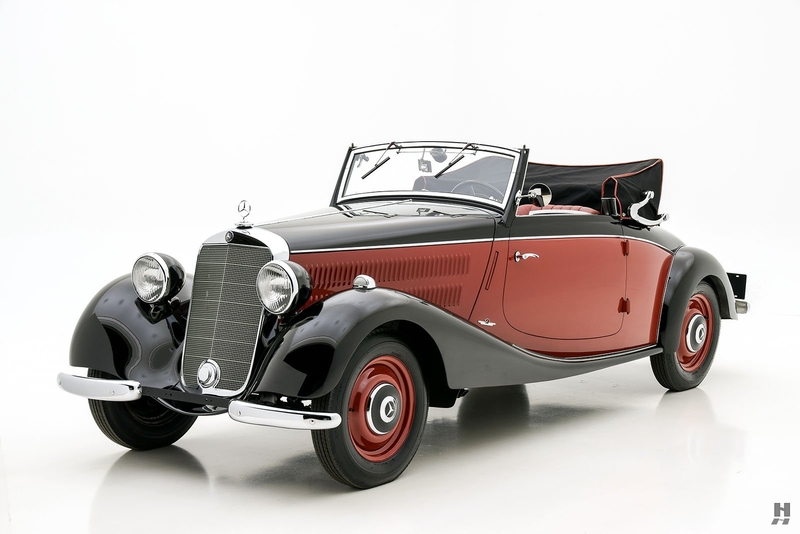

Mercedes-Benz 170V V Cabriolet 1938
Allgemeine Beschreibung :
Mercedes-Benz has long demonstrated the power of a diverse product portfolio. With an ethos of quality and innovation above all, Mercedes-Benz has made their mark in virtually every aspect of over the road transport, from taxicabs to Formula 1 cars, supercars to heavy trucks. Although they are most closely associated with luxury, Mercedes-Benz wisely relied upon the middle of the market to provide the majority of their sales over the years. When the luxury car market sagged in the 1930s, Mercedes-Benz was quick to realize the importance of expanding their offerings, yet crucially, they managed to do so without cheapening their brand and damaging their reputation for quality. The 170 was conceived to compete in the mid-priced market, making its debut at the Paris Auto Salon in 1931. Chassis engineer Hans Nibel designed the platform which featured revolutionary all-independent suspension in a lightweight chassis. The ride quality and handling prowess were far and above superior to other vehicles in the same class. The new model proved quite popular, with nearly 70,000 examples built before 1941.
Found within the 170 range was a wide variety of vehicles that utilized the innovative chassis. Mercedes-Benz offered it as a two- or four-door sedan, two- or four-seat cabriolet, roadster, cabrio-sedan, open touring car, Sedan Delivery, taxi, ambulance, or pickup. Eventually, the range-topping Cabriolet A was added to the mix. The Cabriolet A was a product of the prestigious Sindelfingen coachbuilding department, Mercedes’ in-house custom body builder.
Herman Ahrens arrived at Mercedes-Benz in 1932, setting up a custom coachbuilding shop at the Sindelfingen works. His reputation for quality was established at that Deutsche Industrie Werke in Berlin as well as with Horch where he designed some of that firm’s most prestigious motorcars. Alongside Walter Hacker, who joined him at Mercedes in 1933, Mercedes-Benz styling was transformed and the duo produced some of their most breathtaking designs on the 540K chassis. For buyers of somewhat more modest means than the typical 540K client, the 170 V Cabriolet offered the cachet of a Sindelfingen-designed body at a more reasonable (though still not insignificant) $1,459 in 1936. Rather than modifying a mass-produced model, each Cabriolet A was hand built alongside its more expensive stablemates. The resemblance to its larger sibling can be seen in the graceful sweep of the front wings, the taper of the bonnet as it flows from cowl to radiator grille and the elegant proportions.
Our featured example of this rare and desirable coachbuilt Mercedes-Benz was recently part of the collection of renowned contemporary American realist painter Jamie Wyeth. It was completely restored beginning in 1990 by Magno Restorations of Massachusetts and has been featured in the May/June 1997 issue of The Star magazine. It has been very well cared for since the high-quality restoration was completed, and it presents today in lovely condition. The two-tone black and red paint is period correct and highlights the handsome lines of this rare and desirable body. Beautiful concours-quality chrome work remains in excellent order and the body fit and alignment reveal this as a very high level restoration. The signature of the 170 V are the stylish steel disc wheels, in this case painted in red to complement the body sides and provide some visual pop against the black wings. The body style is simple yet finely detailed with features such as an inset rear-mount spare tire, a small “trunk” behind the top, exposed landau irons and cowl-mounted trafficators.
The cabin is trimmed in lovely dark red leather that complements the exterior paint scheme. The soft trim remains in very good condition, showing signs of light use since the restoration, but presenting with a welcoming broken-in character. Instruments, switchgear and interior brightwork are all in very good order, again showing some light use but remaining very attractive. A side-facing rear seat is fitted for the occasional second passenger, providing they don’t mind the cozy experience.
Beneath the bonnet is a simple and humble appearing 1,697 cc side-valve four-cylinder which produces 38hp. Our example is well detailed with proper fittings and hardware, though not over restored or fussy. The engine produces 38hp and delivers the power to the rear wheels via a four-speed manual transmission. Four wheel hydraulic brakes and independent suspension allow for this car to feel much younger than its 79 years. Following its high quality restoration, this car was shown at a great number of prestigious events such as Meadow Brook, Castle Hill Concours, Lime Rock Vintage Fall Festival, Radnor Hunt Concours and others. It was displayed at the Lars Anderson Museum’s Mercedes Retrospective and even featured in advertising for Saks Fifth Avenue. It remains in handsome condition, and is ready for use in tours, rallies or simply to enjoy for its delightful road manners on your favorite country roads. This is a wonderful opportunity to acquire a true Sindelfingen coachbuilt Mercedes-Benz that can be thoroughly enjoyed on the road or on a show field.
https://hymanltd.com/vehicles/5883
1938 Mercedes-Benz 170V V Cabriolet is listed verkauft on ClassicDigest in St. Louis by Mark Hyman for $149500.
Fakten der Auto
Karosserietyp : Auto Marke : Mercedes-Benz Modell : 170V Ausführung : V Cabriolet Hubraum : 0.0 Modelljahr : 1938 Karosstyp : Convertible Lage : Missouri
Verkauft
Angaben Zum Verkäufer
Verkauft
People who viewed this Mercedes-Benz 170V also viewed similar Mercedes-Benz listed at ClassicDigest
Mercedes-Benz 170V
67500 $
Astoria
Mercedes-Benz 170V
67500 $
Astoria
Mercedes-Benz 170V
21500 $
Astoria
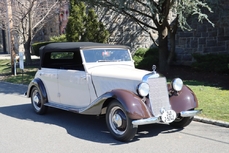
Mercedes-Benz 170V
49500 $
Astoria
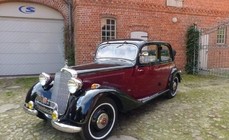
Mercedes-Benz 170V
48500 €
Hainholzweg 1 Germany 21376 Gödenstorf-Lübberstedt
Other cars listed for sale by this dealer
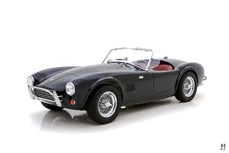
AC Cobra 289
195000$
Missouri
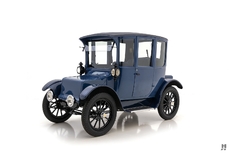
Other Other
142500$
Missouri
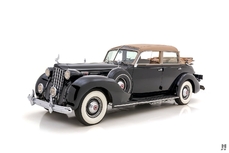
Packard Twelve
139500$
Missouri
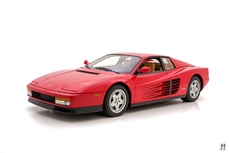
Ferrari Testarossa
159500$
Missouri
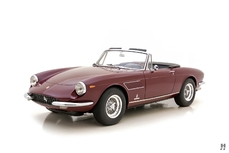
Ferrari 330 GTS
2275000$
Missouri
über Mercedes-Benz
In den Annalen der Automobilgeschichte entfaltet sich die Reise von Mercedes-Benz wie eine Erzählung voller Ingeniosität seiner Gründer. Im Jahr 1886 schuf Karl Benz den Benz Patent Motorwagen, eine Kreation, die als das weltweit erste Automobil in die Geschichte eingehen sollte. Unwissentlich markierte dieser Moment den Ursprung dessen, was sich zu einem weltweit renommierten Premium-Autohersteller entwickeln würde. Die finanzielle Basis dieses bahnbrechenden Unternehmens wurde interessanterweise von Karls Ehefrau, Bertha Benz, bereitgestellt, was eine bemerkenswerte Partnerschaft demonstrierte, die den Ton für das Erbe von Mercedes-Benz setzen sollte.Nicht weit entfernt entstand eine parallele Erzählung, als die Daimler-Motoren-Gesellschaft, gegründet von Gottlieb Daimler und Wilhelm Maybach, die Bühne betrat. Im Jahr 1901 enthüllten sie ihr Auto unter dem mittlerweile berühmten Namen "Mercedes", was auf Spanisch "Geschenk Gottes" bedeutet. Dieser Name wurde auf das Auto auf Wunsch von Emil Jellineks Tochter verliehen, dem Vertriebspartner der Daimler-Motoren-Gesellschaft. Die Räder der Innovation wurden in Bewegung gesetzt.
Springen wir vorwärts ins Jahr 1926, ein entscheidendes Jahr, das die Fusion von Daimler mit Benz & Cie. sah, was zur Geburt von Daimler-Benz führte. Die Fusion führte zur Übernahme von "Mercedes-Benz" als das renommierte Markenzeichen für ihre Automobile und verschmolz die Legenden zweier visionärer Unternehmen zu einer.
Entgegen konservativen Wahrnehmungen entfaltet sich die Geschichte von Daimler-Benz als Chronik von Branchenneuheiten. Von der Einführung des Wabenkühlers über den Schwimmervergaser bis zur bahnbrechenden Einführung von Vierradbremsen im Jahr 1924 trieb Daimler-Benz kontinuierlich die Grenzen der automobilen Innovation voran. Der Dieselantrieb des Mercedes-Benz 260 D im Jahr 1936 markierte den Beginn von Dieselmotoren in Personenkraftwagen. Der ikonische Mercedes-Benz 300SL Gullwing schrieb Geschichte als das erste Auto mit direkter Kraftstoffeinspritzung, wenn auch der winzige 2-Takt-Motor des Gutbrod Vorrang beanspruchen kann.
Sicherheitsinnovationen wurden zum Markenzeichen, mit Béla Barényis patentiertem Sicherheitszellen-Design in den "Ponton"-Modellen im Jahr 1951, das Front- und Heck-Knautschzonen umfasste. Der W116 450SEL 6.9 führte die Einführung des Antiblockiersystems (ABS) ein, eine weitere wegweisende Sicherheitsfunktion. Vom ersten serienmäßigen Airbag bis hin zu vielen weiteren Innovationen wurde das Erbe der "Ersten" weiter in das Gewebe von Daimler-Benz eingeschrieben.
Auf seiner über hundertjährigen Reise hat Mercedes-Benz nicht nur Autos produziert, sondern automobile Ikonen geschaffen. Der SSKL, 710 SSK Trossi Roadster, 770K Grosser, 540K Spezial Roadster, 300SL Gullwing, W100 600 Pullman, W111 280SE 3.5 Flachkühler, W113 230SL Pagode, W109 300 SEL 6.3 und W201 2.3-16 Cosworth sind Zeugnisse des Engagements der Marke für Ingenieurkunst.
Die donnernden Silberpfeile, oder "Silberpfeile", darunter der W 25, W 125, W154, W165 und W196, schufen ein Erbe der Dominanz auf der Rennstrecke. Diese Maschinen waren nicht nur Autos; sie waren Ausdruck von Präzision, Geschwindigkeit und einem unbezwingbaren Geist, der die Konkurrenz im Staub zurückließ.
Während Mercedes-Benz in die Zukunft schreitet, tut es dies nicht nur als Automobilhersteller, sondern als Hüter eines Erbes, als Fackelträger der Innovation und als Leuchtturm automobiler Exzellenz. Der Weg in die Zukunft wird zweifellos die Fortsetzung der Verschmelzung von modernster Technologie, zeitlosem Design und dem unerschütterlichen Engagement für die Festlegung neuer Standards in der Welt der Automobile erleben.