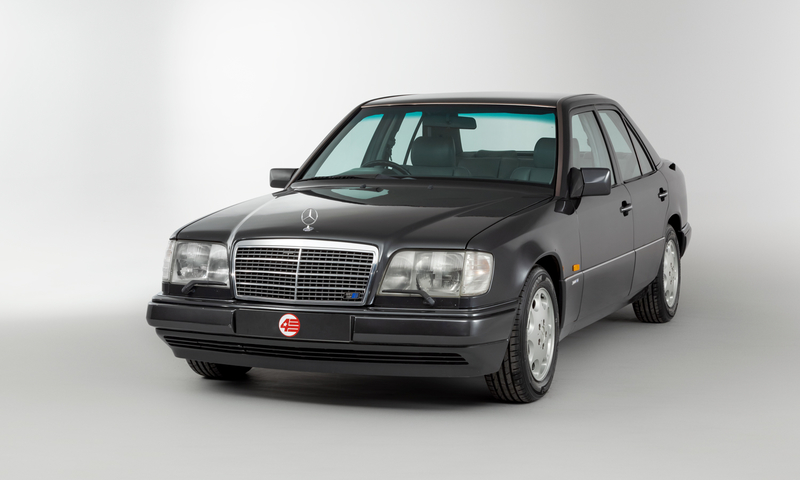


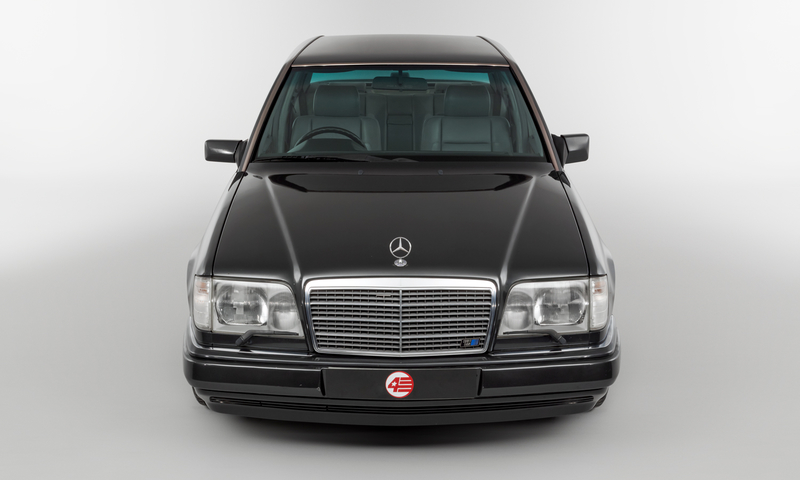
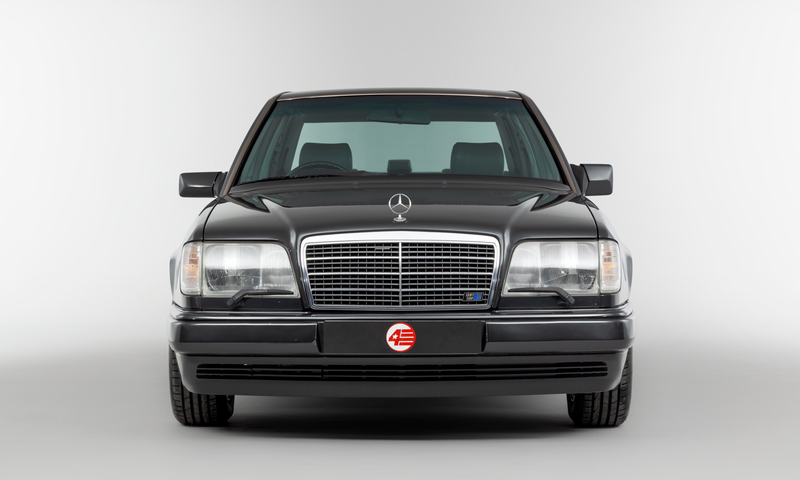
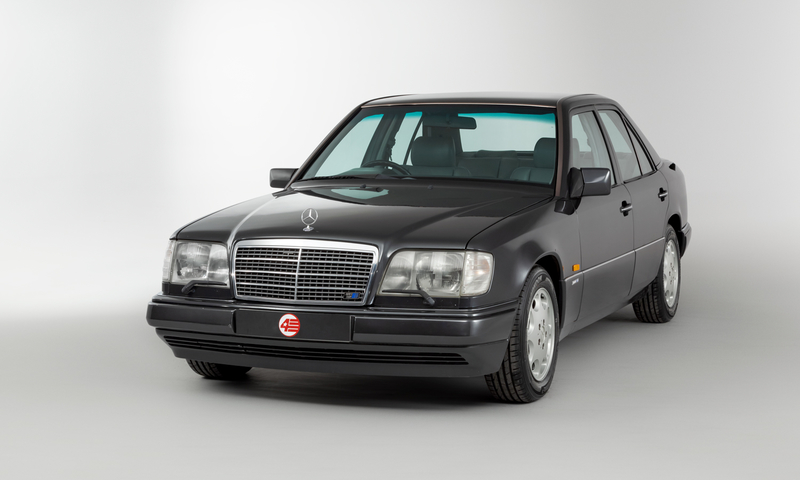
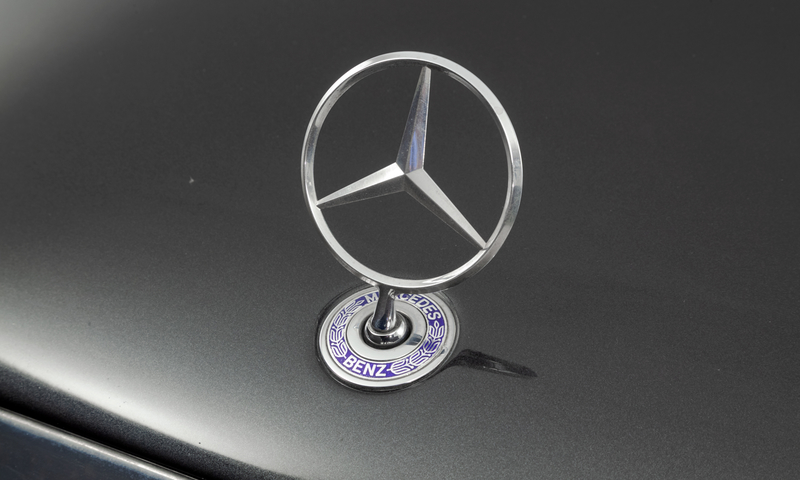
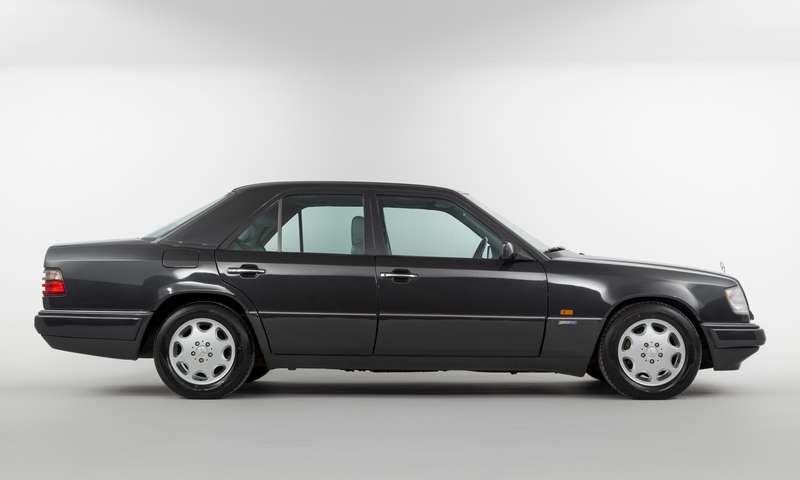
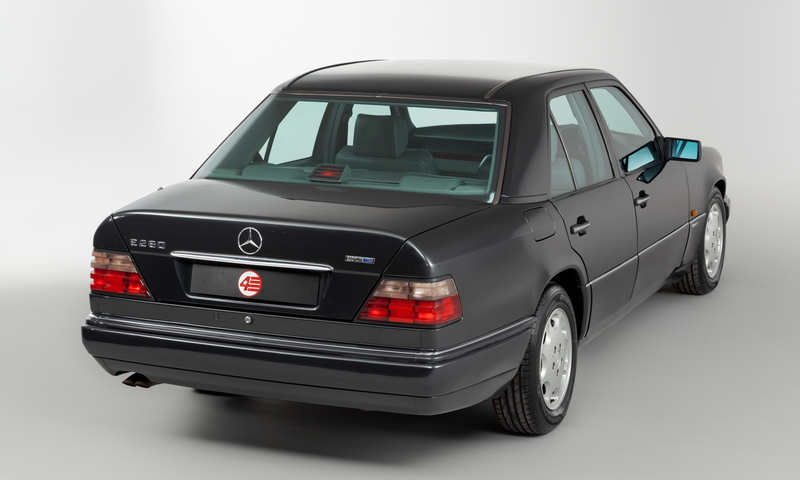
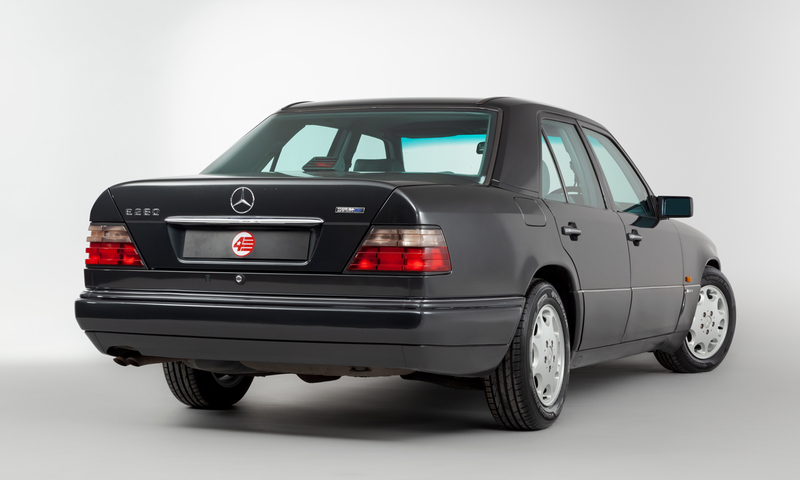
Mercedes-Benz 220 w124 E280 Sportline 1994
General description :
Model History
W124 was the internal chassis designation for the 1985-1995 generation of the Mercedes-Benz E-Class; it was also the first generation officially referred to as the “E-Class”. W124 models replaced the W123 after 1985 and were succeeded by the W210 E-Class after 1995. The R129 SL roadster was based on the W124 platform, and in return the W124 was later equipped with the SL’s 5-litre V8 engines, creating the 500E.
Much of the 124's engineering and many of its features were advanced automotive technology at its introduction, incorporating innovations that have been adopted throughout the industry. It had one of the lowest drag coefficients of any vehicle at the time due to its aerodynamic body that included plastic moulding for the undercarriage to streamline airflow beneath the car, thus reducing fuel consumption and wind noise. It had a single windscreen wiper with an eccentric mechanism at its base that extended the wiper's reach to the top corners of the windscreen, more than if it had travelled in a simple arc. The saloons, coupés, and convertibles had optional rear headrests that would fold down remotely to improve rearward visibility when required.
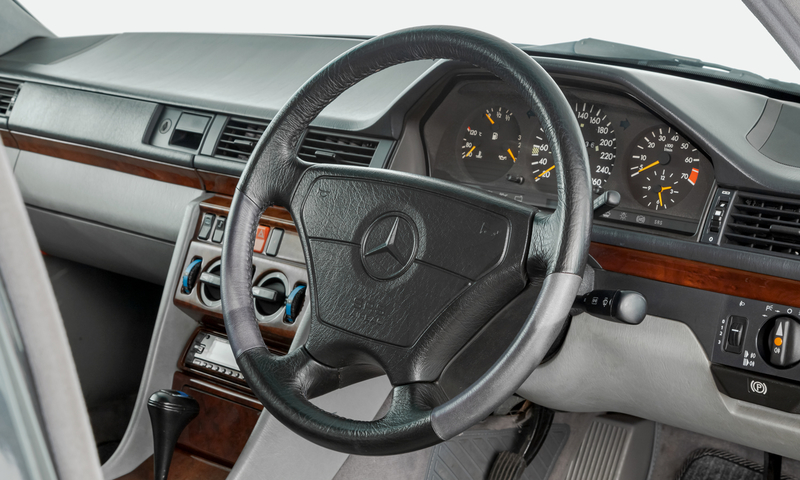
The ‘Sportline’ option came as standard with sports seating, wider wheels with wider profile tyres, quick ratio steering, a smaller diameter steering wheel, “Sportline” designation on the gearknob and front wings, slightly lower ride height, and a specially tuned suspension including shorter, stiffer springs, struts, anti-roll bars, and bushings.
Equipment
Blue-Black Metallic paintwork, Grey perforated leather upholstery, Sportline equipment: Sports seats front and rear, Electrically adjustable front seats with memory, 390mm ‘E500’ sports steering wheel, Quick ratio steering, Lower ride height, Specially tuned suspension, “Sportline” exterior badges and gearknob; 5-speed automatic transmission, Cruise control, Air conditioning, Electric windows front and rear, Electrically-adjustable steering column, Burred walnut interior trim, Front central armrest, Rear headrests, Electric rear window sunblind, Heat-insulating glass all round, Headlamp wash/wipe, Clear front indicators, Remote central locking, Pioneer head unit with remote, Spare wheel, Mercedes overmats.
Exterior
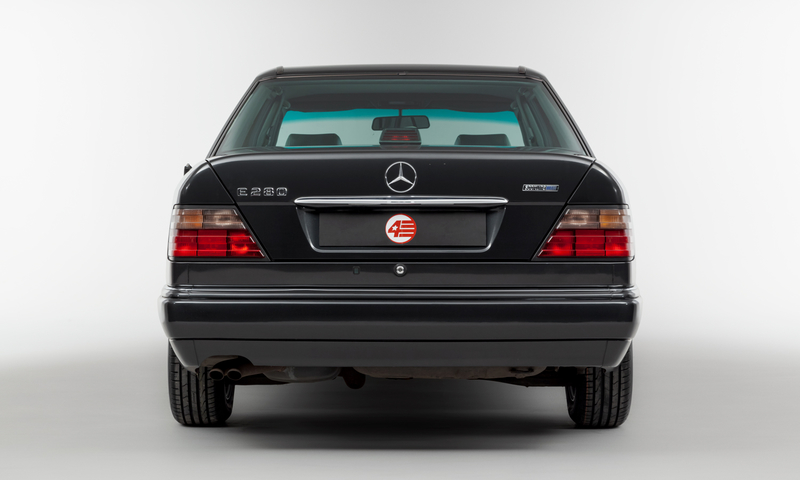
This bona fide W124 Sportline looks magnificent in Blue-Black Metallic, the perfect choice for a Mercedes of this vintage. As a rare factory Sportline the car boasts specially tuned suspension for better handling, lower ride height and a more assertive stance. On close inspection there are no unsightly scrapes or scuffs to report, either to the bumpers or bodywork, and along both sides the car remains nice and straight. The headlamps are clear with no signs of moisture ingress, and the ‘Sportline’ badges are still present all round. With only a handful of discreet paint imperfections to speak of, this handsome example presents in great condition throughout, not concours but in line with the age and mileage. The underside also presents to a very high standard.
VIEWINGS WELCOME BY APPOINTMENT ONLY /// ADDITIONAL PHOTOS AVAILABLE UPON REQUEST
Interior
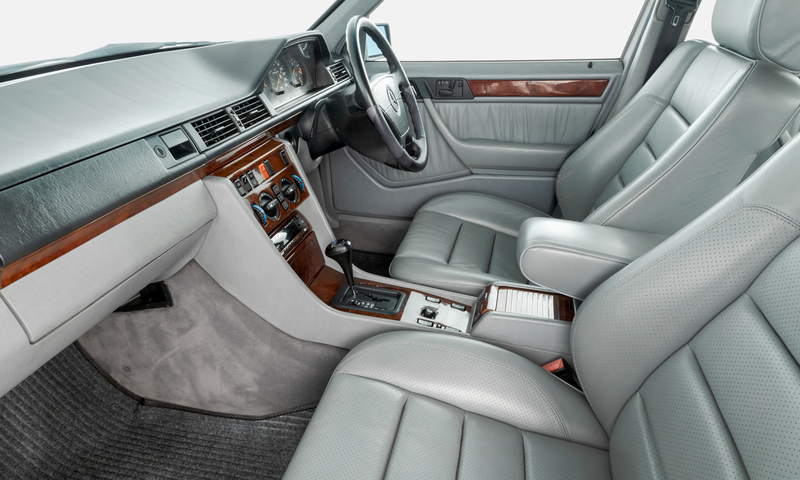
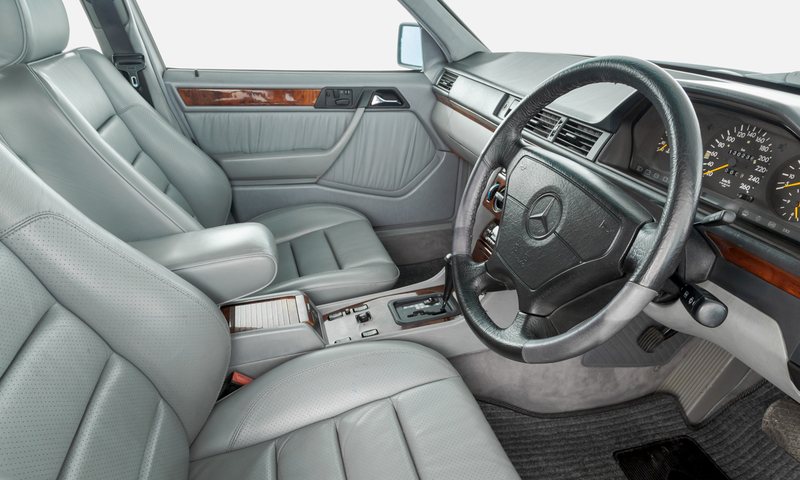
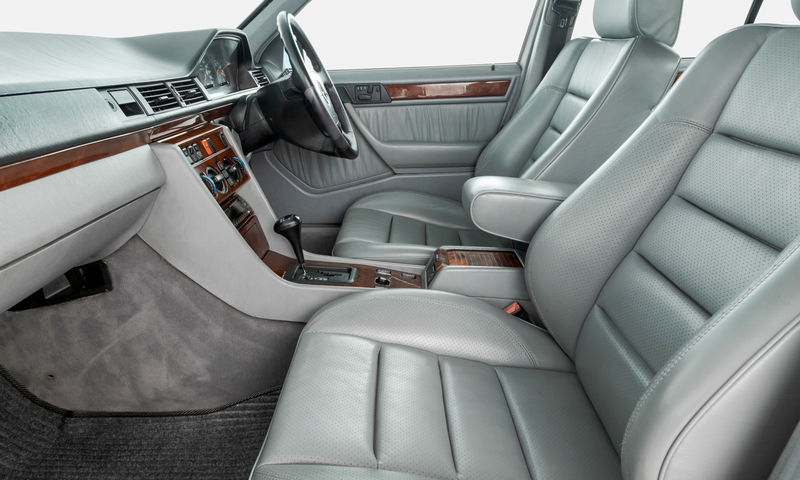
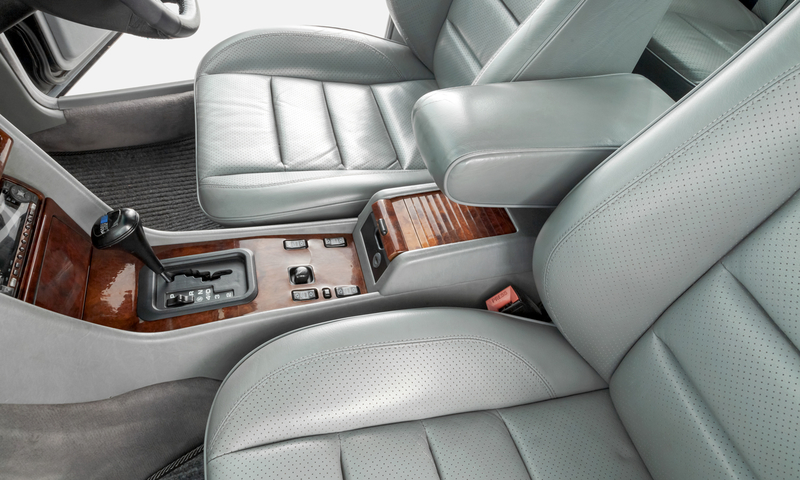
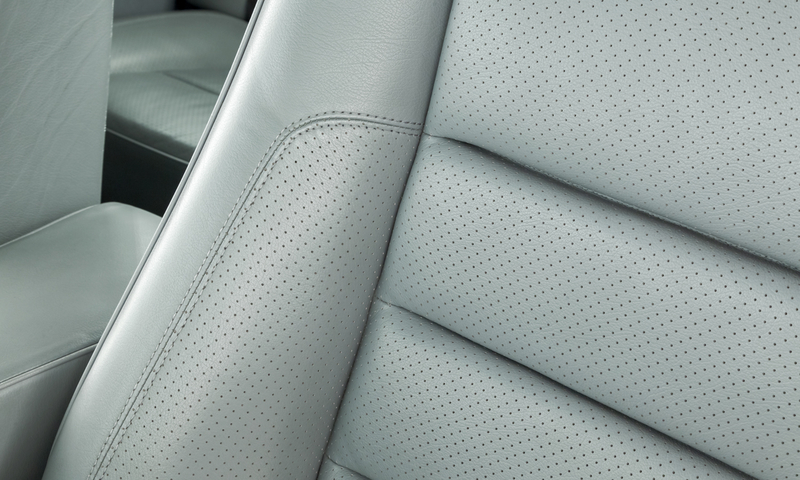
The airy E-Class cabin is equipped with sumptuous sports seats front and rear, nicely spec’d in pale grey perforated leather. The supple upholstery retains a lovely matte finish that’s free from the shininess and wear of higher mileage examples; even commonly worn areas such as the driver’s bolster and front armrest show few signs of use. Both the Sportline gearknob and special 390mm ‘E500’ sports steering wheel also present exceptionally well. The grey upholstery is accented with glossy walnut inlays extending from the doors to the dash, along the centre console and between the rear seats, all still in great condition with only a few hairline cracks in the lacquer to report.
The front seats are electrically adjustable, and both are equipped with memory. The steering column is also electric, with other creature comforts including cruise control, dual zone air conditioning, an electric rear window sunblind, and a Pioneer head unit that fits in perfectly with the surrounding walnut trim.
ENGINE & TRANSMISSION
The E280’s 2799cc straight six starts without fuss and idles smoothly up to temperature. Power is transferred to the rear wheels via a 5-speed automatic gearbox. Lifting the bonnet reveals a perfectly tidy engine bay, not overly dressed but in very good original condition. Looking closely there are no signs of any damage or poor repair to be found. The last service was carried out in August 2020 and the MOT is valid until August 2021.
WHEELS, TYRES & BRAKES
All four 8-hole alloy wheels have just returned from Lepsons having been fully refurbished and fitted with a brand new set of Hankook tyres for the new keeper’s peace of mind. The brakes have also just been inspected by our trusted classic car specialist and are in fine operational condition.
One of the most important parts of the Sportline package is the specially tuned suspension, which includes shorter, stiffer springs, struts, anti-roll bars, and bushings for optimal handling, lower ride hide and an overall more commanding presence on the road.
History File
This rare and desirable Sportline was first registered in Singapore in February 1995. It arrived in the UK in late 1999 and has now driven just 80k miles from new. The History File is complete with the original Mercedes document wallet, owner’s manual, and stamped service booklet. The last service was carried out in August 2020 at 80,837 miles, and since arriving with us a full mechanical inspection has been carried out with zero negatives to report.
http://www.4starclassics.com/for-sale/mercedes-w124-e280-sportline-for-sale/
1994 Mercedes-Benz 220 w124 E280 Sportline is listed sold on ClassicDigest in Kingsley by 4 Star Classics for £8495.
Car Facts
Car type : Car Make : Mercedes-Benz Model : 220 w124 Model Version : E280 Sportline Engine size : 2.8 Model Year : 1994 Sub type : Van Location : Hampshire
Sold
Seller Information
Sold
People who viewed this Mercedes-Benz 220 w124 also viewed similar Mercedes-Benz listed at ClassicDigest
Mercedes-Benz 220 w124
100 $
London
Mercedes-Benz 220 w124
3900 €
rijksweg 17NL-6996 AA Drempt
Mercedes-Benz 220 w124
16950 €
In der Masch 23DE-32049 Herford
Mercedes-Benz 220 w124
1700 €
Dornacher Str 3DDE-85622 Feldkirchen
Mercedes-Benz 220 w124
3990 €
Weinsheimerstrasse 39DE-67547 Worms
Other cars listed for sale by this dealer
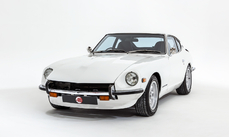
Datsun 240Z
39995£
Hampshire
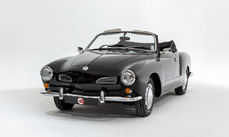
Volkswagen Karmann-Ghia
36995£
Hampshire
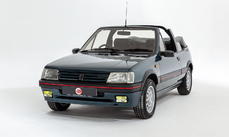
Peugeot 205
10995£
Hampshire
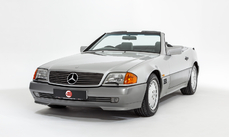
Mercedes-Benz 500SL r129
19995£
Hampshire
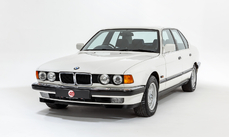
BMW 735
29995£
Hampshire
About Mercedes-Benz
In the annals of automotive history, the journey of Mercedes-Benz is a tale that unfolds with the ingenuity of its founding pioneers. In the year 1886, Karl Benz crafted the Benz Patent Motorwagen, a creation that would go down in history as the world's inaugural automobile. Unbeknownst to him, this moment marked the genesis of what would evolve into the most illustrious premium car manufacturer globally. The financial underpinning of this pioneering venture, interestingly, was provided by Karl Benz's wife, Bertha Benz, demonstrating a remarkable partnership that would set the tone for Mercedes-Benz's legacy.A parallel narrative emerged not far away, as Daimler-Motoren-Gesellschaft, founded by Gottlieb Daimler and Wilhelm Maybach, entered the scene. In 1901, they unveiled their automobile under the now-famous moniker "Mercedes," meaning "godsend" in Spanish. This name was bestowed upon the car at the behest of Emil Jellinek's daughter, the distributor for Daimler-Motoren-Gesellschaft. The wheels of innovation were set in motion.
Fast forward to 1926, a pivotal year that witnessed the merger of Daimler with Benz & Cie., culminating in the birth of Daimler-Benz. The amalgamation saw the adoption of "Mercedes-Benz" as the distinguished trademark for their automobiles, fusing the legacies of two visionary entities into one.
Contrary to perceptions of conservatism, the trajectory of Daimler-Benz unfolds as a chronicle of industry firsts. From the introduction of the honeycomb radiator to the float carburetor, and the pioneering implementation of four-wheel brakes in 1924, Daimler-Benz consistently pushed the boundaries of automotive innovation. The diesel-powered Mercedes-Benz 260 D in 1936 marked the inception of diesel engines in passenger cars. The iconic Mercedes-Benz 300SL Gullwing made history as the first car with direct fuel injection, albeit the Gutbrod's tiny 2-stroke engine can claim precedence.
Safety innovations became a hallmark, with Béla Barényi's patented safety cell design in the "Ponton"-models in 1951, featuring front and rear crumple zones. The W116 450SEL 6.9 saw the introduction of the Anti-Lock Brake system (ABS), another pioneering safety feature. From the first production airbags and beyond, the legacy of "firsts" continued to be etched into the fabric of Daimler-Benz.
Over its centennial journey, Mercedes-Benz has not merely produced cars but has sculpted automotive icons. The SSKL, 710 SSK Trossi Roadster, 770K Grosser, 540K Spezial Roadster, 300SL Gullwing, w100 600 Pullman, w111 280SE 3.5 Flachkühler, w113 230SL Pagoda, w109 300 SEL 6.3, and w201 2.3-16 Cosworth stand testament to the brand's commitment to engineering excellence.
The roaring Silver Arrows, or "Silberpfeile," including the W 25, W 125, W154, W165, and W196, created a legacy of dominance on the racetrack. These machines were not merely cars; they were expressions of precision, speed, and an indomitable spirit that left their competitors in the dust.
As Mercedes-Benz marches into the future, it does so not just as an automaker but as a custodian of a legacy, a torchbearer of innovation, and a beacon of automotive excellence. The road ahead is sure to witness the continued fusion of cutting-edge technology, timeless design, and an unwavering commitment to setting new standards in the world of automobiles.
One luminary figure who left an indelible mark was Béla Barényi, often heralded as the "father of passive safety" for his pioneering work in safety engineering. His patented safety cell design, featuring front and rear crumple zones, became a hallmark of Mercedes-Benz's commitment to occupant safety, setting new standards that reverberated throughout the automotive world.
Moving through the chronicles, the collaborative genius of Wilhelm Maybach, alongside Gottlieb Daimler, laid the foundation for Daimler-Motoren-Gesellschaft. Their innovations not only birthed the first Mercedes but established a culture of relentless pursuit of technological excellence that remains integral to Mercedes-Benz's DNA.
In the post-merger era of 1926, Ferdinand Porsche emerged as a prominent figure within Mercedes-Benz. His work on the Mercedes-Benz S-Type, a supercharged race car, garnered acclaim and set the stage for a legacy that extended far beyond the marque. Porsche's impact would later extend to his eponymous company, but his influence at Mercedes-Benz during those formative years was pivotal.
As the 20th century progressed, the legendary Rudolf Uhlenhaut emerged as a key figure. Uhlenhaut, an accomplished engineer and the driving force behind the iconic Silver Arrows, played a crucial role in Mercedes-Benz's dominance in motorsports. His engineering prowess and attention to detail were instrumental in creating some of the most formidable racing cars of the era.
In the latter half of the century, figures like Bruno Sacco, the head of design at Mercedes-Benz from 1975 to 1999, left an indelible imprint on the brand's aesthetic identity. Sacco's design philosophy, characterized by clean lines and timeless elegance, shaped iconic models like the W126 S-Class and the W201 190E, solidifying Mercedes-Benz's reputation for luxury and sophistication.
The narrative would be incomplete without acknowledging the contributions of engineers like Hans Scherenberg, whose leadership in the 1970s ushered in a new era of technological innovation at Mercedes-Benz. Scherenberg's tenure saw the development of groundbreaking technologies, including the Anti-Lock Brake system (ABS) and the introduction of airbags in production cars.