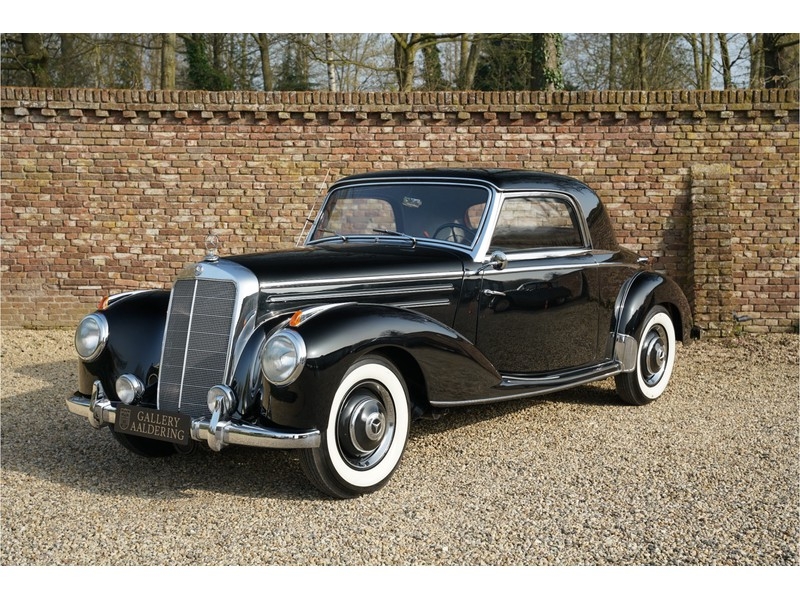


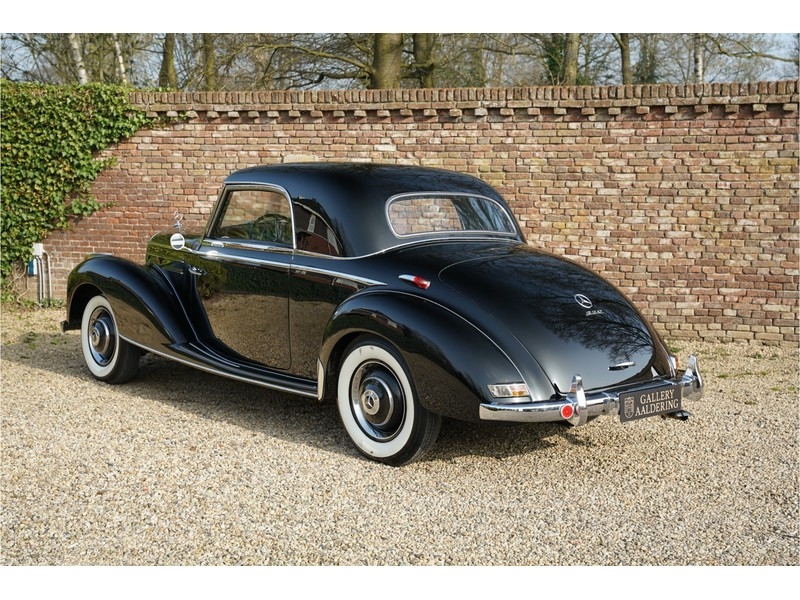
Mercedes-Benz 220 W187 220 A COUPE One of only 85, lugage set, fully rest 1955
General description :
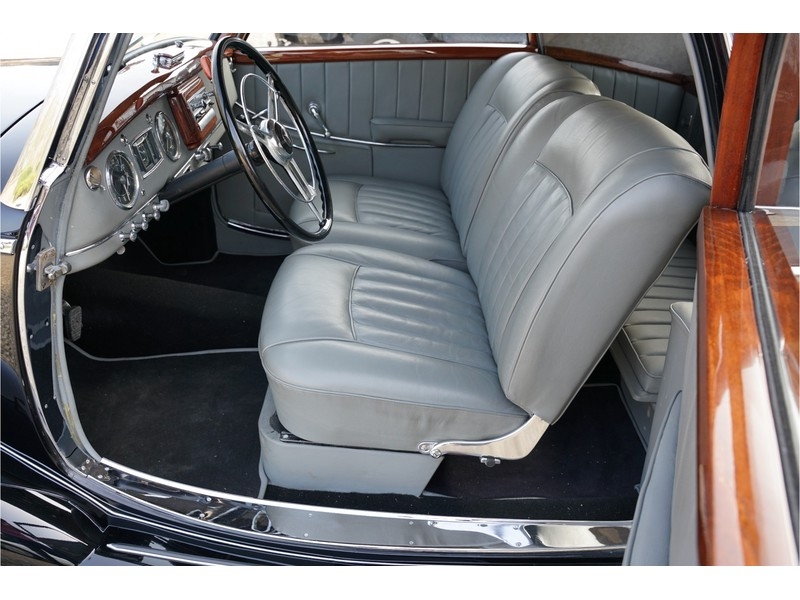
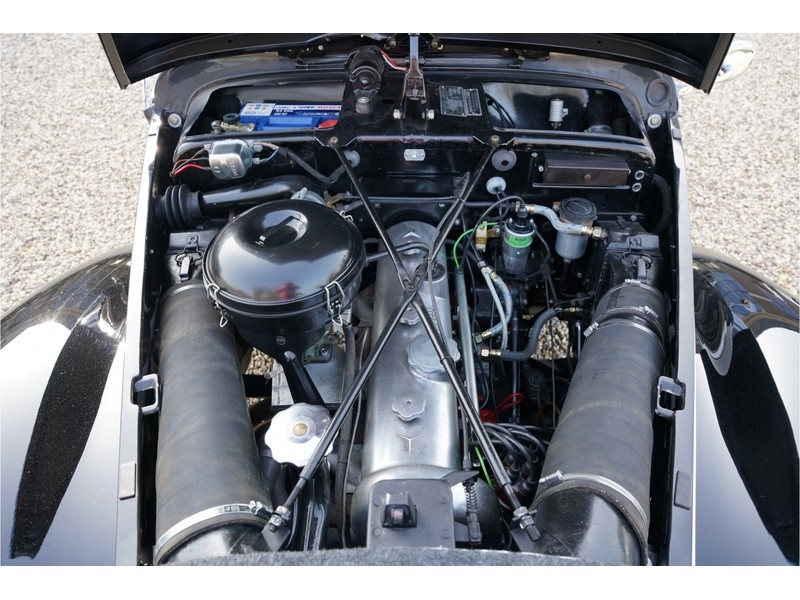
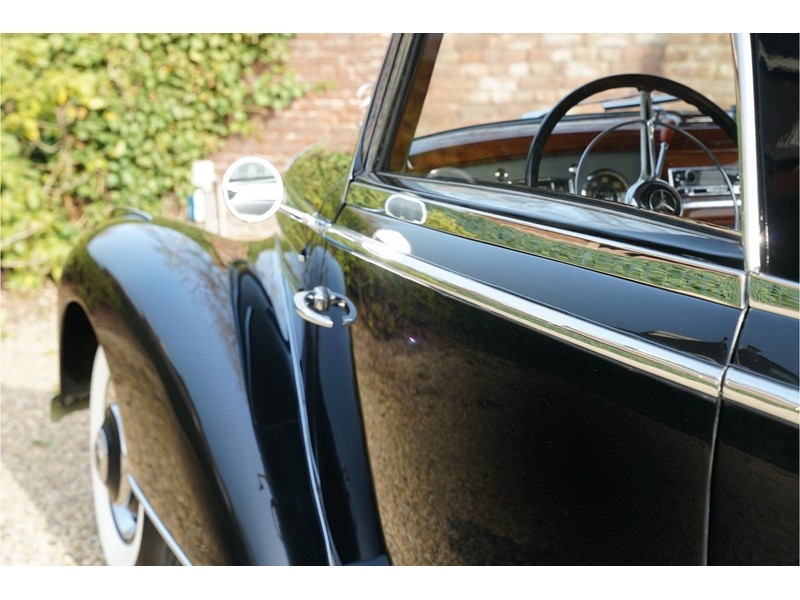
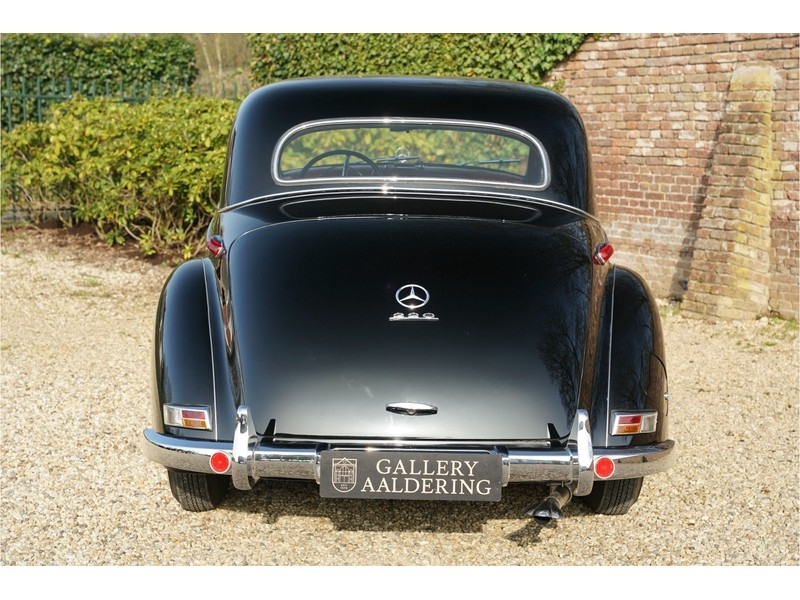
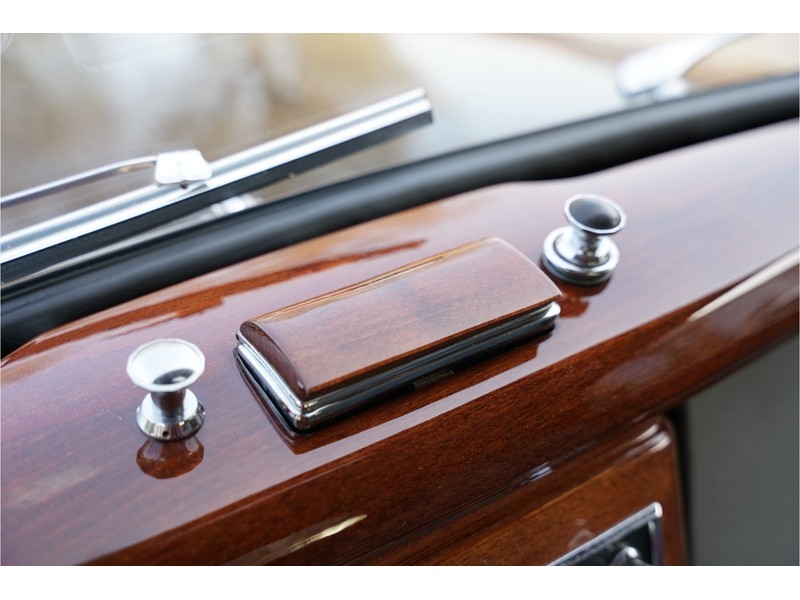
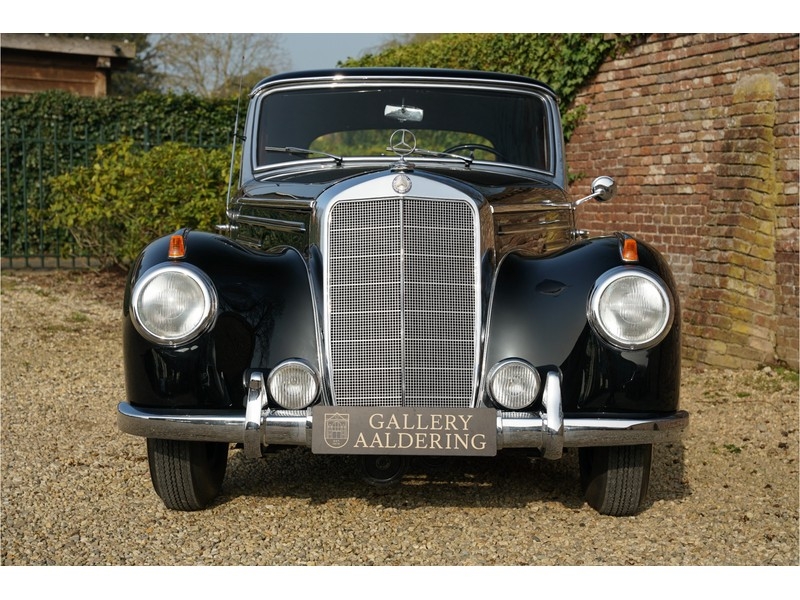
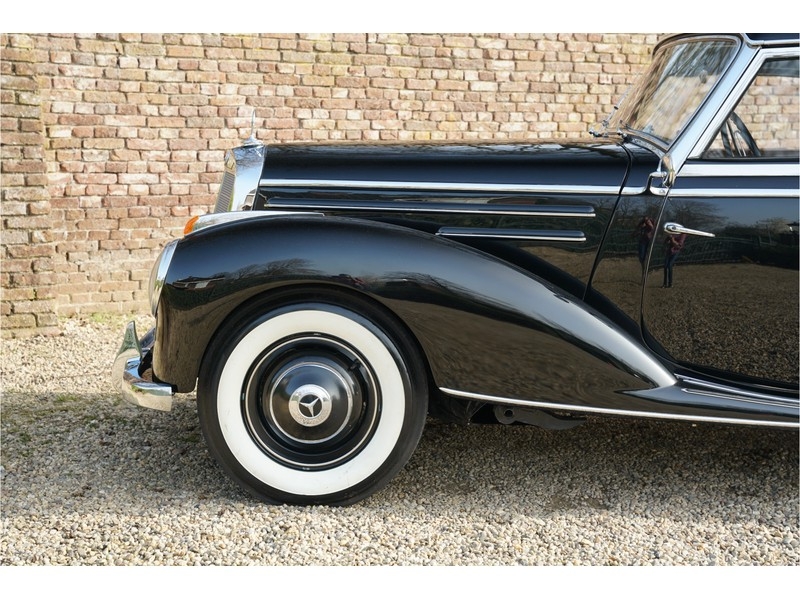
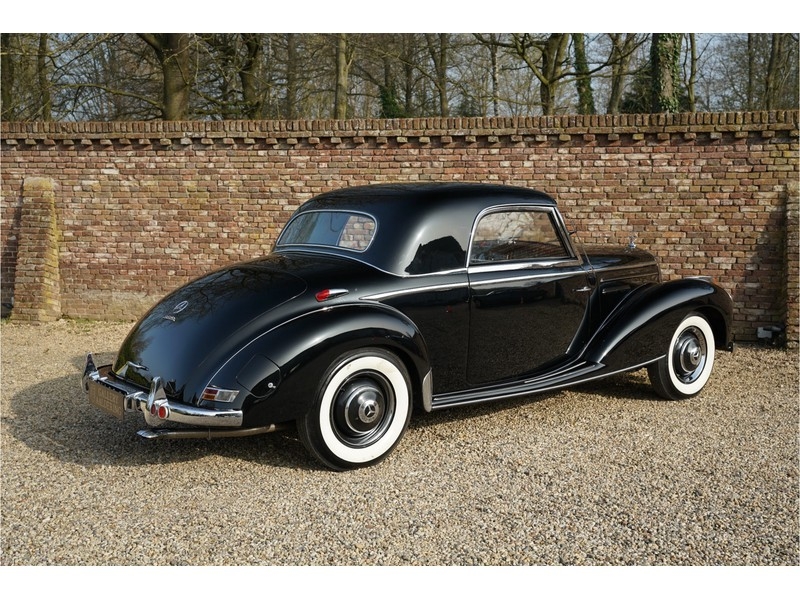
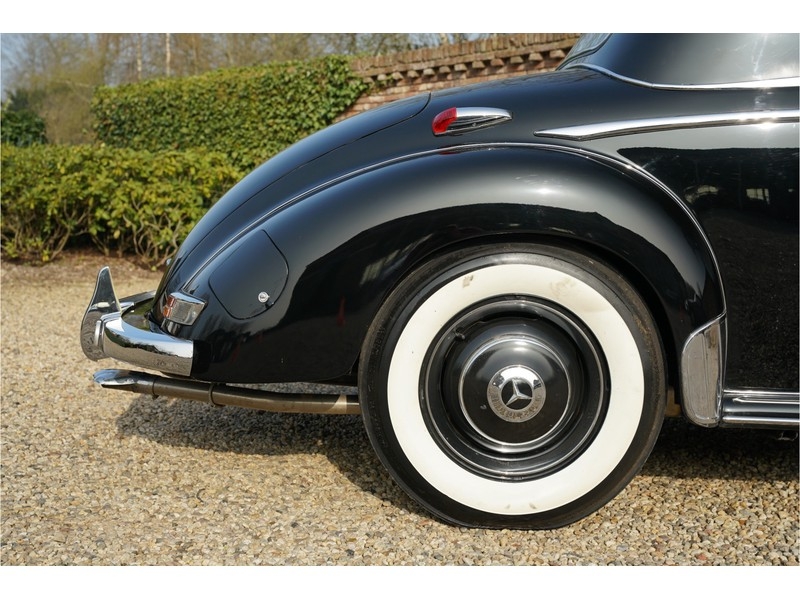
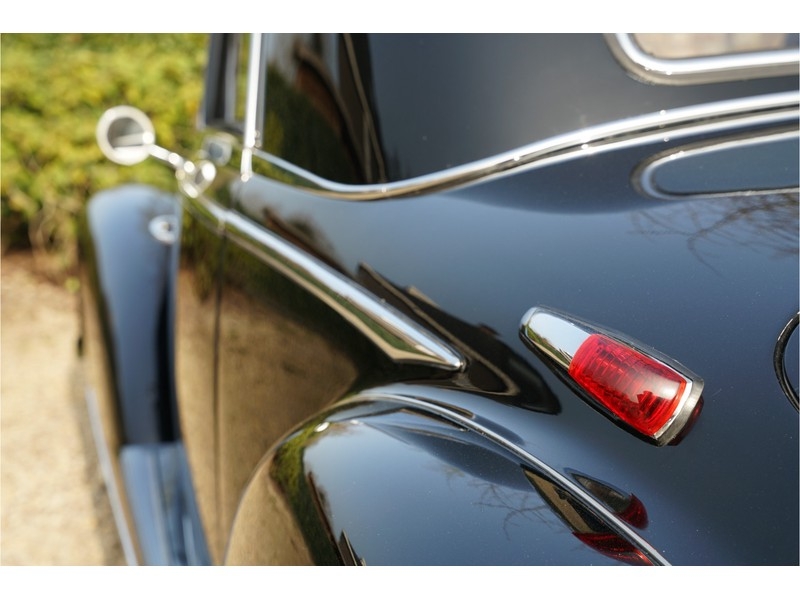
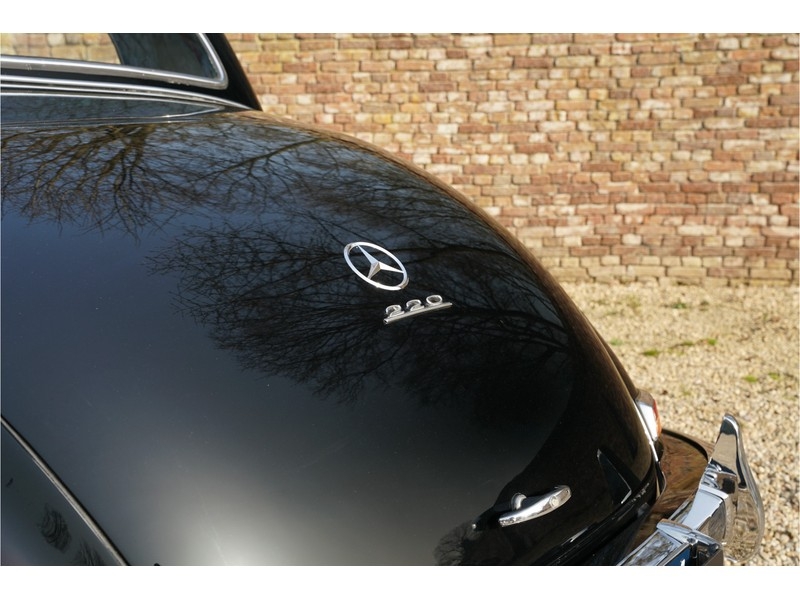
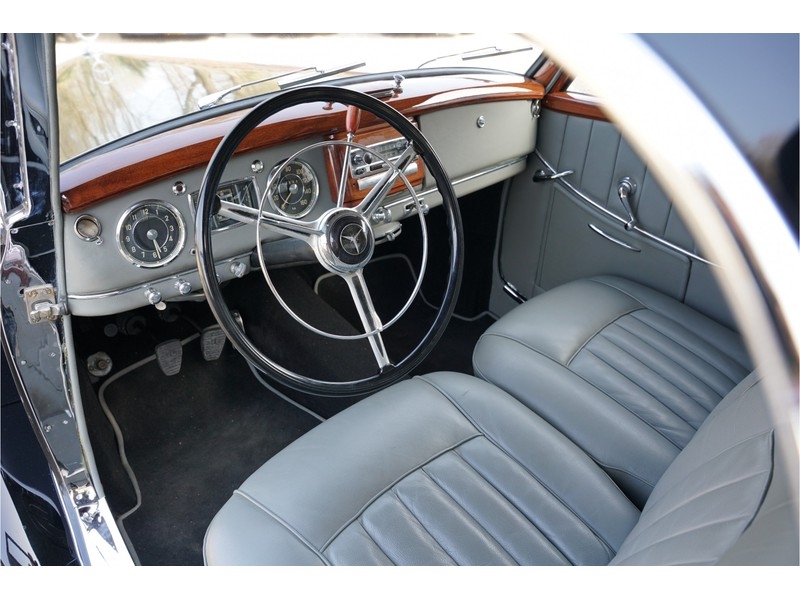
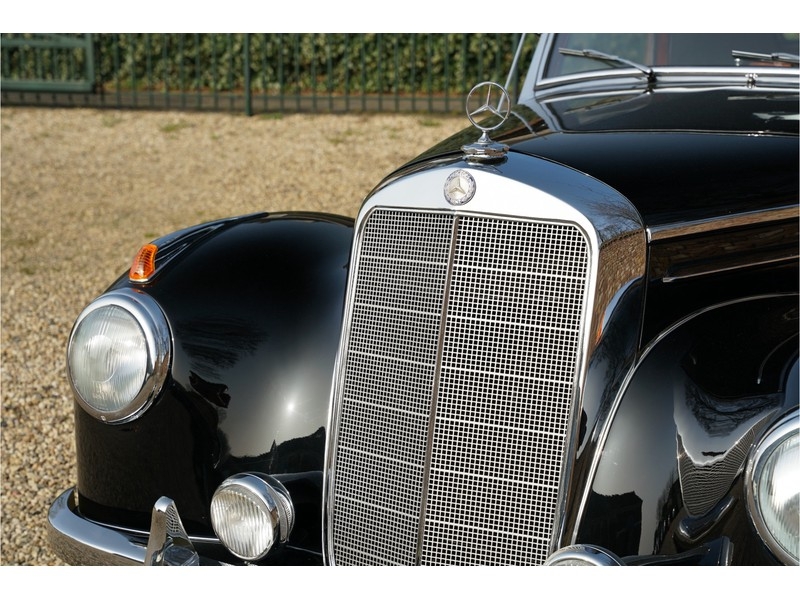
In 1951 Mercedes-Benz introduced the W187. The car was available in various versions. When introduced the sedan and convertible went on sale. In 1954 a coupé was added to the collection. According to Mercedes-Benz this later addition, based on the convertible, followed requests by a number of celebrities who had direct access to the top at Mercedes-Benz. Who exactly these celebrities were remains unclear, but they could never have amounted to many as Mercedes-Benz only sold 85 of the 220A coupé in 1954 and 1955. Four years ago our car was fully restored. Last December the mechanics were thoroughly seen to. To say this Mercedes-Benz 220A is in rude health would be an understatement. This car is in prime condition. It also happens to be a matching numbers car. On the outside the car looks great with its straight and correctly aligned panelwork. The black paintwork was very well applied during the respray and is still perfect. The interior trim has been completely replaced in keeping with its roots. The seats and bench seat are in grey leather together with black carpets. Completing the pretty picture is the immaculate woodwork. The 220A coupé has a 2.2 litre straight-six attached to a manual 4-speed gearbox. The four drum brakes work perfectly. During the last major service a complete new ignition was fitted and the carburettor correctly re-tuned. This has of course greatly benefitted the drive. The engine runs nice and smoothly. All fluids were replaced and correctly sized new tyres were also fitted. Finally one should not overlook the rather splendid matching luggage set that comes with this Mercedes-Benz 220A coupé. Finding a Mercedes-Benz W187 220A coupé is quite hard with natural attrition of the original 85 cars produced. Finding one in this splendid condition is neigh on impossible. Gallery Aaldering is Europe’s leading Classic Cars specialist since 1975! Always 400 Classic and Sportscars in stock, please visit http://www.gallery-aaldering.com for the current stock list (all offered cars are available in our showroom) and further information. We are located near the German border, 95 km from Düsseldorf and 90 km from Amsterdam. So easy traveling by plane, train, taxi and car. Transport and worldwide shipping can be arranged. No duties/import costs within Europe. We buy, sell and provide consignment sales (selling on behalf of the owner). We can arrange/provide registration/papers for our German (H-Kennzeichen, TÜV, Fahrzeugbrief, Wertgutachten usw.) and Benelux customers. Gallery Aaldering, Arnhemsestraat 47, 6971 AP Brummen, The Netherlands. Tel: 0031-575-564055. Quality, experience and transparency is what sets us apart. We look forward to welcoming you in our showroom
http://www.gallery-aaldering.com/mercedes-benz-200-serie-220-a-coupe-one-of-only-85-lugage-set-fully-restored-en
1955 Mercedes-Benz 220 W187 220 A COUPE One of only 85, lugage set, fully rest is listed sold on ClassicDigest in Brummen by Gallery Dealer for €139500.
Car Facts
Car type : Car Make : Mercedes-Benz Model : 220 W187 Model Version : 220 A COUPE One of only 85, lugage set, fully rest Engine size : 0.0 Model Year : 1955 Sub type : Coupé Location : Brummen
Sold
Seller Information
Sold
People who viewed this Mercedes-Benz 220 W187 also viewed similar Mercedes-Benz listed at ClassicDigest
Mercedes-Benz 220 W187
Emeryville
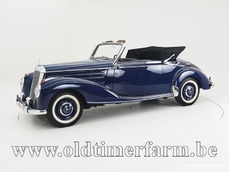
Mercedes-Benz 220 W187
184950 €
Aalter
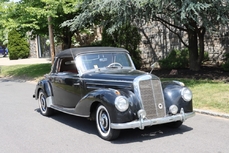
Mercedes-Benz 220 W187
99500 $
Astoria
Mercedes-Benz 220 W187
9950 $
Astoria
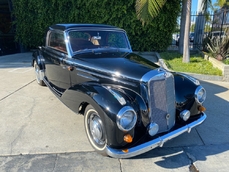
Mercedes-Benz 220 W187
167500 $
Astoria
Other cars listed for sale by this dealer
Triumph TR6
Brummen
Porsche 911 / 964
Brummen
Porsche 356
Brummen
Opel Kadett
Brummen
Morgan Plus 4
Brummen
About Mercedes-Benz
In the annals of automotive history, the journey of Mercedes-Benz is a tale that unfolds with the ingenuity of its founding pioneers. In the year 1886, Karl Benz crafted the Benz Patent Motorwagen, a creation that would go down in history as the world's inaugural automobile. Unbeknownst to him, this moment marked the genesis of what would evolve into the most illustrious premium car manufacturer globally. The financial underpinning of this pioneering venture, interestingly, was provided by Karl Benz's wife, Bertha Benz, demonstrating a remarkable partnership that would set the tone for Mercedes-Benz's legacy.A parallel narrative emerged not far away, as Daimler-Motoren-Gesellschaft, founded by Gottlieb Daimler and Wilhelm Maybach, entered the scene. In 1901, they unveiled their automobile under the now-famous moniker "Mercedes," meaning "godsend" in Spanish. This name was bestowed upon the car at the behest of Emil Jellinek's daughter, the distributor for Daimler-Motoren-Gesellschaft. The wheels of innovation were set in motion.
Fast forward to 1926, a pivotal year that witnessed the merger of Daimler with Benz & Cie., culminating in the birth of Daimler-Benz. The amalgamation saw the adoption of "Mercedes-Benz" as the distinguished trademark for their automobiles, fusing the legacies of two visionary entities into one.
Contrary to perceptions of conservatism, the trajectory of Daimler-Benz unfolds as a chronicle of industry firsts. From the introduction of the honeycomb radiator to the float carburetor, and the pioneering implementation of four-wheel brakes in 1924, Daimler-Benz consistently pushed the boundaries of automotive innovation. The diesel-powered Mercedes-Benz 260 D in 1936 marked the inception of diesel engines in passenger cars. The iconic Mercedes-Benz 300SL Gullwing made history as the first car with direct fuel injection, albeit the Gutbrod's tiny 2-stroke engine can claim precedence.
Safety innovations became a hallmark, with Béla Barényi's patented safety cell design in the "Ponton"-models in 1951, featuring front and rear crumple zones. The W116 450SEL 6.9 saw the introduction of the Anti-Lock Brake system (ABS), another pioneering safety feature. From the first production airbags and beyond, the legacy of "firsts" continued to be etched into the fabric of Daimler-Benz.
Over its centennial journey, Mercedes-Benz has not merely produced cars but has sculpted automotive icons. The SSKL, 710 SSK Trossi Roadster, 770K Grosser, 540K Spezial Roadster, 300SL Gullwing, w100 600 Pullman, w111 280SE 3.5 Flachkühler, w113 230SL Pagoda, w109 300 SEL 6.3, and w201 2.3-16 Cosworth stand testament to the brand's commitment to engineering excellence.
The roaring Silver Arrows, or "Silberpfeile," including the W 25, W 125, W154, W165, and W196, created a legacy of dominance on the racetrack. These machines were not merely cars; they were expressions of precision, speed, and an indomitable spirit that left their competitors in the dust.
As Mercedes-Benz marches into the future, it does so not just as an automaker but as a custodian of a legacy, a torchbearer of innovation, and a beacon of automotive excellence. The road ahead is sure to witness the continued fusion of cutting-edge technology, timeless design, and an unwavering commitment to setting new standards in the world of automobiles.
One luminary figure who left an indelible mark was Béla Barényi, often heralded as the "father of passive safety" for his pioneering work in safety engineering. His patented safety cell design, featuring front and rear crumple zones, became a hallmark of Mercedes-Benz's commitment to occupant safety, setting new standards that reverberated throughout the automotive world.
Moving through the chronicles, the collaborative genius of Wilhelm Maybach, alongside Gottlieb Daimler, laid the foundation for Daimler-Motoren-Gesellschaft. Their innovations not only birthed the first Mercedes but established a culture of relentless pursuit of technological excellence that remains integral to Mercedes-Benz's DNA.
In the post-merger era of 1926, Ferdinand Porsche emerged as a prominent figure within Mercedes-Benz. His work on the Mercedes-Benz S-Type, a supercharged race car, garnered acclaim and set the stage for a legacy that extended far beyond the marque. Porsche's impact would later extend to his eponymous company, but his influence at Mercedes-Benz during those formative years was pivotal.
As the 20th century progressed, the legendary Rudolf Uhlenhaut emerged as a key figure. Uhlenhaut, an accomplished engineer and the driving force behind the iconic Silver Arrows, played a crucial role in Mercedes-Benz's dominance in motorsports. His engineering prowess and attention to detail were instrumental in creating some of the most formidable racing cars of the era.
In the latter half of the century, figures like Bruno Sacco, the head of design at Mercedes-Benz from 1975 to 1999, left an indelible imprint on the brand's aesthetic identity. Sacco's design philosophy, characterized by clean lines and timeless elegance, shaped iconic models like the W126 S-Class and the W201 190E, solidifying Mercedes-Benz's reputation for luxury and sophistication.
The narrative would be incomplete without acknowledging the contributions of engineers like Hans Scherenberg, whose leadership in the 1970s ushered in a new era of technological innovation at Mercedes-Benz. Scherenberg's tenure saw the development of groundbreaking technologies, including the Anti-Lock Brake system (ABS) and the introduction of airbags in production cars.