


Mercedes-Benz Other SLK '2000 2000
General description :
With maintenance booklets, that have been filled in since day one, and a Mercedes-Benz instruction manual Comes with three very recent maintenance bills Had an entire rehaul in July 2023 Compact, modest, and sporty luxury car The Mercedes-Benz R170 series was produced from 1996 to 2004, a period in which it marked an expansion in Mercedes-Benz's lineup that came as a reaction to emerging trends in medium-sized or compact roadsters. In response to this trend, with the MX-5 leading the way, Mercedes-Benz introduced the SLK, which stands for ‘Sport, Leicht und Kurz’ - or ‘Sporty, Leight and Short’ in German. From 1996 on, it was sold at a well-affordable price under the internal reference 'R170’. The 'SLK', that the R170 had initiated, proved to be a success, as it was sold in multiple series until 2019. Even before the arrival of the R170, Mercedes-Benz had been working on a concept car in order to compete with the MX-5. In 1993, they filed a patent for an electric hardtop that, when the roof was open, stowed away in the rear trunk. In 1994, Mercedes-Benz unveiled the 'SLK I Concept' convertible concept car at the Turin Motor Show. In that very same year, a second concept car, the 'SLK II Concept', was displayed at the Paris Motor Show, giving visitors a glimpse of what the metal hardtop would eventually look like. In 1996, the 200 SLK was introduced as the original model, and not only did it feature the retractable hardtop, it also paid tribute to Mercedes-Benz's rich roadster history as its wheelbase’s length was identical to that of the world-celebrated Gullwing 300 SL and the 190SL. Initially, it came with three engines: a naturally aspirated two-litre straight-four engine with 134 horsepower, the same two-litre engine but supercharged and thus more powerful, or a supercharged 2.3-litre four-cylinder engine producing 190 horsepower. In the year 2000, a significant facelift occurred that brought redesigned bumpers, grille, and taillights, the indicators were integrated into the side mirrors. Inside, the ergonomics were improved with sportier seats, the steering wheel and gearshift received a new look. In 2001, an AMG model with a 3.2-litre V6 engine was introduced, and from that model year on, a six-speed manual transmission was available for the R170. Approximately 311,000 R170 cars were made, making it a famous entry-level sports car. Mercedes-Benz 200 SLK KOMPRESSOR The 200 SLK is the initial, and entry-level, model to the R170 series. Throughout its entire production period, it was offered alongside the 200 SLK KOMPRESSOR as its parallel counterpart. Essentially, the latter is the same car, with significantly higher power due to its forced induction. The regular 200 SLK comes with a two-litre engine. Any differences with R170 models lie solely in the engine's behaviour and its power performance. The R170 remains an affordable, dependable, and utterly durable entry-level convertible that has set the standard for cars equipped with a retractable hardtop. Technical information: Body work Length (cm): 401 (158 inch) Width (cm): 172 (68 inch) Height (cm): 128 (50 inch) Wheelbase (cm): 240 (94 inch) Weight (kg): 1265 (2789 lbs) Mechanics Engine: 1998 cc supercharged (KOMPRESSOR) straight-four front-engine Valve gear: 16 Fuel system: MPI Gear box: 6-speed automatic Transmission: RWD Left-steered power: 163 hp (120 kW) at 5300 t/m torque: 230 Nm at 2500 t/m Top speed: 223 km/h (139 mph) **Please do not hesitate to contact us via email to receive the detailed expertise report**
2000 Mercedes-Benz Other SLK '2000 is listed for sale on ClassicDigest in Aalter by Oldtimerfarm for €12950.
Car Facts
Car type : Car Make : Mercedes-Benz Model : Other Model Version : SLK '2000 Engine size : 0.0 Model Year : 2000 Location : Aalter Vehicle Registration : Undefined
12950 €
People who viewed this Mercedes-Benz Other also viewed similar Mercedes-Benz listed at ClassicDigest
Mercedes-Benz Other
100 $
United Kingdom
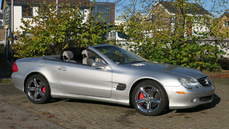
Mercedes-Benz Other
16500 €
De Lier
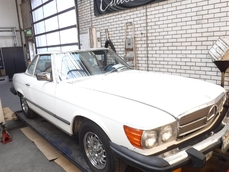
Mercedes-Benz Other
23500 €
De Lier
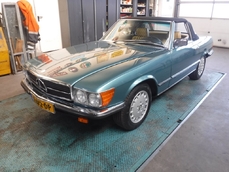
Mercedes-Benz Other
28500 €
De Lier
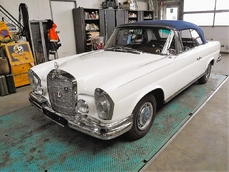
Mercedes-Benz Other
127500 €
De Lier
Other cars listed for sale by this dealer
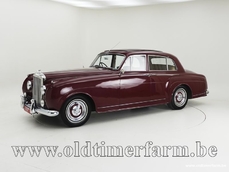
Bentley S1
99950€
Aalter
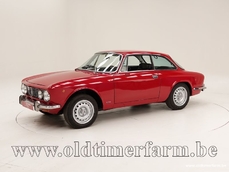
Alfa Romeo 2000 GTV
25950€
Aalter
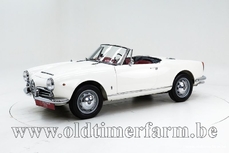
Alfa Romeo Giulia 1600 Sprint
69950€
Aalter
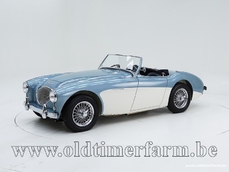
Austin-Healey 100
89950€
Aalter
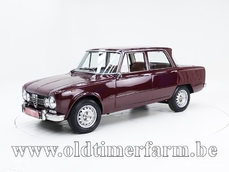
Alfa Romeo Giulia
12500€
Aalter
About Mercedes-Benz
In the annals of automotive history, the journey of Mercedes-Benz is a tale that unfolds with the ingenuity of its founding pioneers. In the year 1886, Karl Benz crafted the Benz Patent Motorwagen, a creation that would go down in history as the world's inaugural automobile. Unbeknownst to him, this moment marked the genesis of what would evolve into the most illustrious premium car manufacturer globally. The financial underpinning of this pioneering venture, interestingly, was provided by Karl Benz's wife, Bertha Benz, demonstrating a remarkable partnership that would set the tone for Mercedes-Benz's legacy.A parallel narrative emerged not far away, as Daimler-Motoren-Gesellschaft, founded by Gottlieb Daimler and Wilhelm Maybach, entered the scene. In 1901, they unveiled their automobile under the now-famous moniker "Mercedes," meaning "godsend" in Spanish. This name was bestowed upon the car at the behest of Emil Jellinek's daughter, the distributor for Daimler-Motoren-Gesellschaft. The wheels of innovation were set in motion.
Fast forward to 1926, a pivotal year that witnessed the merger of Daimler with Benz & Cie., culminating in the birth of Daimler-Benz. The amalgamation saw the adoption of "Mercedes-Benz" as the distinguished trademark for their automobiles, fusing the legacies of two visionary entities into one.
Contrary to perceptions of conservatism, the trajectory of Daimler-Benz unfolds as a chronicle of industry firsts. From the introduction of the honeycomb radiator to the float carburetor, and the pioneering implementation of four-wheel brakes in 1924, Daimler-Benz consistently pushed the boundaries of automotive innovation. The diesel-powered Mercedes-Benz 260 D in 1936 marked the inception of diesel engines in passenger cars. The iconic Mercedes-Benz 300SL Gullwing made history as the first car with direct fuel injection, albeit the Gutbrod's tiny 2-stroke engine can claim precedence.
Safety innovations became a hallmark, with Béla Barényi's patented safety cell design in the "Ponton"-models in 1951, featuring front and rear crumple zones. The W116 450SEL 6.9 saw the introduction of the Anti-Lock Brake system (ABS), another pioneering safety feature. From the first production airbags and beyond, the legacy of "firsts" continued to be etched into the fabric of Daimler-Benz.
Over its centennial journey, Mercedes-Benz has not merely produced cars but has sculpted automotive icons. The SSKL, 710 SSK Trossi Roadster, 770K Grosser, 540K Spezial Roadster, 300SL Gullwing, w100 600 Pullman, w111 280SE 3.5 Flachkühler, w113 230SL Pagoda, w109 300 SEL 6.3, and w201 2.3-16 Cosworth stand testament to the brand's commitment to engineering excellence.
The roaring Silver Arrows, or "Silberpfeile," including the W 25, W 125, W154, W165, and W196, created a legacy of dominance on the racetrack. These machines were not merely cars; they were expressions of precision, speed, and an indomitable spirit that left their competitors in the dust.
As Mercedes-Benz marches into the future, it does so not just as an automaker but as a custodian of a legacy, a torchbearer of innovation, and a beacon of automotive excellence. The road ahead is sure to witness the continued fusion of cutting-edge technology, timeless design, and an unwavering commitment to setting new standards in the world of automobiles.
One luminary figure who left an indelible mark was Béla Barényi, often heralded as the "father of passive safety" for his pioneering work in safety engineering. His patented safety cell design, featuring front and rear crumple zones, became a hallmark of Mercedes-Benz's commitment to occupant safety, setting new standards that reverberated throughout the automotive world.
Moving through the chronicles, the collaborative genius of Wilhelm Maybach, alongside Gottlieb Daimler, laid the foundation for Daimler-Motoren-Gesellschaft. Their innovations not only birthed the first Mercedes but established a culture of relentless pursuit of technological excellence that remains integral to Mercedes-Benz's DNA.
In the post-merger era of 1926, Ferdinand Porsche emerged as a prominent figure within Mercedes-Benz. His work on the Mercedes-Benz S-Type, a supercharged race car, garnered acclaim and set the stage for a legacy that extended far beyond the marque. Porsche's impact would later extend to his eponymous company, but his influence at Mercedes-Benz during those formative years was pivotal.
As the 20th century progressed, the legendary Rudolf Uhlenhaut emerged as a key figure. Uhlenhaut, an accomplished engineer and the driving force behind the iconic Silver Arrows, played a crucial role in Mercedes-Benz's dominance in motorsports. His engineering prowess and attention to detail were instrumental in creating some of the most formidable racing cars of the era.
In the latter half of the century, figures like Bruno Sacco, the head of design at Mercedes-Benz from 1975 to 1999, left an indelible imprint on the brand's aesthetic identity. Sacco's design philosophy, characterized by clean lines and timeless elegance, shaped iconic models like the W126 S-Class and the W201 190E, solidifying Mercedes-Benz's reputation for luxury and sophistication.
The narrative would be incomplete without acknowledging the contributions of engineers like Hans Scherenberg, whose leadership in the 1970s ushered in a new era of technological innovation at Mercedes-Benz. Scherenberg's tenure saw the development of groundbreaking technologies, including the Anti-Lock Brake system (ABS) and the introduction of airbags in production cars.