


Mercury Montclair 292 V8 1955
General description :
Description
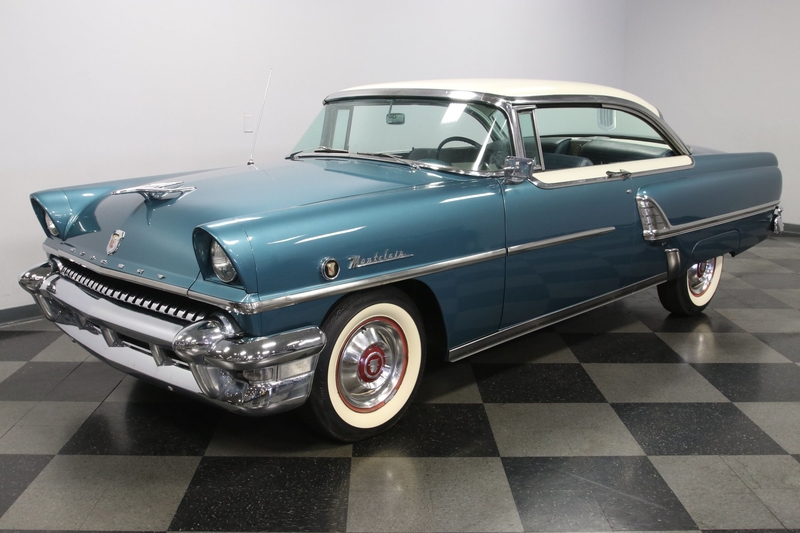
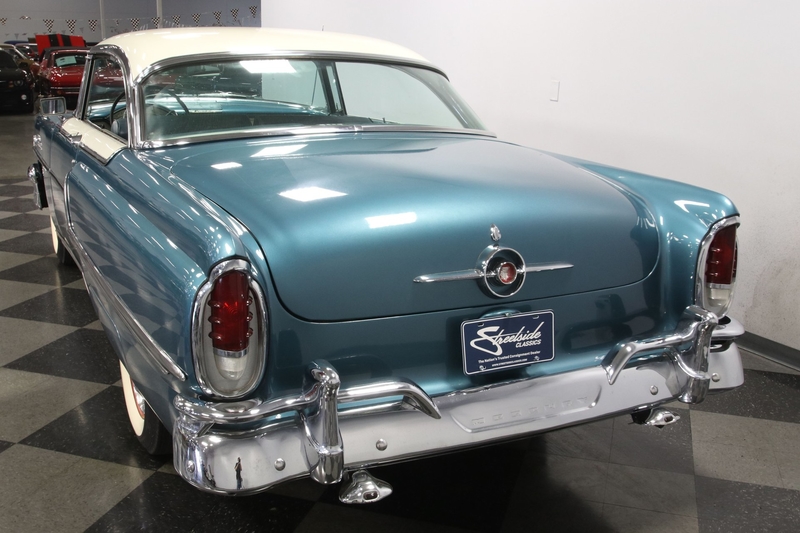
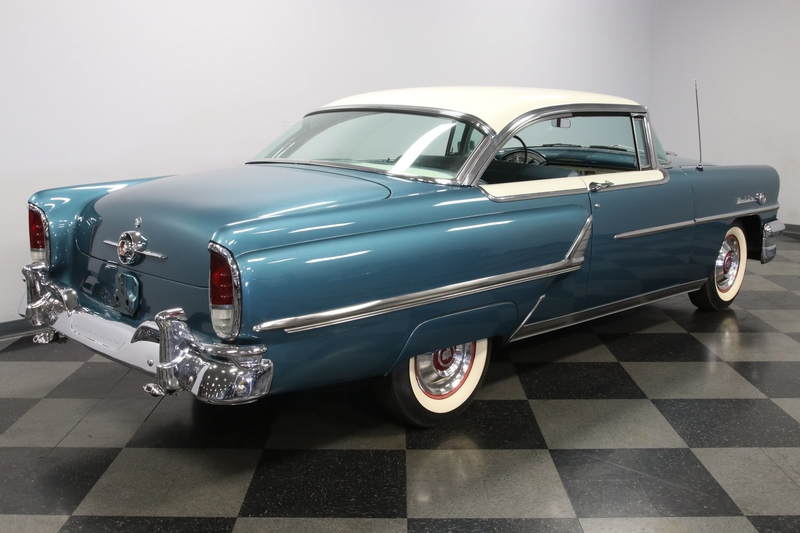
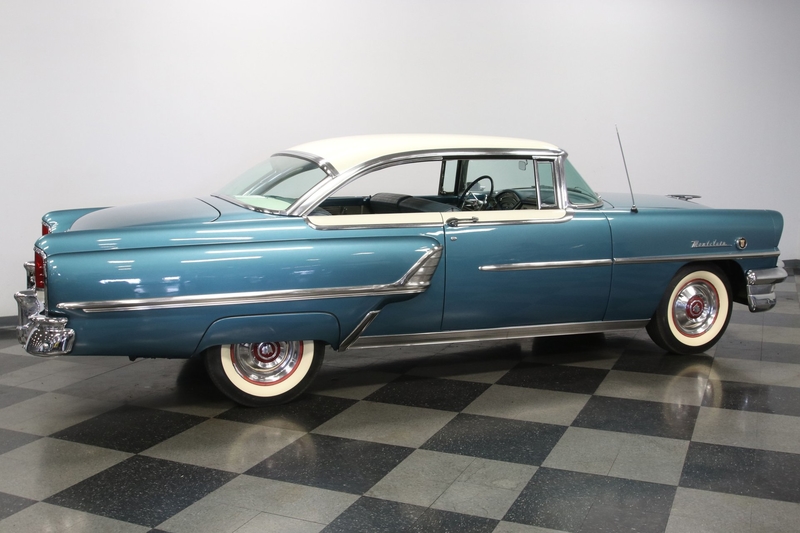
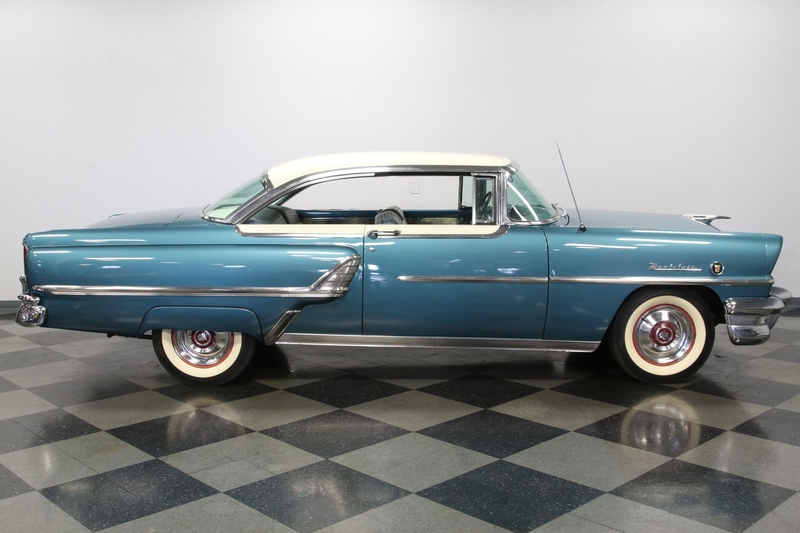
The 1955 Mercury Montclair introduced a new level of premium to the Mercury world. So it's great to have an example that has the correct V8 under the hood and a high-class color-coordinated look in inside and out.
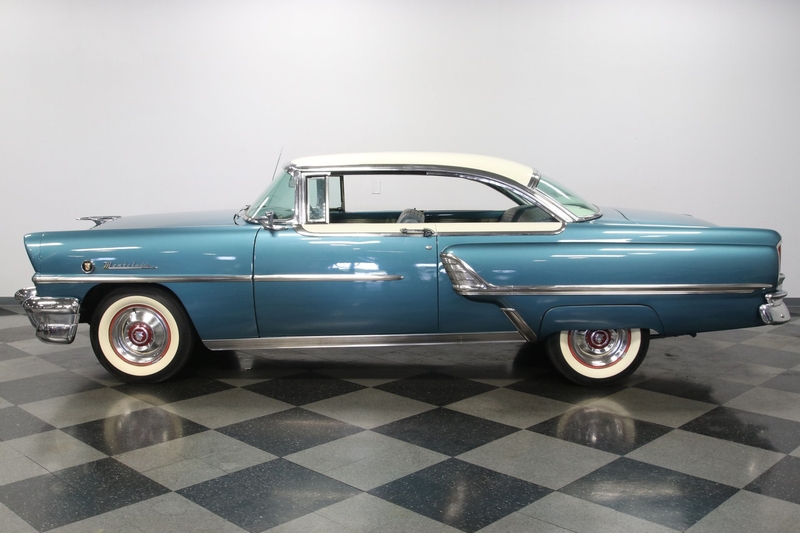
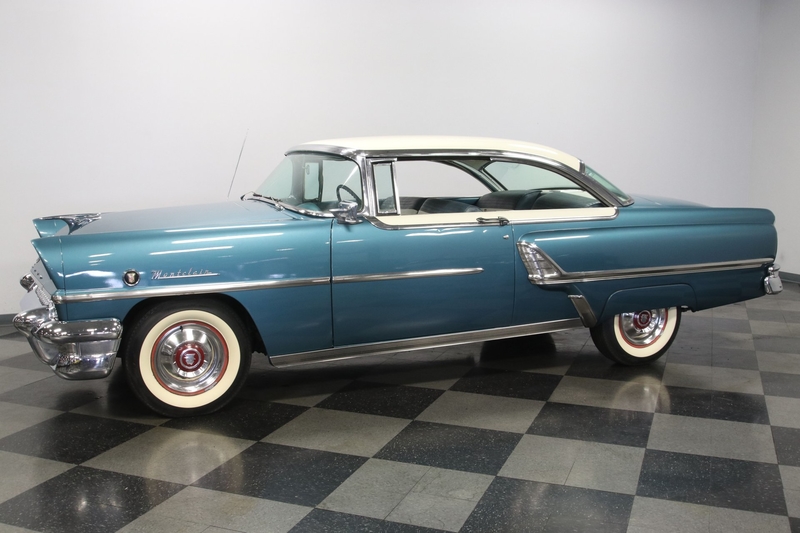
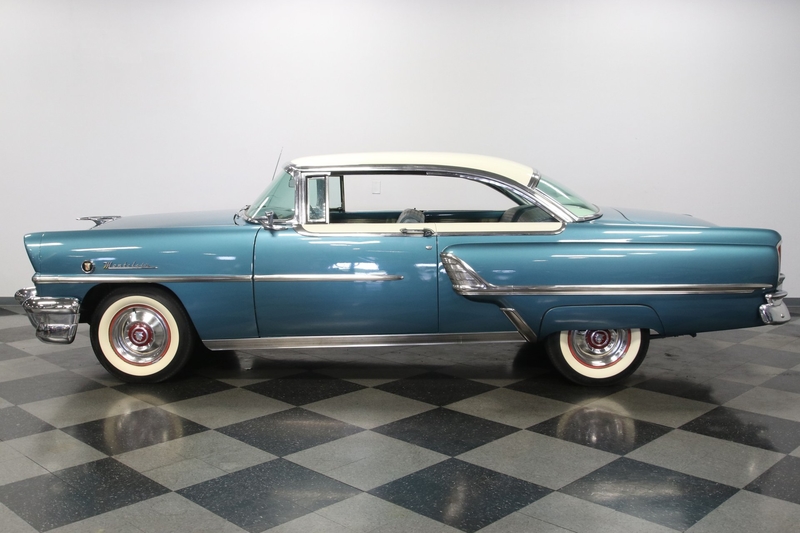
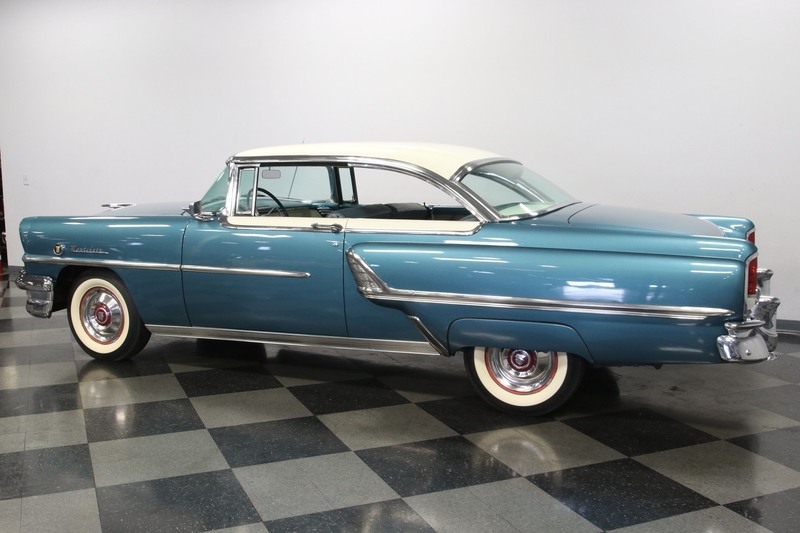
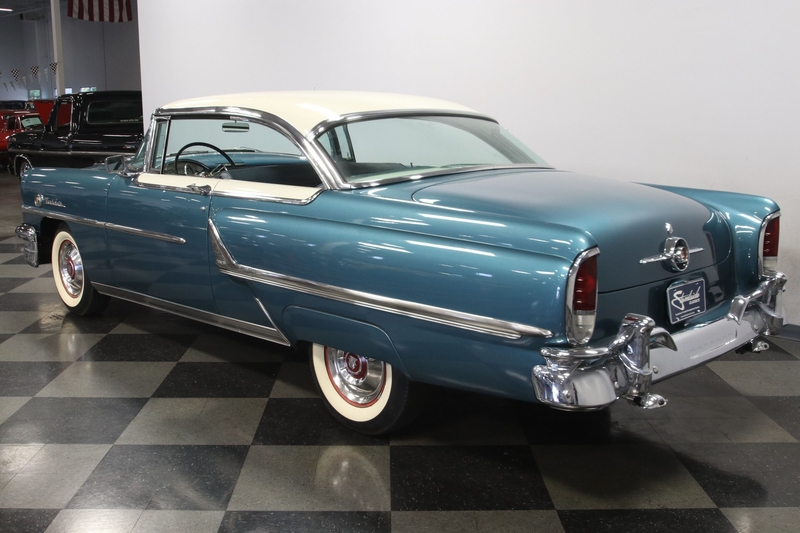
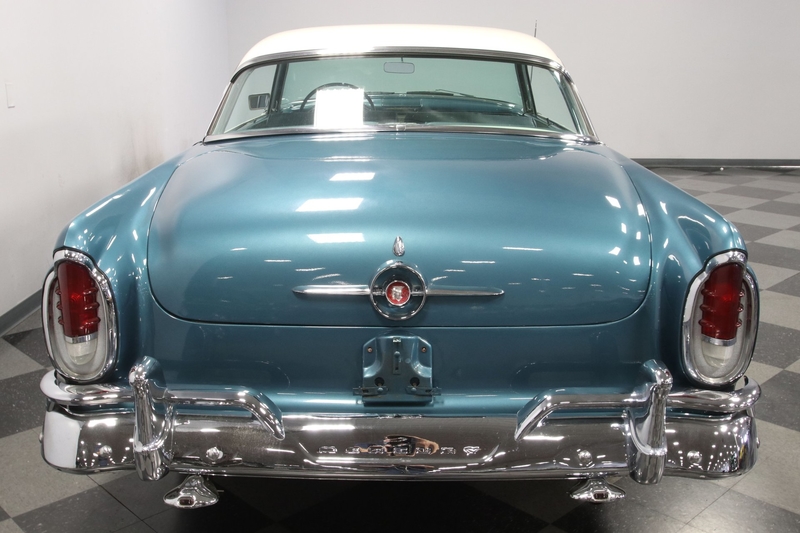
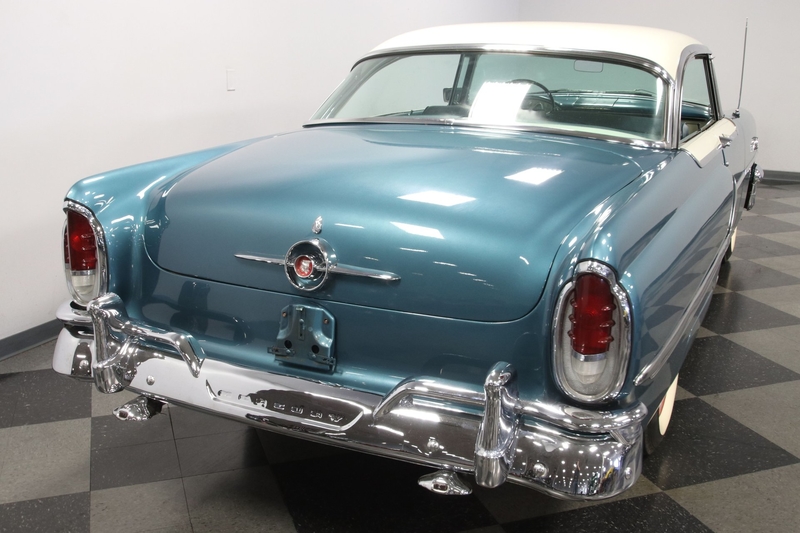
The new Montclair coupes were on the upper end of the class spectrum, and they were proud to show it. After all, you paid 50% more than a Ford V8 coupe for this in '55, and so they made sure you got extra flair for the money. The longer chassis allowed designers to create bodies that were a bit more upscale-looking. You especially see this on the trim line that starts above the grille, wraps around the front and continues down the body even thorough the door. It really helps to emphasize the longer and wider lines that made the best 1950s cars. The same goes for the big chrome bumpers. The design seems to borrow the best from the custom car scene with long headlight overhangs and fender skirts. Plus, the paint package has the white on the roof flowing just a little bit above the doors and also as part of the taillights inset. And speaking of the paint, we love the two-tone Glen Lake Blue against the Alaska White. It was updated later in life to make sure it still has a good gloss in the sunshine.
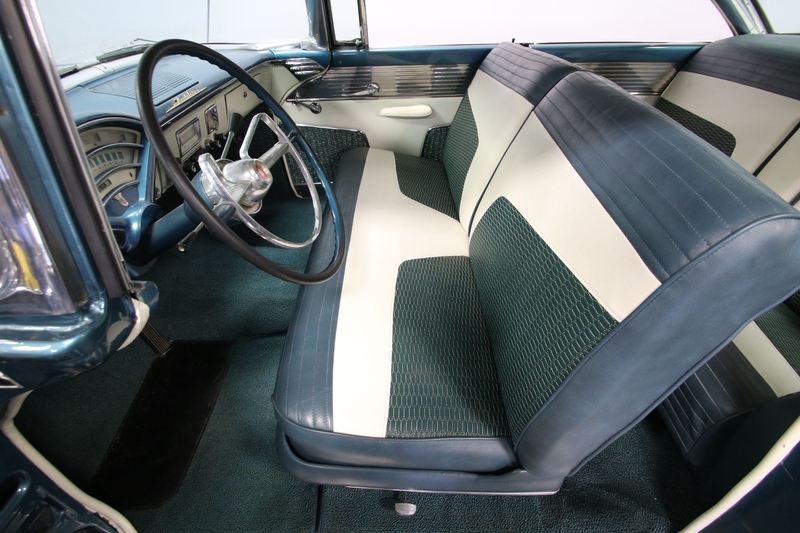
The interior is quite vintage, which is nice, because the blue and white inside is very much in harmony with the exterior two-tone. Bright door trim, textured seat inserts, and terrific details (like the rear armrest) really set this Mercury apart. The dash is quite complete, and even keeps the AM radio, clock, and heat controls all there for display so that everything looks in place. More of this whole originality is seen on the artful factory steering wheel and the arching dash that shows off the very stylish gauge package. While you may need to service some of these pieces if you want to return the full function, it's preferable to already have everything quite complete, right down to the Mercury crest on the odometer panel.
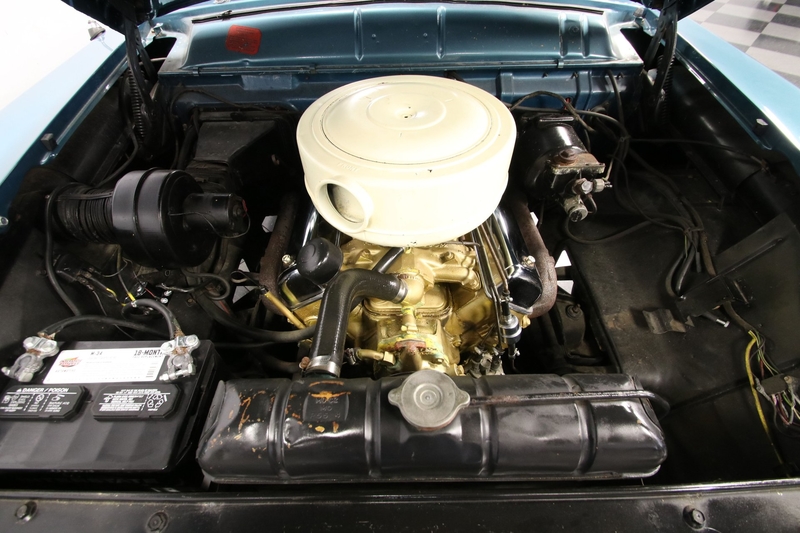
Another reason to want a '55 Mercury is under the hood. Ford had just debuted the Thunderbird, and the premium 292 cubic-inch V8 made its way to the premium Montclair, too. With this kind of significance, it's great to have a period-correct block still under the hood. The big air grabber, golden block, and bright valve covers even give this a nice look within the dark engine bay. The automatic transmission, supple Mercury raid, and the tune of the dual exhaust all come together to deliver a proper cruising classic.
When you want premium 1950s motoring, you know you want this whitewall classic. So don't miss this distinct Mercury. Call now!
Features : Seatbelts (None) , Power Brakes , Cloth Interior , Vinyl Interior , Heat , Defrost , AM Radio ,
https://www.streetsideclassics.com/vehicles/5991-cha/1955-mercury-montclair
1955 Mercury Montclair 292 V8 is listed sold on ClassicDigest in Charlotte by Streetside Classics for $27995.
Car Facts
Car type : Car Make : Mercury Model : Montclair Model Version : 292 V8 Engine size : 0.0 Model Year : 1955 Location : Charlotte
Sold
Seller Information
Sold
People who viewed this Mercury Montclair also viewed similar Mercury listed at ClassicDigest
Mercury Montclair
12 €
Emmerich
Mercury Montclair
12950 $
13710 NE 20th Street Bellevue, WA 98005
Other cars listed for sale by this dealer
GMC Sierra
26995$
Charlotte
Dodge Challenger
Charlotte
Chevrolet Camaro
54995$
Charlotte
Chevrolet Camaro
94995$
Charlotte
Chevrolet Corvette
61995$
Charlotte
About Mercury
Mercury, the automotive brand, has a rich history that extends beyond its role in the customization and hot-rodding scene, particularly with the iconic Mercury Eight. Here are some key points to know about Mercury:Formation and Early Years:
Mercury was introduced by the Ford Motor Company in 1938 as a mid-priced brand, positioned between the affordable Ford models and the luxury Lincoln lineup. The brand aimed to fill the gap between these two segments.
Mercury Eight:
The Mercury Eight, launched in 1939, is perhaps the most famous model in the brand's history. It featured a sleek design and a powerful V8 engine. This model became popular for customization and hot-rodding, earning it a significant place in American automotive culture.
Customization Culture:
The Mercury Eight, with its distinctive styling and relatively affordable price, became a favorite among custom car builders. It played a pivotal role in the development of the custom car and hot rod culture, particularly in the post-World War II era.
Lead Sleds and Customization:
The term "lead sled" is often associated with heavily customized cars from the 1940s and 1950s. These cars, including the Mercury Eight, were often modified with lowered suspensions, chopped roofs, and other stylistic changes. Lead sleds were a prominent part of the custom car scene, and the Mercury Eight was a popular choice for such modifications.
Post-War Prosperity:
In the post-World War II period, Mercury, like many other American automakers, experienced a surge in popularity as the economy boomed. The brand contributed to the era's fascination with stylish and powerful automobiles.
Evolution of Models:
Over the years, Mercury continued to produce various models, contributing to Ford's lineup. Some notable models include the Mercury Monterey, Mercury Comet, and Mercury Cougar.
Decline and Discontinuation:
Despite periods of success, Mercury faced challenges in establishing a unique identity separate from Ford. As consumer preferences shifted, the brand struggled, and Ford eventually announced the discontinuation of Mercury in 2010.
Legacy in Popular Culture:
Mercury, especially models like the Mercury Eight, holds a significant place in American popular culture. Its association with the customization and hot-rodding scene, as well as its distinctive designs, has left a lasting impact.
In summary, while the Mercury Eight is celebrated for its role in the customization and hot-rodding subculture, Mercury as a brand played a broader role in automotive history, contributing to mid-priced segments and reflecting the automotive trends of its time.